The menu says Swedish, deep tissue, aromatherapy, Thai herbal compress, and you are looking at the booking page with no idea what separates them. That is a fair place to be. Most types of massage differ in only three ways: whether oil is used, how firm the pressure is, and whether the session is mostly flowing strokes or mostly stretching and pressing.
Hold on to those three questions and the menu gets simple. Below is each style we offer at our Viaduct and St Heliers spas, what it feels like on the table, who tends to enjoy it, and one honest line on when to skip it. If you are brand new, our first-time guide covers the rest of the visit.
Three questions that sort every style
- Oil or no oil? Traditional Thai is done without oil, through loose clothing. Almost everything else uses oil on skin under a towel.
- Gentle, medium or firm? Aromatherapy sits at the soft end, Swedish in the middle, deep tissue at the firm end. In every style you set the pressure, and you can change it mid-session.
- Flowing or working? Swedish and aromatherapy glide. Thai, deep tissue and reflexology press, stretch and hold on specific spots.
Our guide to Thai versus oil massage goes deeper on the first question, and the pressure guide explains how to talk about the second.
The classic styles, one by one
Traditional Thai massage
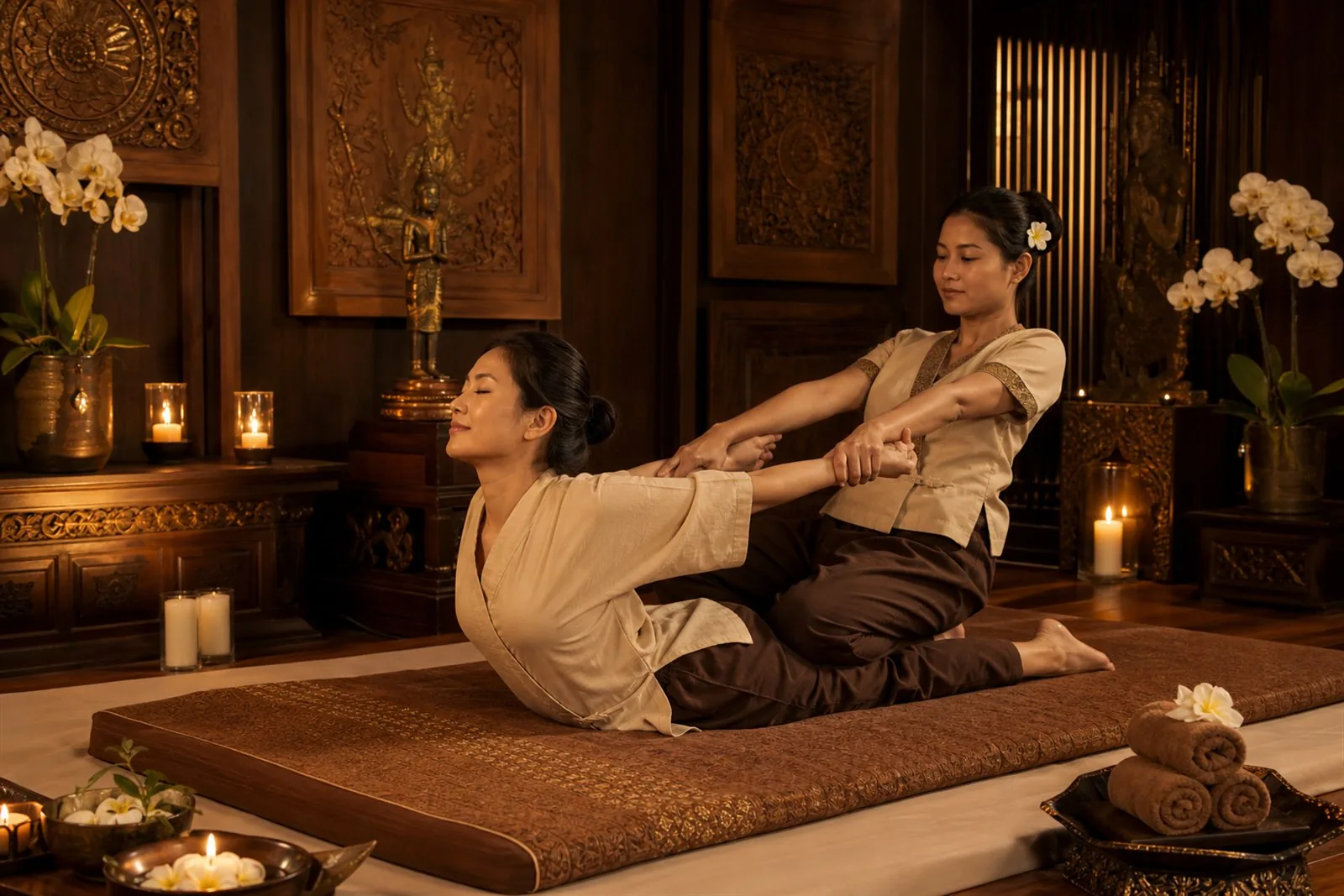
Acupressure plus yoga-style stretches in a steady rhythm, with no oil. You stay clothed and your therapist moves your limbs into stretches. It suits stiff, desk-bound bodies and anyone who finds oil messy. Skip it if you want to lie still and be stroked, because this one is active. More in our guide to Thai massage in Auckland.
Swedish massage
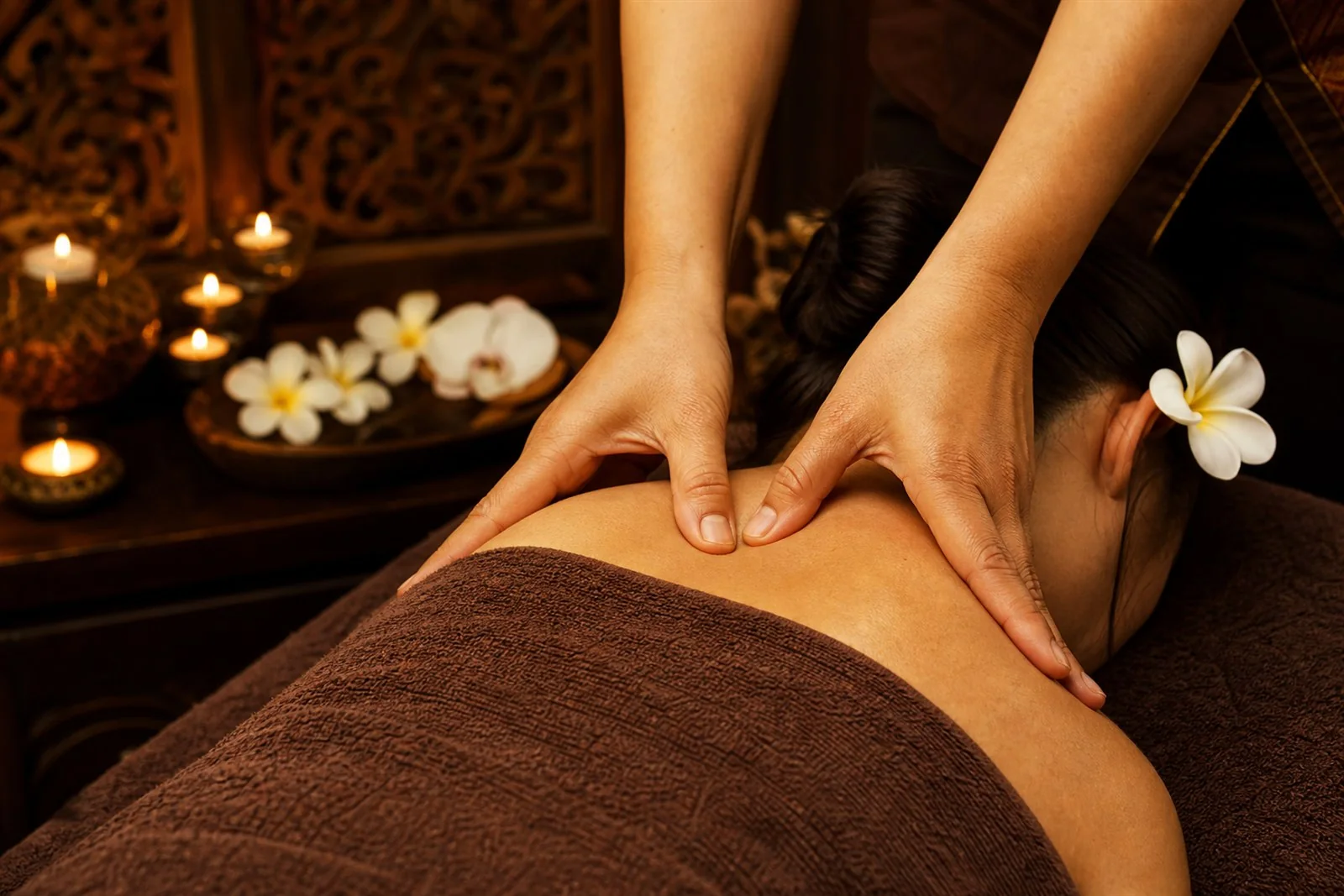
A full-body oil massage with sweet almond oil, long flowing strokes and kneading at a firm but friendly pressure. It is the style most people picture when they say "a massage", and a sensible first booking. It suits tight muscles from workouts or physical work. Skip it if you need very deep pressure on one stubborn spot. See the Swedish massage guide.
Aromatherapy massage
The same slow, gentle technique with a blend of essential oils chosen for scent. It leans towards calm rather than correction, and many guests find it eases a busy head as much as a sore neck. Skip it if you dislike strong scents or have a known oil sensitivity, and tell your therapist when you book. Choosing a blend is covered in the aromatherapy oil guide.
Deep tissue and sport massage
Slower, firmer work into the deeper muscle layers and the fascia around them. It suits intensive training, physically straining jobs and long-held tightness. Skip it if you want to switch off completely, because deep work asks you to breathe and stay present, and some tenderness afterwards is common. Cleveland Clinic's overview of massage types draws the same line, with Swedish as the gentle classic and deep tissue for tight muscles and tendons. We compare it with Thai in Thai massage vs deep tissue.
Heat, herbs and the slower specialty styles
These are the treatments people book for an occasion, and most of them need a longer session.
- Hot stone (90 or 120 minutes): heated stones rest on key points while larger ones are worked through warm oil. Warm muscle lets pressure go further. Skip it if you dislike being hot or have a heart or blood pressure condition. How a hot stone session runs.
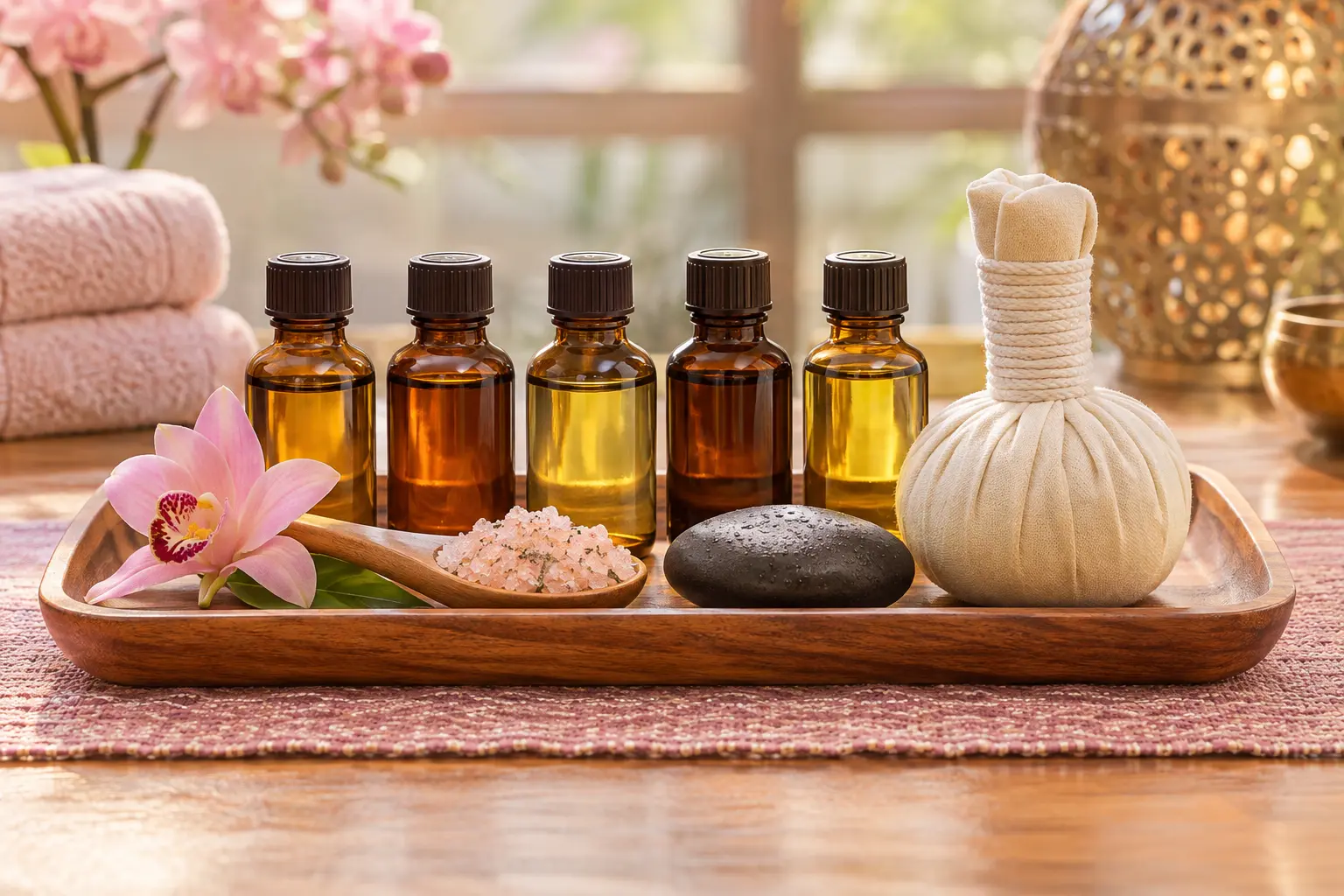
- Thai herbal compress (90 or 120 minutes): a steamed compress of lemongrass, turmeric and kaffir lime pressed and rolled over the body. It is warm and aromatic rather than deep. Skip it if you want hard pressure. The herbal compress guide.
- Warm coconut oil: any of our styles, done with warmed coconut oil that softens skin while the therapist works on neck, back and shoulders. Skip it if you want a drier, no-oil feel. Coconut oil massage explained.
- Candle therapy (Viaduct only): warm massage-candle wax blended with scented oils, used with Swedish technique. Candle massage at the Viaduct.
Shorter and more targeted
Back and shoulder is 30, 45 or 60 minutes of focused upper-body work, built for a desk-tight neck and shoulders. It will not touch your legs, so skip it if your whole body is tired. See back and shoulder massage in Auckland. Reflexology foot massage is 30, 45 or 60 minutes on feet and legs, aimed at lower-body ache from standing or walking. Skip it if your feet are ticklish enough to ruin it; your therapist can use a firmer touch. Our reflexology guide has the details.
Couple massage is any of our styles shared in a private room, with the Viaduct having two couple rooms and St Heliers one. It is a setting rather than a technique, so choose the style first. Start with couples massage in Auckland.
Can you mix styles in one session?
Often, yes, and it is one of the most useful things to know. A 90-minute session can be mostly one style with a different emphasis. Ask for Swedish with extra time on the shoulders, or aromatherapy with firmer pressure through the back. You do not have to pick a single label and live with it.
What helps your therapist most is a plain sentence about your week rather than a style name. "I have been driving a lot and my lower back is stiff" tells them more than "deep tissue" does, because the same label can mean quite different pressure to different people. Say where it is tight, how firm you like it, and anything you want left alone.
If you are unsure, book the 60-minute version of the style that sounds closest. An hour is long enough to find out whether you like the feel of it, and you can go longer next time. Our guide to choosing between 60 and 90 minutes helps with that decision.
When a style is the wrong choice
Every style has a time to skip it. With a heart condition, high blood pressure or reduced skin sensation, check with your GP before any heat treatment. Deep work is the wrong call the day after a hard race, and a fresh strain should be seen by your GP or physio first. A gentle aromatherapy session is the wrong call if you came for a sore spot to be properly worked. If you are not sure which side of the line you are on, tell us at booking and we will steer you.
"Most people book the style they have heard of. The better question is what your body did this week. Sat all day, book Thai or back and shoulder. Trained hard, book deep tissue. Just frazzled, book aromatherapy."
Siri therapist team
A quick chooser
- Stiff, desk-bound, want to feel stretched: Traditional Thai.
- First massage ever, want something comforting: Swedish or aromatherapy.
- Gym, sport or a physical job: deep tissue.
- Tension stacked in the neck and shoulders, short on time: back and shoulder.
- Sore legs and feet: reflexology.
- Cold weather or a milestone treat: hot stone or herbal compress.
- Sharing it: couple massage, in whichever style you both like.
What the main styles cost
Our five everyday styles (Traditional Thai, aromatherapy, Swedish, deep tissue and coconut oil) share one price list. 60 minutes is $115 at the Viaduct and $105 at St Heliers; 90 minutes is $165 and $145. Hot stone and the herbal compress are $175 and $160 for 90 minutes. The full list is on the Viaduct pricing page and the St Heliers pricing page, and both spas are open seven days from 10am to 8pm.
Before you book: If you are pregnant, recovering from an injury or surgery, or have a heart condition, high blood pressure or a skin condition, check with your midwife, GP or specialist first and tell the therapist when you book. We do not offer a dedicated prenatal massage.
Common questions
The ones most people meet are Swedish, deep tissue, aromatherapy, Thai and hot stone. They differ in oil, pressure and whether the session is flowing strokes or stretching and pressing. Our menu adds reflexology, back and shoulder, herbal compress and couple massage.
Swedish or aromatherapy is a gentle, familiar place to start, with oil and a towel over you. If you would rather stay clothed and be stretched, try Traditional Thai. Tell your therapist it is your first time and they will check your pressure as they go.
Deep tissue is the firmest style on our menu, and Traditional Thai can also be firm because pressure comes through palms, thumbs and elbows. You choose the pressure in any style, so say so if it is too much.
A 60-minute massage is $115 at the Viaduct and $105 at St Heliers. Hot stone and herbal compress start at 90 minutes, at $175 (Viaduct) and $160 (St Heliers). A 15% surcharge applies on public holidays.