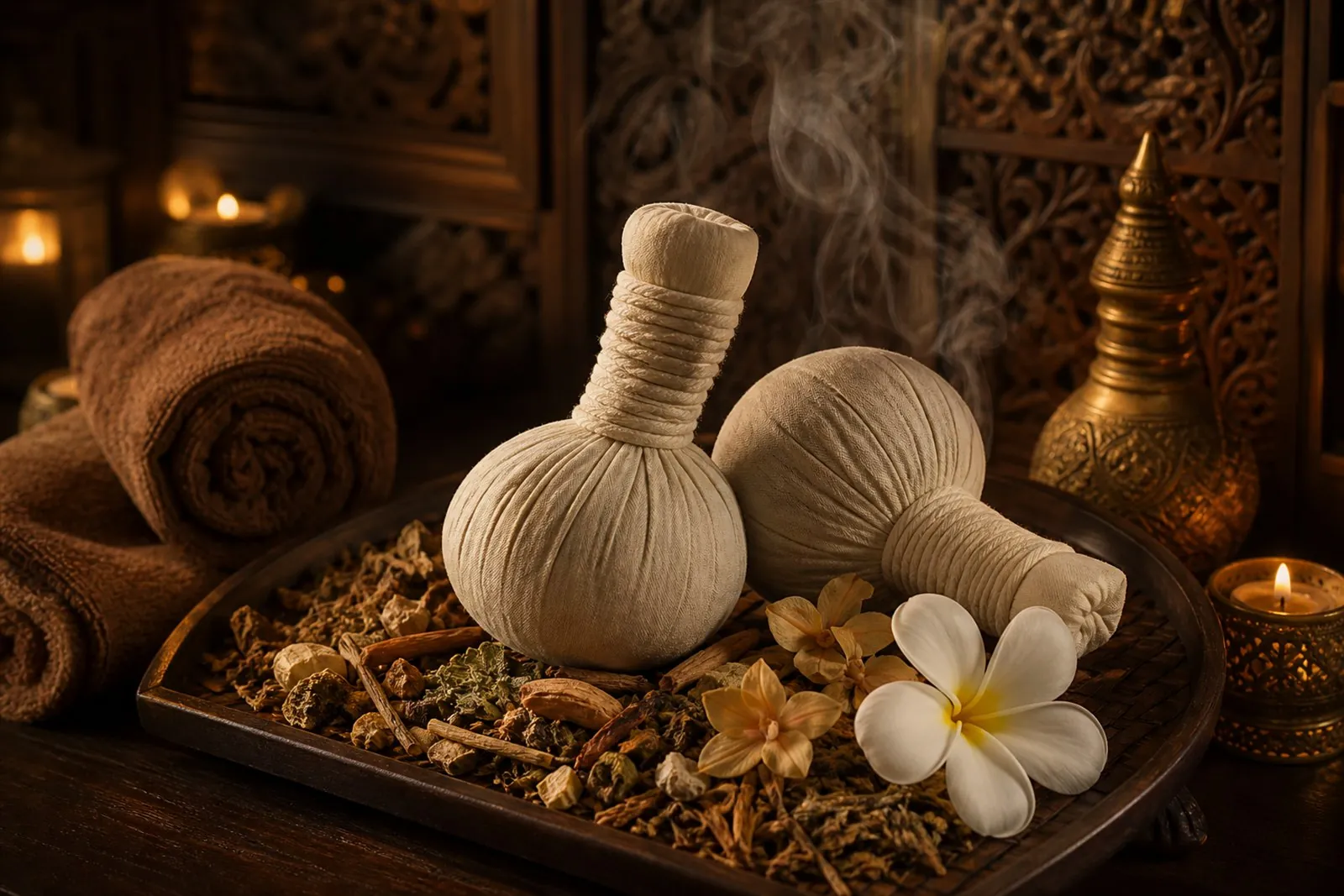
Walk past the treatment rooms at either of our spas on a busy afternoon and you will sometimes catch it before you see anything — a warm, green, slightly peppery smell drifting down the corridor. Lemongrass. Turmeric. Kaffir lime. That is a luk pra kob coming out of the steamer, and it means someone in the next room is about to have a very good ninety minutes.
A Thai herbal compress massage is a full-body oil-free-to-oil-light treatment in which a tightly bound muslin bundle of Thai medicinal herbs is steamed until it is hot and fragrant, then pressed, rolled and dabbed along the muscles between massage strokes. It runs 90 or 120 minutes at both our Viaduct and St Heliers spas. The heat does a large share of the work, which is why the pressure can stay moderate and the treatment still leaves you loose for days.
Where the tradition comes from
The herbal compress is one of the oldest tools in Thai traditional medicine, and it was originally a field remedy rather than a spa luxury. Compresses were used on soldiers, farmers and labourers — people whose bodies were worn down by repetitive work — and the recipe travelled through families and temple medicine schools rather than textbooks. The name is literal: luk is a ball or bundle, pra kob is to press or apply.
What survives today is the same simple idea. Heat opens the tissue. The muslin holds the herbs against the skin while the therapist works. The rhythm — press, hold, roll, lift — is closer to a slow drumbeat than to a rub.
What is actually in the bundle
Recipes vary by region and by family, but the herbs you will smell most clearly in ours are the classic Thai ones:
- Lemongrass — the bright citrus note that hits you first, traditionally used for aching muscles
- Turmeric — the deep yellow root, long used in Thai medicine on inflamed, overworked tissue
- Kaffir lime — leaf and rind, sharp and cutting through the sweetness
- Camphor and ginger family roots — the warming, slightly menthol edge that makes the heat feel like it is travelling
None of this is a medicine cabinet, and we would not pretend otherwise. What it is, reliably, is heat plus aromatics plus skilled hands, and that combination is remarkably good at persuading a tight back to let go.
"The compress lets the heat and the herbs arrive at exactly the spot the muscle is complaining about — and it keeps arriving, wave after wave, for an hour and a half."
Siri therapist team
What it is best for
Guests book the herbal compress most often for stiff and sore muscles, a lower back that has seized after a long drive or a long week, shoulders that have crept up towards the ears, and the tension headaches that come with them. It suits people who want relief but find deep tissue work more punishing than pleasant.
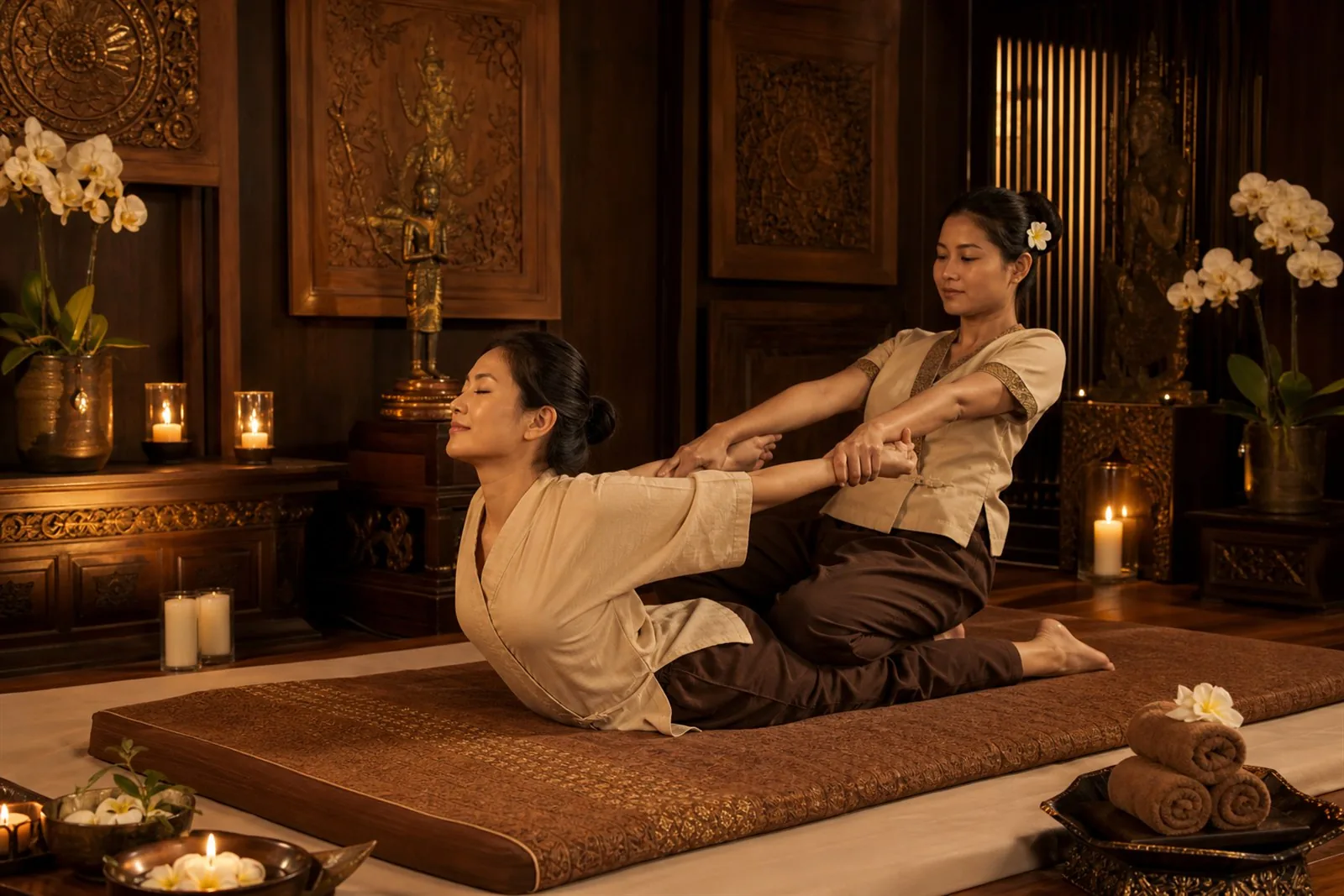
It is also a lovely first Thai treatment. If you have never had a Thai massage and the idea of being stretched and leaned on makes you nervous, the compress is a gentle door in — you stay lying down, the pressure is moderate, and the heat does the persuading.
What a session actually feels like
Here is the honest shape of a 90-minute treatment, so nothing is a surprise:
- First few minutes. A short chat about where you are sore, how firm you like the pressure, and anything we should avoid. Then you are left to undress to your comfort and get under the towel.
- First fifteen. Warm-up strokes without the compress, so your therapist can feel where the tight bands actually are rather than where you think they are.
- The compress arrives. Your therapist tests the heat on their own forearm, then on your skin, before committing. The first press feels hotter than you expect for about two seconds, then simply feels good.
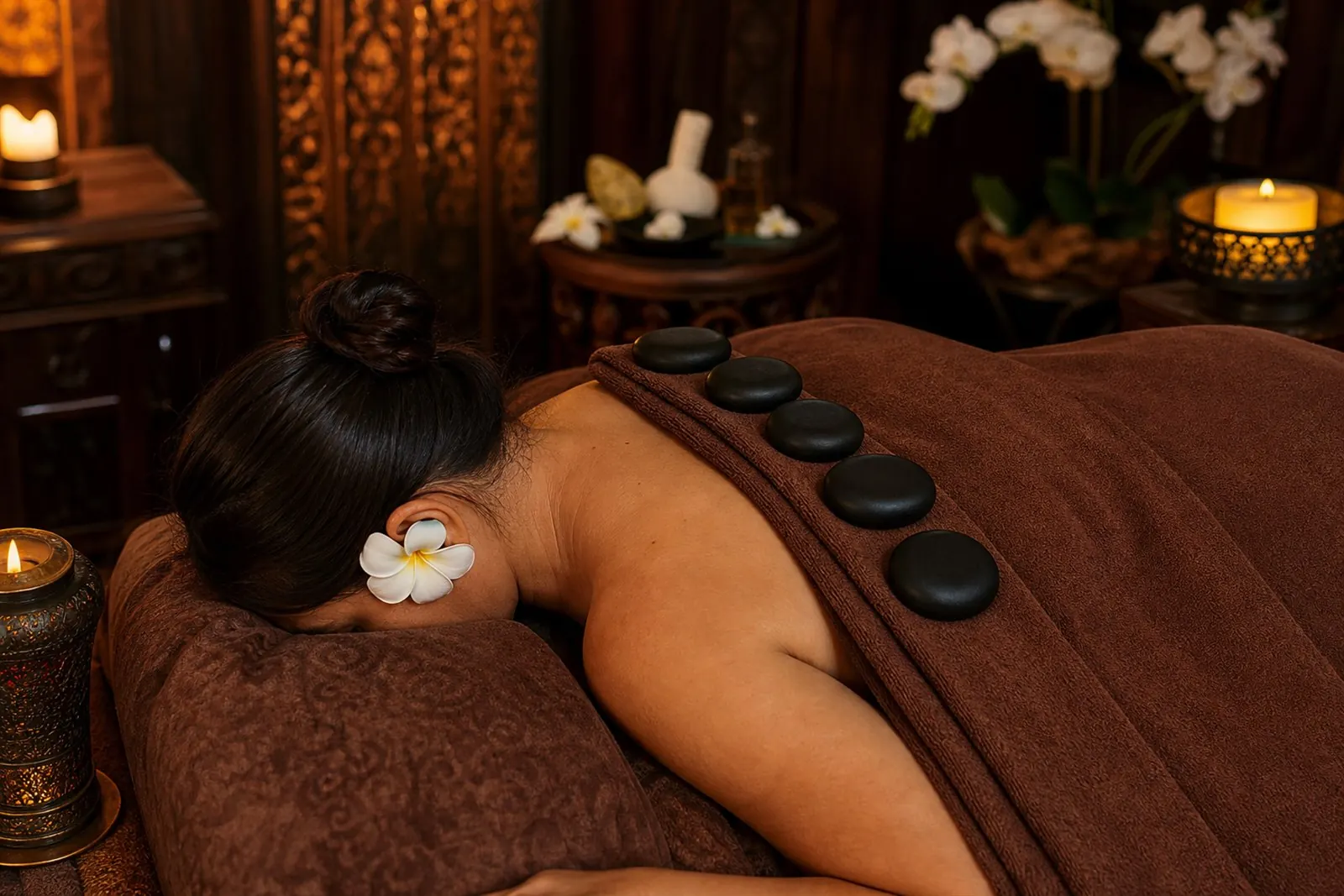
- The middle hour. Alternating work — compress, hands, compress — down the back, across the shoulders, along the backs of the legs, then the front. The bundle gets swapped for a fresh hot one as it cools.
- The last ten. Slower, lighter, everything settling. Most people are half asleep by this point, which is the correct response.
The honest limitation
If what you actually want is to be worked on hard — someone finding a knot and staying there until it gives — the herbal compress is not the treatment for you. Heat and moderate pressure are its whole design. Book deep tissue massage instead, or read our therapist's notes on deep tissue and sport recovery first. Likewise, if you overheat easily or dislike strong scents, say so when you book and we will point you to aromatherapy or Swedish massage.
What it costs in Auckland
The herbal compress is offered in the two long formats only, because it genuinely needs the time:
- Viaduct, Auckland CBD — 90 mins $175 · 120 mins $235
- St Heliers — 90 mins $160 · 120 mins $210
Both spas are open seven days, 10.00am to 8.00pm. Full price lists sit on the Viaduct pricing page and the St Heliers pricing page, and note that a 15% surcharge applies on public holidays.
Before you book: tell us when you book if you are pregnant, have had recent surgery, have a skin condition, varicose veins, or heart or blood pressure conditions. Heat treatments are not right for everyone, and it is much easier for us to guide you to the right treatment beforehand than to change course on the table. If you are under a doctor's or specialist's care, check with them first.
If you are new to all of this, our guide to your first visit to a Thai spa answers the practical questions — what to wear, when to arrive, what to say. Otherwise: ninety minutes, steamed herbs, and a back that forgives you. It is a good way to spend an afternoon.
Common questions
Ninety minutes or two hours — those are the only two lengths we offer it in, because the compress needs time to work through the whole body properly.
No. Your therapist tests the temperature on their own skin first, then on yours, and adjusts. It should feel like a deep, welcome heat, never a sting. Tell your therapist immediately if it feels too hot — that is a normal request, not a complaint.
At our Viaduct spa it is $175 for 90 minutes and $235 for 120 minutes. At St Heliers it is $160 for 90 minutes and $210 for 120 minutes. A 15% surcharge applies on public holidays.
You do not have to. A little herbal oil and scent stays on the skin, and most guests like to leave it there for a few hours. If you would rather rinse off, leave it until the evening so the warmth has time to settle.