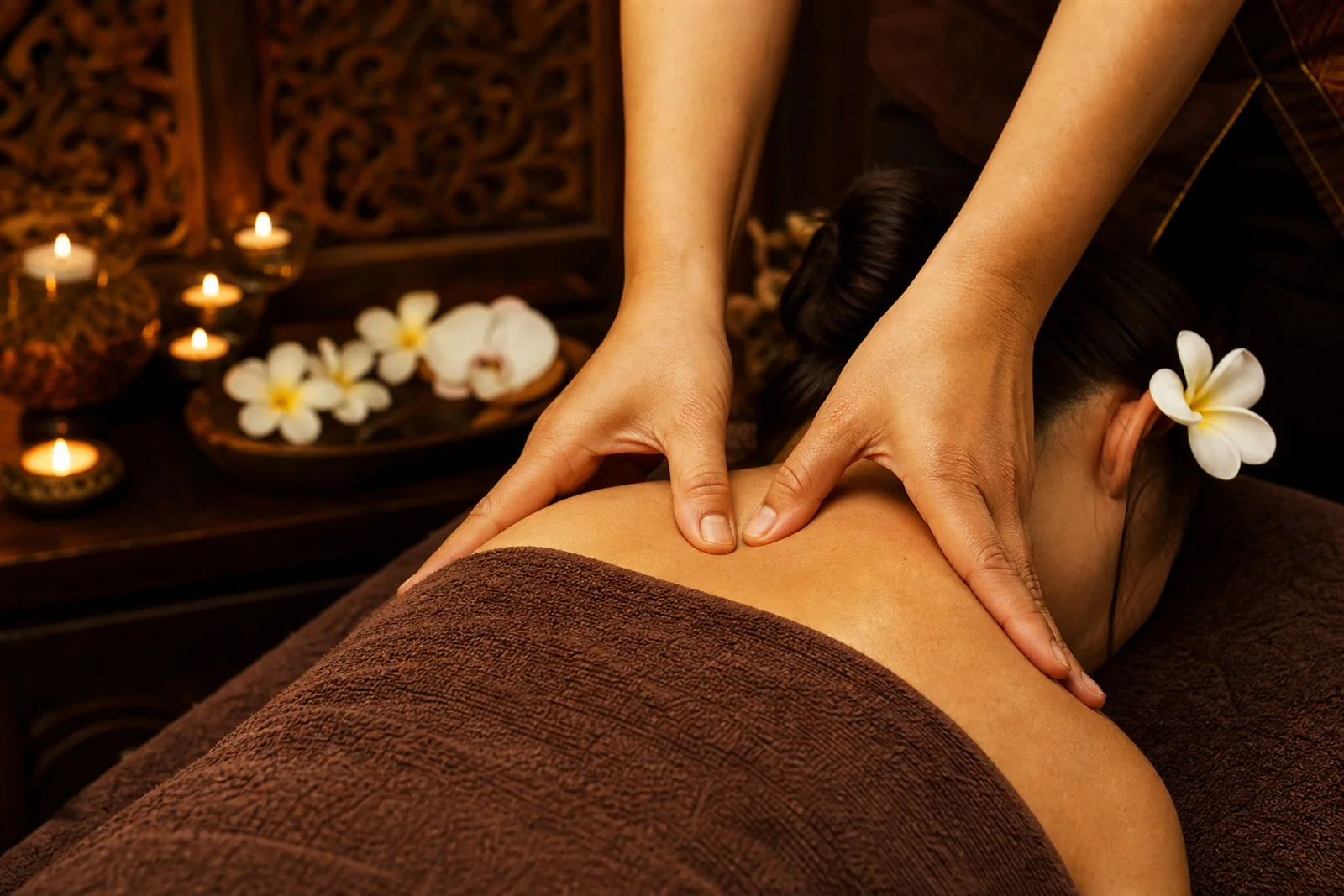
Deep tissue massage — also called sport massage — works the deeper layers of muscle and the fascia around them, using slower strokes and firmer, more sustained pressure to release tight tissue and restore range of movement. It is available in 30, 60, 90 and 120 minutes at both spas.
It is also the treatment people book for the wrong reasons more often than any other, usually on the theory that if a normal massage is good, a harder one must be better. It is not that simple, and the difference matters if you train.
When deep tissue genuinely helps
- Chronic tightness that has been building for months — calves, hip flexors, upper back, the classic runner's and cyclist's complaints
- Restricted range of movement where nothing is injured but nothing quite moves freely either
- Between training blocks, when you have volume to recover from and no event in the immediate future
- Physically demanding work — trades, hospitality, nursing, anything with repeated loading
When it is the wrong call
- Within 48 hours of a race or event. Firm work can leave you slightly sore and slightly less coordinated for a day. Do not do this to yourself before a start line.
- On an acute injury. A fresh strain, tear or sprain needs assessment, not pressure. See a physiotherapist or GP first.
- When you are already exhausted and stressed. A depleted nervous system does not want more intensity. Book aromatherapy or hot stone instead and come back for deep tissue in a fortnight.
- As a first-ever massage, usually. Start at medium and find out what your body tolerates before going firm.
"The best deep tissue session is the one where you keep breathing normally the whole way through. If you are gripping the table, we are not achieving anything."
Siri therapist team
How to time it around training
- Race or event day minus 5 to 7 days — the last window for firm work. Anything closer, go lighter.
- Race day minus 1 to 2 — light or medium flush work only, if anything. Swedish massage is the better booking here.
- The day after a hard event — light and short. Everything is inflamed; this is not the moment to dig.
- Two to four days after — the sweet spot for deep tissue. The acute soreness has passed and the tightness has revealed itself.
- Off-season or base phase — the ideal time to work through long-standing problem areas properly, at 90 minutes rather than 60.
How to get more out of the session
Deep tissue is the treatment where guest input matters most:
- Be specific and physical. "Left glute and down the outside of the thigh, worse after running" is a briefing. "My legs are sore" is not.
- Book 90 minutes if you have more than two problem areas. Sixty minutes covers the body once. It does not cover the body once and then go back.
- Breathe out as the therapist works into a tight spot. This genuinely helps, and it is the same principle covered in our guide to massage pressure.
- Ask for the aftercare. Two stretches you will actually do beat ten you will not.
The honest limitation
Deep tissue massage is not a diagnosis and it is not physiotherapy. It cannot tell you whether that hip is a tight glute or a labral issue, and it will not rehabilitate a torn muscle. If you have pain that wakes you at night, pain radiating down a limb, numbness, pins and needles, swelling, or a problem that has been steadily worsening for weeks, see a physiotherapist, sports doctor or GP first. Come to us for the tissue work alongside the rehab — that combination works very well. On its own, it is a gamble.
Also tell us if you take blood thinners, bruise easily, have osteoporosis, varicose veins, are pregnant, or have had recent surgery — all of these change what pressure is safe.
Prices
- Viaduct, Auckland CBD — 30 mins $65 · 60 mins $115 · 90 mins $165 · 120 mins $220
- St Heliers — 30 mins $60 · 60 mins $105 · 90 mins $145 · 120 mins $195
If firm work is not what you need this week, our comparison of traditional Thai and oil massage will help you choose something better suited — and our frequency guide covers how to time massage around a training year.
Common questions
At least five to seven days. Firmer work can leave you mildly sore and slightly less coordinated for a day or two, which is not what you want on a start line. Two days out, book something light instead.
Viaduct: $65 for 30 minutes, $115 for 60, $165 for 90, $220 for 120. St Heliers: $60, $105, $145 and $195.
It should have a strong, satisfying ache — not pain that makes you hold your breath. If you are bracing against the therapist, the pressure has gone past useful.
No. For a fresh strain, tear or sprain, or for pain with numbness or tingling, see a physiotherapist or GP first. Massage works well alongside rehabilitation, not instead of it.