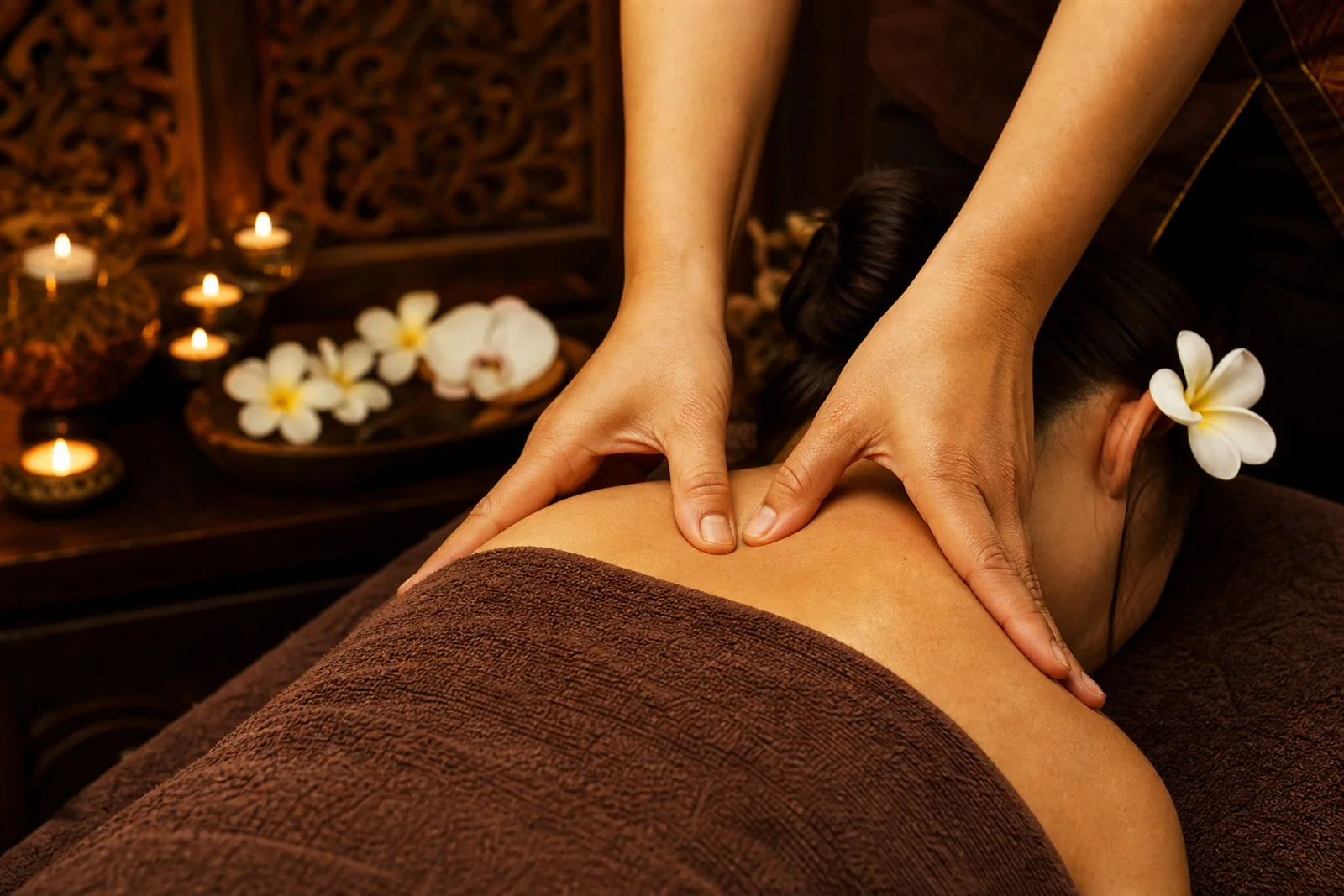
Ten minutes into almost every massage, a therapist asks some version of: is the pressure okay? And a great many guests say "yes, that's great" regardless of whether it is, because saying otherwise feels like a complaint.
It is not a complaint. It is the most useful information you can give, and your therapist is asking because they genuinely cannot tell from the outside. Muscle tone, pain tolerance and preference vary enormously between people who look identical on the table.
What each level actually means
Light
Slow, gliding, working with the skin and the top layer of muscle. This is not a weak massage — it is aimed at your nervous system rather than your tissue, and it is often the right choice for high stress, poor sleep, fibromyalgia-type sensitivity, or a body that is simply exhausted. Nothing should register as effort.
Medium
The default, and where most of our treatments live. You can feel the therapist working into the muscle, there is a pleasant ache on tight spots, and your breathing stays completely normal. If you are unsure what to ask for, ask for this.
Firm
Sustained pressure into deeper layers and fascia. There is real sensation — the "hurts good" zone. The test is your breath: if you can still breathe slowly and evenly, the pressure is right. If you are holding your breath, gripping the table, or tensing against the therapist, it has crossed the line and is now working against you.
"A guest who braces is a guest we cannot reach. Tense muscle does not let you in, no matter how hard you push."
Siri therapist team
Why harder is not better
The common belief is that a good massage should hurt, and that a therapist who does not leave you sore was not doing much. Bodies tend to do the opposite of what that belief expects. Push past someone's tolerance and their body defends itself — muscles contract, the guest holds their breath, and the therapist ends up working against a wall they helped build.
The most effective pressure is the firmest pressure you can receive while staying completely relaxed. That is a different number for everyone, and it is often lower than people's egos would like. Harvard Health's guide to therapeutic massage for pain relief puts it plainly: massage does not have to be painful to be therapeutic, so tell your therapist the kind of touch you prefer.
How to answer the question honestly
Use specifics. Any of these are perfect things to say, and none of them will offend anyone:
- "A little lighter on the shoulders, please — the rest is perfect."
- "Can you go firmer on the left side? That's the sore one."
- "That spot is too much. Can you work around it?"
- "That's exactly right, don't change anything."
- "Could you spend more time here and less on my legs?"
The last one is underused and enormously effective. You are allowed to redirect the whole treatment.
Matching pressure to treatment
- Light to medium — aromatherapy, warm coconut oil, herbal compress
- Medium — Swedish, hot stone, back and shoulder
- Medium to firm — deep tissue / sport massage, reflexology
- Your choice throughout — traditional Thai yoga massage, where you set the strength of both pressure and stretch. If that freedom makes you nervous, our guide to whether Thai massage is painful explains what you should and should not feel.
When pressure is not the variable to change
If a spot is sharply painful, radiates down a limb, tingles or feels numb, more pressure is not the answer and neither is less — say something and we will leave the area alone. Sharp, shooting or electrical sensations are a reason to see a GP or physiotherapist, not to push harder.
Also worth naming: some soreness for a day after firm work is normal, particularly if it has been months since your last massage. Being unable to move comfortably for three days is not, and it means the pressure was too much for you on that day.
When to ask for lighter pressure — and check with your GP first
Some bodies need a lighter touch for reasons that have nothing to do with preference. Tell us when you book, and check with your GP or specialist first, if any of these apply to you:
- You take blood-thinning medication or bruise easily — firm pressure can leave marks.
- You have osteoporosis, or have had a recent fracture, operation or injury.
- You have varicose veins, a history of blood clots, or unexplained swelling in one leg.
- You are pregnant — we do not offer a dedicated pregnancy massage, so phone the branch to talk through what is suitable.
- You have a heart condition, high blood pressure, diabetes with reduced feeling in your hands or feet, or a skin condition in an area that would be worked on.
None of these automatically rules massage out. They change what is sensible: lighter pressure, certain areas left alone, sometimes a different treatment altogether. That is exactly the conversation your therapist wants to have before you lie down — not halfway through, and not afterwards when something has been sore for a week.
One sentence that fixes most of it
At the start, before you lie down, say: "I'd like medium pressure overall, firmer on my upper back, and please avoid my neck." Twelve seconds. It will improve your massage more than any treatment upgrade on the menu — and it works just as well on your very first visit as on your fiftieth.
Common questions
No. Firm work can have a satisfying ache, but if you are holding your breath or tensing against the therapist, the pressure is too much and is actually reducing how effective the treatment is.
Just say it plainly — "a little lighter on the shoulders, please". Therapists ask because they cannot tell from the outside, and a specific answer is genuinely more useful to them than politeness.
Ask for medium, then adjust in the first five minutes. Medium is where most of our treatments sit and it gives you room to move in either direction.
Mild soreness for a day after firm work is common, especially if it has been a while. Being unable to move comfortably for several days is not — tell us and we will adjust next time.