Thai massage has a reputation. Somebody's friend had one on holiday, was folded into shapes they did not know they could make, had a therapist kneel on their thighs, and limped for two days. The story gets better every time it is told.
So, is Thai massage painful? It should not be. It can be intense, with firm thumb pressure, deep stretches and the therapist's body weight behind the work, but it should never be sharp, and you should never feel you have to grit your teeth through it. Intensity is something you set. Pain is a sign that something needs to change.
Why Thai massage feels stronger than oil massage
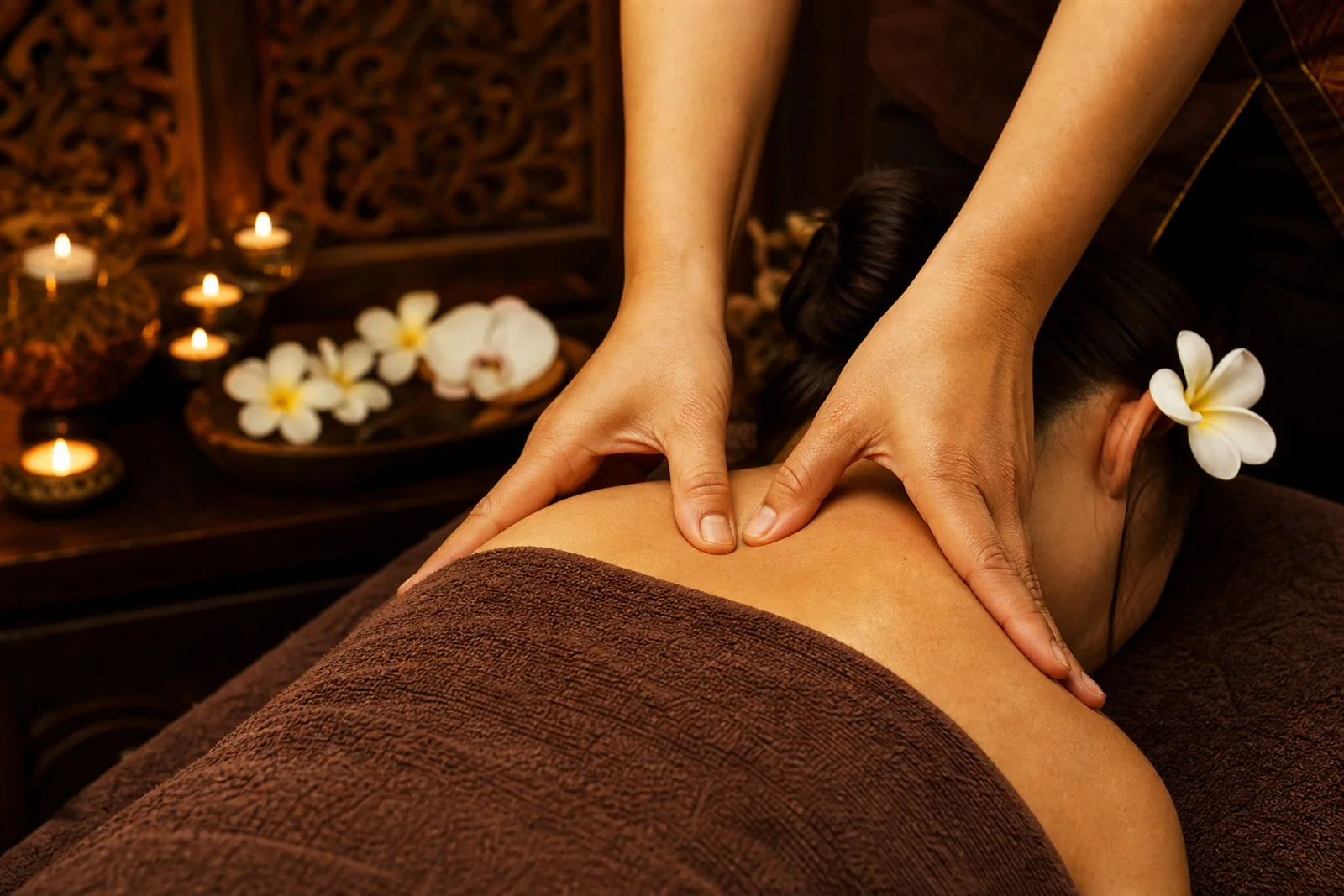
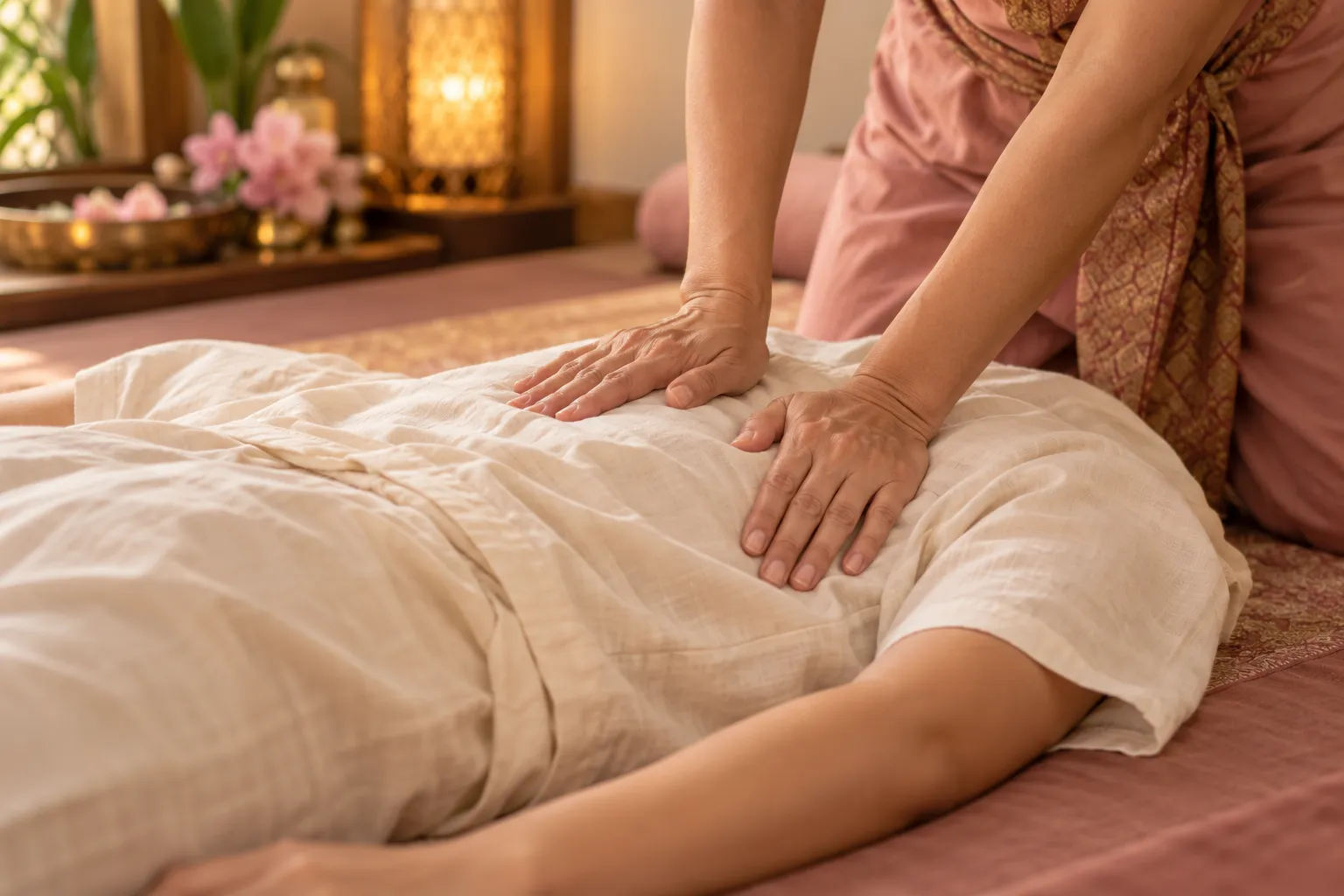
There are two reasons. First, the pressure goes through your clothing with palms, thumbs, forearms, knees and sometimes feet, in a press-and-release rhythm rather than a glide. Each point of contact is more distinct than a long oiled stroke, so you notice it more.
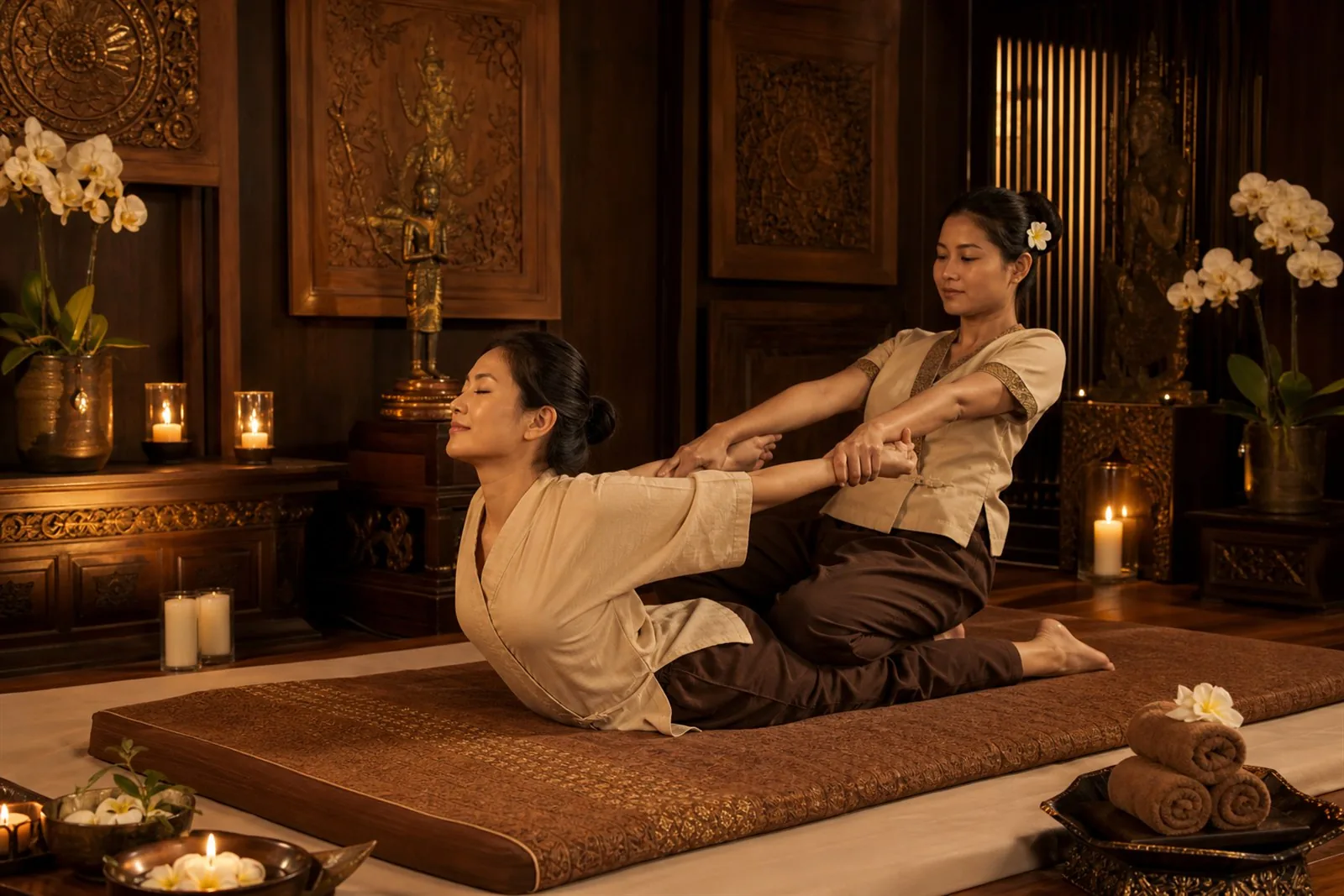
Second, there are stretches. Most of us only meet a strong stretch at the gym, under our own control. The first time someone else is holding it for you, even a moderate one can feel like a lot, simply because it is unfamiliar. Neither of these is a problem. They are what the treatment is. What matters is the quality of the sensation, and that is something you can learn to read in a single session.
There is an irony here, too. The people who stand to gain most from Thai massage are often the ones who find it most intense, because stiff hips and hamstrings make every stretch feel bigger. The answer is not to tough it out. Start gently, and let range come back over a few sessions; the same stretch tends to feel milder each time.
Is Thai massage painful, or just strong?
The most useful test with Thai massage is where you feel it.
Fine: breathe and let it work
- A strong, spreading ache in the middle of a muscle: calves, inner thighs, around the shoulder blades
- A stretch you feel along the length of the hamstring or across the front of the hip
- Tenderness that eases after a few slow breaths while the therapist holds the point
- A sense of release as a stretch lets go
Not fine: say so straight away
- Anything sharp, pinching or stabbing, especially in a joint such as the knee, hip, lower back or neck
- Tingling, numbness, or a sensation that shoots down an arm or leg
- A stretch you feel in the joint rather than the muscle
- Pain that makes you hold your breath, clench your jaw or brace against the therapist
Our guide to massage pressure covers the general rule: firm enough to feel, never so firm that you tense against it. Thai massage adds the joint test. Muscles can take a strong stretch; joints should never be pushed to their end point.
Your breath is the other giveaway. Breathing out slowly as a stretch deepens helps the muscle let go, and a good therapist will often lean in as you exhale. If you notice you have stopped breathing altogether, that is your cue to speak up, not to push through.
"The stretch you feel in the middle of the muscle is doing the work. If you feel it in the joint, tell us. That is the one we ease off."
Siri therapist team
The parts of a Thai massage that feel strongest
If you know what is coming, it is easier to relax into it. These are the moments that tend to feel most intense:
- Thumb work along the legs. Traditional Thai massage follows lines up the inside and outside of the legs, and the inner thigh and calf can be tender on anyone who sits, runs or stands a lot.
- Hip openers. Folding the knee across the body or out to the side reaches the deep muscles of the hip, which are tight in most people who sit for work.
- Back bends and twists. Only gentle versions, but if your spine is stiff they are a big sensation.
- Knee or foot pressure. In the traditional style a therapist may use a knee or foot on the legs or back to spread their weight. It sounds alarming and usually feels broader and softer than a thumb.
All of these can be made lighter, shorter, or left out altogether. You will not be the first person to ask, and the rest of the massage works just as well without them. Our guide to traditional Thai massage in Auckland walks through the full sequence if you would like to know the order in advance.
How to ask for lighter pressure or a gentler stretch
Be specific, and say it early. The first five minutes set the tone for the rest of the hour, and a therapist can adjust far more easily at the start than halfway through. Phrases that work well in a Thai massage:
- "Softer with the thumbs on my legs, please."
- "Less stretch on the hamstrings. They are very tight."
- "Please skip the back bends."
- "My left knee is sore, so go easy on that side."
- "That is a good level. Keep it there."
Mention anything relevant when you book as well, so your therapist can plan around it before you arrive. Nobody will think less of you for asking. A light Thai massage is still a Thai massage, and it still loosens you up.
Is it normal to be sore after Thai massage?
Some next-day tenderness is common, especially after a first session or if it has been a long time since you last stretched. It usually feels like the day after a new yoga or gym class: a dull ache in the thighs, hips or back that eases within a day or two and feels better for gentle movement.
Water, a warm shower and an easy walk all help, and our aftercare guide covers the rest. What is not normal: bruising, sharp pain, swelling, pain in a joint, numbness or tingling, or soreness that is getting worse after two days. If any of that happens, see your GP, and tell us so we can adjust next time.
Who should choose an oil massage instead
This is the honest limitation. Thai massage is an active treatment, and even at its lightest you will be moved, folded and stretched. If that is not what your body needs, a lighter pressure setting will not change it. A different treatment will.
Choose a gentle oil massage instead, and check with your GP, midwife or physiotherapist before booking anything, if you:
- have osteoporosis or know your bones are fragile. Strong stretches and body-weight pressure are not worth the risk
- are hypermobile, or have a joint replacement or a disc problem
- are recovering from an injury or recent surgery
- are pregnant. Siri does not offer a dedicated prenatal massage, so talk to your midwife first and phone the branch to discuss options
- find firm touch distressing, or simply want to lie still and be soothed
For most of these, aromatherapy massage is the kinder choice: blended essential oils, light-to-medium pressure, long slow strokes, and nothing is stretched. Tell your therapist about any condition when you book, whichever treatment you choose.
Booking a first Thai massage
If you are curious but nervous, book 60 minutes and ask for light pressure and gentle stretches from the start. You can always go firmer next time. Traditional Thai massage is $115 for 60 minutes at the Viaduct and $105 at St Heliers, and aromatherapy costs the same if you decide the oil route suits you better. Both spas are open seven days, 10.00am to 8.00pm.
Common questions
It should not. Thai massage can feel strong, with firm thumb pressure and deep stretches, but it should never feel sharp or pinching, or make you hold your breath. Tell your therapist straight away if it does and they will ease off.
A mild ache in the legs, hips or back for a day or two is common, much like after a new yoga class. Bruising, joint pain, numbness, or soreness that gets worse after two days is not normal. See your GP if that happens.
Yes. You set how strong the pressure is and how far each stretch goes, and any stretch can be eased or skipped. Say so at the start, and again whenever something feels like too much.
Aromatherapy massage: light-to-medium pressure with blended essential oils and no stretching. At Siri it costs the same as Thai massage, $115 for 60 minutes at the Viaduct and $105 at St Heliers.