A guest books "a Thai massage" expecting to lie under a towel while warm oil is worked into their back — and instead finds themselves fully clothed, being folded gently into a stretch. It is a very good treatment. It is just not the one they had in mind.
So before you book, the difference in one line each:
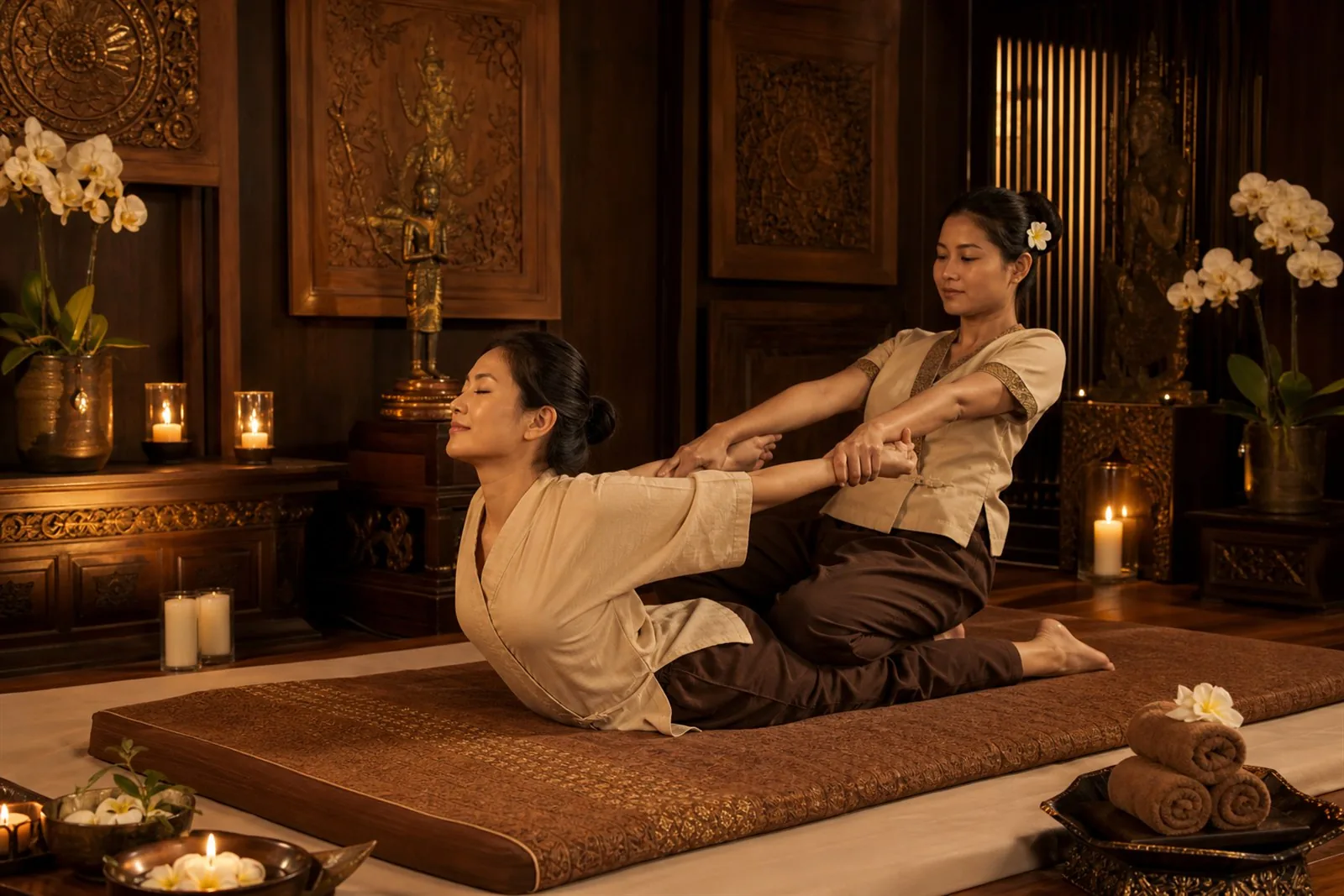
- Traditional Thai (yoga) massage — no oil, clothed, acupressure combined with assisted stretching. You are moved.
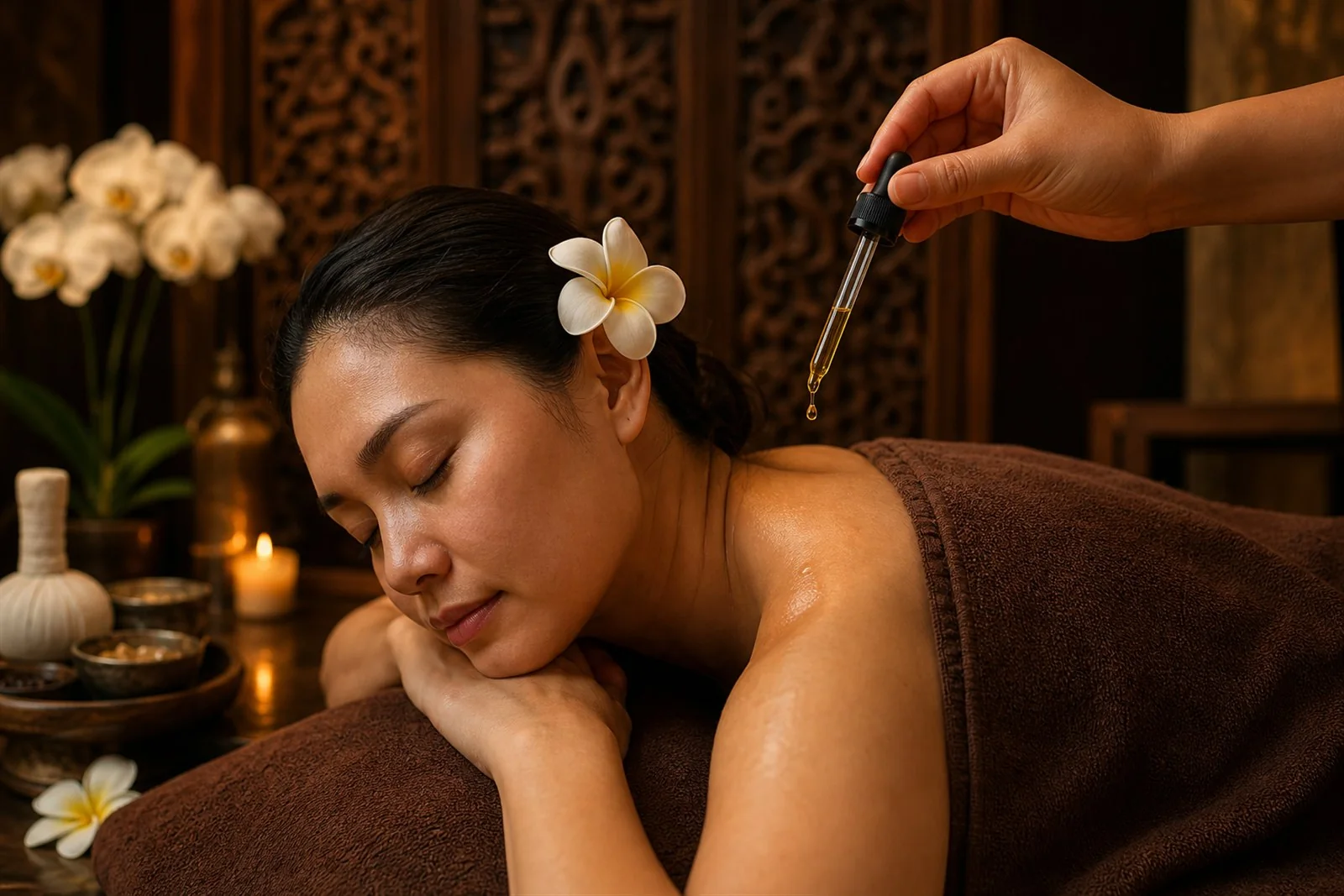
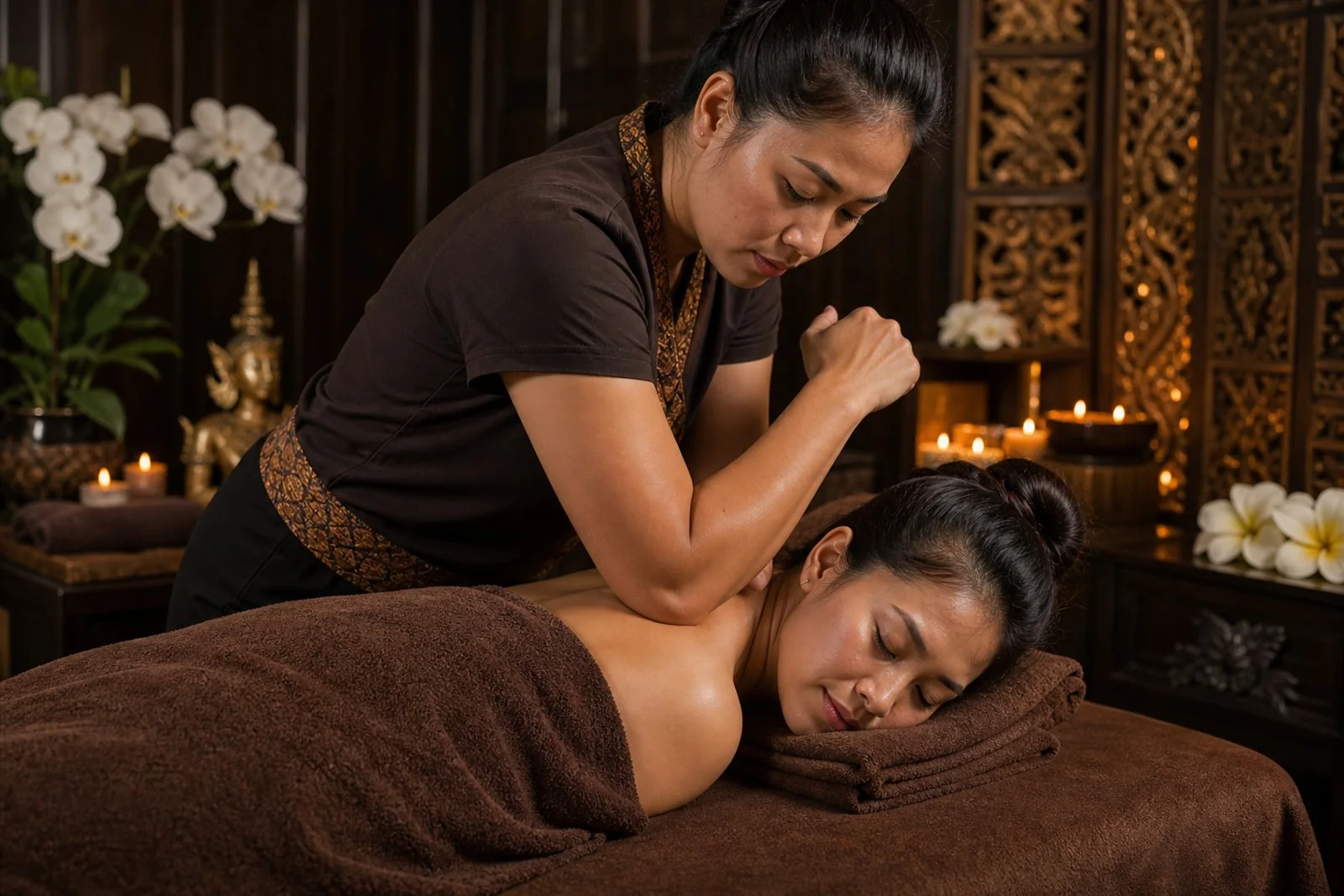
- Oil massage — aromatherapy, Swedish, deep tissue, warm coconut oil — under a towel, gliding strokes into the muscle. You are worked on.
Traditional Thai yoga massage, properly explained
Thai massage descends from a completely different tradition to western massage. Rather than kneading muscle, the therapist applies rhythmic compression along traditional energy lines using palms, thumbs, forearms, elbows and feet, and moves your limbs through a sequence of assisted stretches — hence the nickname "lazy person's yoga".
You stay clothed throughout, on a mat or a firm bed. The tempo is smooth and rocking rather than static, and you choose your preferred strength of pressure and stretch. On our menu it is associated with lower back pain, stiffness, headaches and stress.
Choose Thai if
- You feel stiff rather than sore — hips, hamstrings, shoulders that will not rotate
- You sit all day and never stretch
- You dislike oil, or dislike undressing for a treatment
- You want to leave feeling energised and mobile rather than sleepy
- You are curious about the tradition and want the real thing
Oil massage, and its four flavours
Oil massage covers the western-derived styles, all performed under towels with the guest undressed to their comfort level:
- Aromatherapy — gentle, flowing, blended essential oils. For stress, poor sleep and general depletion.
- Swedish — sweet almond oil, firm and invigorating, good for circulation and general tightness.
- Deep tissue — slower, firmer, into the deeper layers. For chronic tightness and physical work.
- Warm coconut oil — any style with warm coconut oil, softening for skin as well as muscle.
Choose oil if
- You are sore in a specific place and want it worked on directly
- You want to switch off completely and possibly fall asleep
- Your skin is dry and could use the treatment as much as your muscles
- You find stretching uncomfortable, or have joint issues
- It is your first massage and you want the familiar version
"Stiff, book Thai. Sore, book oil. That covers about ninety per cent of the decision."
Siri therapist team
Practical differences to know before you arrive
- Clothing — Thai is clothed, so wear loose clothing or change into ours. Oil massage means undressing to your comfort under a towel.
- Afterwards — no oil on your skin after Thai, so it works far better in a lunch break or before an appointment.
- Energy — most people leave Thai feeling awake and lengthened, and leave an oil massage feeling soft and sleepy. Choose according to what happens next in your day.
- Noise — Thai massage involves being moved around; it is an active treatment, not a silent one.
The honest limitations
Traditional Thai is not for everyone. If you have osteoporosis, disc problems, hypermobility, recent surgery, joint replacements, are pregnant, or have any injury that makes being moved risky, tell us when you book — and check with your GP or physiotherapist first. Stretching a body that should not be stretched is a real way to make things worse.
Equally, oil massage will not restore range of movement the way assisted stretching does. If your problem is genuinely stiffness rather than tension, an oil massage will feel lovely and change very little by Wednesday.
Prices — identical, so choose on merit
- Viaduct — 30 mins $65 · 60 mins $115 · 90 mins $165 · 120 mins $220
- St Heliers — 30 mins $60 · 60 mins $105 · 90 mins $145 · 120 mins $195
Both traditional Thai and all four oil styles sit at the same price at each spa, so the only question is what your body needs this week. If you still cannot decide, phone the branch — or read our first-visit guide and book 60 minutes of aromatherapy, which is the safest excellent first choice.
Common questions
Traditional Thai massage is done fully clothed without oil, combining acupressure with assisted yoga-style stretching. Oil massage — aromatherapy, Swedish, deep tissue or warm coconut oil — is done under towels with gliding strokes worked into the muscle.
No. Your therapist works within your range and you choose the strength of both the pressure and the stretch. Tell us about any joint problems, injuries or hypermobility when you book.
Both help, differently. If your back feels stiff and locked, traditional Thai stretching tends to give more relief; if it feels sore and knotted, an oil massage worked directly into the muscle is the better booking.
Yes — at the Viaduct both are $65 for 30 minutes, $115 for 60, $165 for 90 and $220 for 120. At St Heliers, $60, $105, $145 and $195.