The most common thing a first-time guest says, about four minutes in, is: sorry, I've never done this before. There is nothing to apologise for. But there is a small amount of information that makes the first visit dramatically easier, and almost none of it is on a spa menu.
So here it is, in the order you will actually need it.
Before you book: choose the treatment honestly
The mistake is picking the most impressive-sounding treatment. Pick the one that matches your problem instead. If you are tense and tired, book aromatherapy massage. If you are physically sore from work or training, book deep tissue. If your neck and shoulders are the whole issue, book a back and shoulder massage and let the therapist spend the entire time there.
If you genuinely do not know, phone us. Viaduct: 027-722-6564. St Heliers: 027 654 6642. Thirty seconds on the phone beats an hour of the wrong treatment. Our comparison of traditional Thai versus oil massage covers the biggest fork in the road.
How long to book
- 30 minutes — one area only. A lunch-break neck-and-shoulders. Not a full body treatment, despite what you may be hoping.
- 60 minutes — the standard first booking. Covers the body properly without a big commitment.
- 90 minutes — what most people wish they had booked. Time for the therapist to return to problem areas rather than pass over them once.
- 120 minutes — an occasion.
What to wear
Whatever you arrived in. Come as you are — spas are not formal, and you will not be underdressed. Two small things help: leave heavy jewellery at home, and tie long hair up if you would rather it stay out of the oil.
One exception. Traditional Thai (yoga) massage is performed clothed and involves stretching, so loose clothing is better — or we will give you spa clothes to change into.
The undressing question
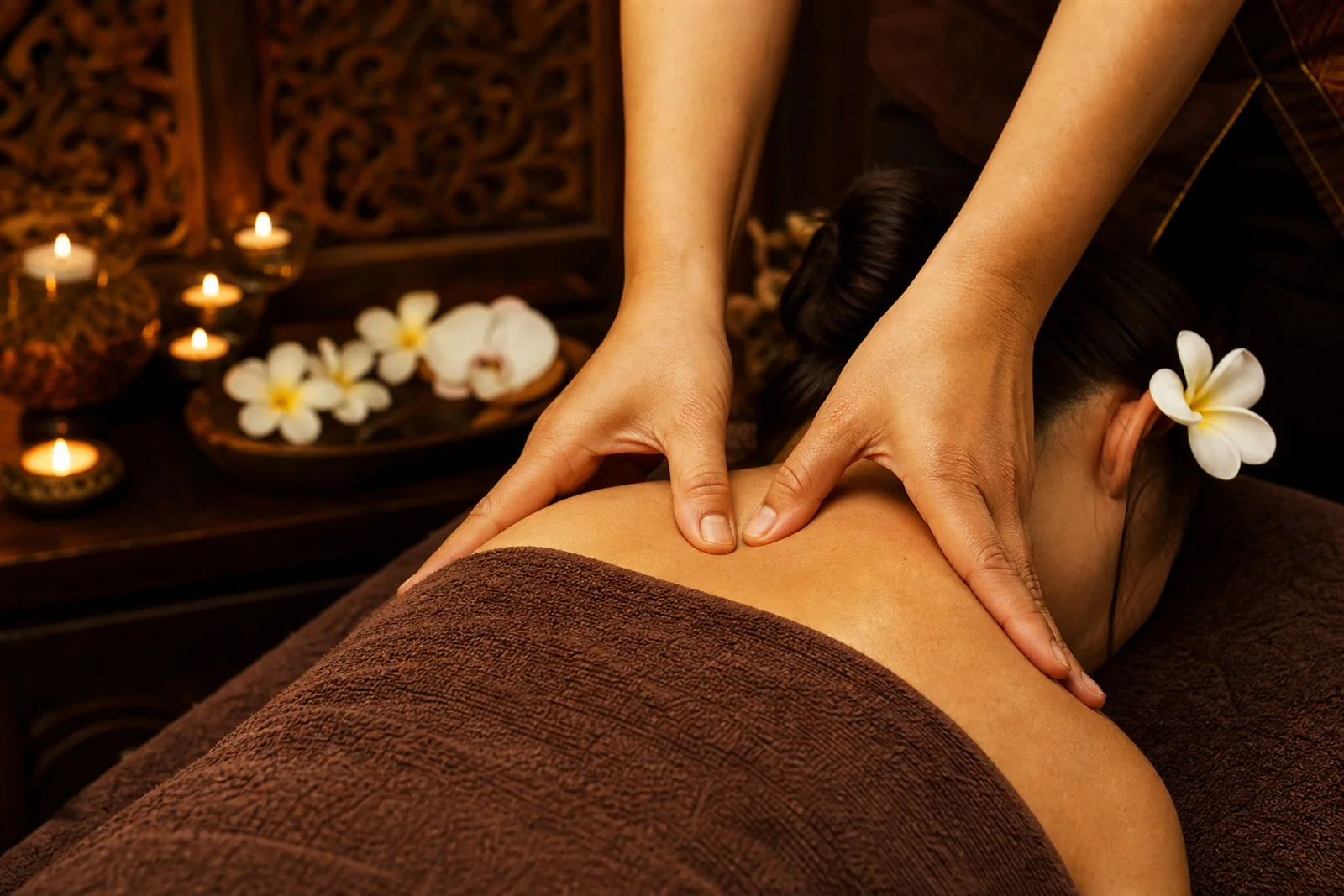
The honest answer: undress to whatever level you are comfortable with, and no further. Most guests keep underwear on for oil massage. Your therapist leaves the room while you get under the towel, knocks before returning, and you stay covered for the entire treatment — only the section being worked on is uncovered at any moment. Nobody is assessing you. This is the least interesting part of your therapist's day.
Arrive ten minutes early
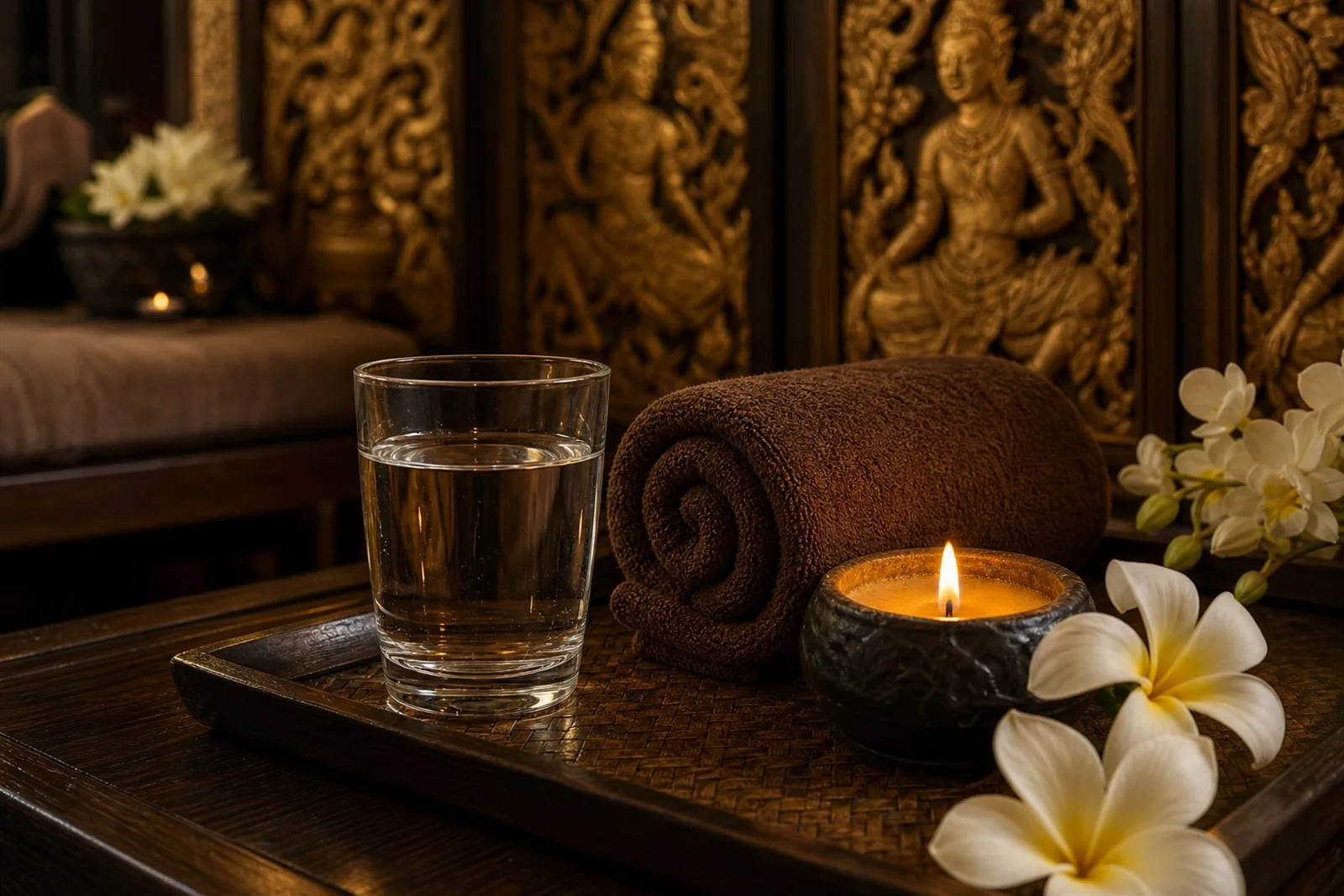
Not for paperwork — for your nervous system. Ten minutes of sitting still, drinking a glass of water and stopping is the difference between a massage that starts working at minute five and one that starts working at minute twenty. Arriving late does not extend your session; it shortens it.
"The guests who get the most out of a first massage are simply the ones who tell us the truth at the start. Where it hurts, how firm, and what they hate."
Siri therapist team
What to tell your therapist
- Where you actually hurt — point at it. Vague is unhelpful.
- Your pressure preference — light, medium or firm. If you do not know, say medium and adjust in the first five minutes.
- Anywhere off-limits — feet, stomach, scalp, a recent bruise. No explanation needed.
- Anything medical — pregnancy, recent surgery, injuries, high or low blood pressure, heart conditions, diabetes, skin conditions, blood thinners. This is not admin; it changes what is safe. If you are under medical care, check with your doctor before booking.
- Whether you want to chat — "I'd like to be quiet" is a completely normal and welcome sentence.
During: the things nobody warns you about
- Your stomach may gurgle. That is your body switching out of stress mode. It is a good sign, not an embarrassing one.
- You might fall asleep. Fine. Common. Snoring included.
- You can change your mind. "A bit lighter, please" is allowed at any point, including minute fifty-eight.
- You can ask to stop. Rare, but always allowed.
Our guide to massage pressure explains why speaking up is genuinely more useful to your therapist than politeness.
Afterwards
Get up slowly — you will be more relaxed than you feel. Drink water, keep warm, and avoid a heavy gym session that evening. The full aftercare guide covers the rest, including the two common mistakes that undo the treatment.
On tipping: New Zealand is not a tipping country, and it is not expected here. A rebooking, or telling a friend, is worth considerably more to us.
Practical details
- Viaduct — 1B/124 Customs Street West, Auckland 1010 · 027-722-6564
- St Heliers — 417A Tamaki Drive, St Heliers, Auckland 1071 · 027 654 6642
- Hours — both open 7 days, 10.00am to 8.00pm
- Public holidays — closed Good Friday, Christmas Day, Boxing Day, New Year's Day, and ANZAC Day until 1.00pm; a 15% surcharge applies on public holidays
Still deciding between the two? Here is how to choose between our Viaduct and St Heliers spas.
Common questions
No. Undress only to the level you are comfortable with — most guests keep underwear on. You are covered with towels the whole time and only the area being worked on is uncovered. Traditional Thai yoga massage is done fully clothed.
Sixty minutes is the standard first booking. Thirty minutes only covers one area, and ninety is what most people wish they had chosen.
Tipping is not expected in New Zealand and there is no obligation at either of our spas.
Say so, immediately and at any point in the treatment. Your therapist would far rather adjust at minute five than find out afterwards that you spent an hour uncomfortable.