Two people book a massage on the same evening, and both describe their back as "tight". One cannot bend to pick something off the floor without the whole back moving as a single block. The other has one spot under the right shoulder blade that has ached since the end of last month. They need different treatments.
Here is the Thai massage vs deep tissue difference in a sentence. Thai massage works the whole body in motion: clothed, no oil, rhythmic pressure and assisted stretching. Deep tissue massage keeps you still and works slowly into the deeper layers of particular muscles, with oil, under a towel. So the choice is less about how hard you want it and more about whether your problem is movement or a spot.
Thai massage vs deep tissue at a glance
- Clothing. Thai: fully clothed, in loose clothes. Deep tissue: undressed to your comfort, under a towel.
- Oil. Thai: none. Deep tissue: yes.
- Technique. Thai: press-and-release acupressure plus assisted stretches. Deep tissue: slow, sustained pressure into the deeper muscle and the fascia around it.
- Tempo. Thai: flowing and rhythmic, with frequent changes of position. Deep tissue: slow, with long pauses on tight areas.
- Focus. Thai: the whole body, feet to head. Deep tissue: the areas you name.
- Afterwards. Thai: lengthened and awake. Deep tissue: well worked, sometimes tender for a day or two.
- Price at Siri. Identical: 60 mins $115 at the Viaduct, $105 at St Heliers.
How a Thai massage works
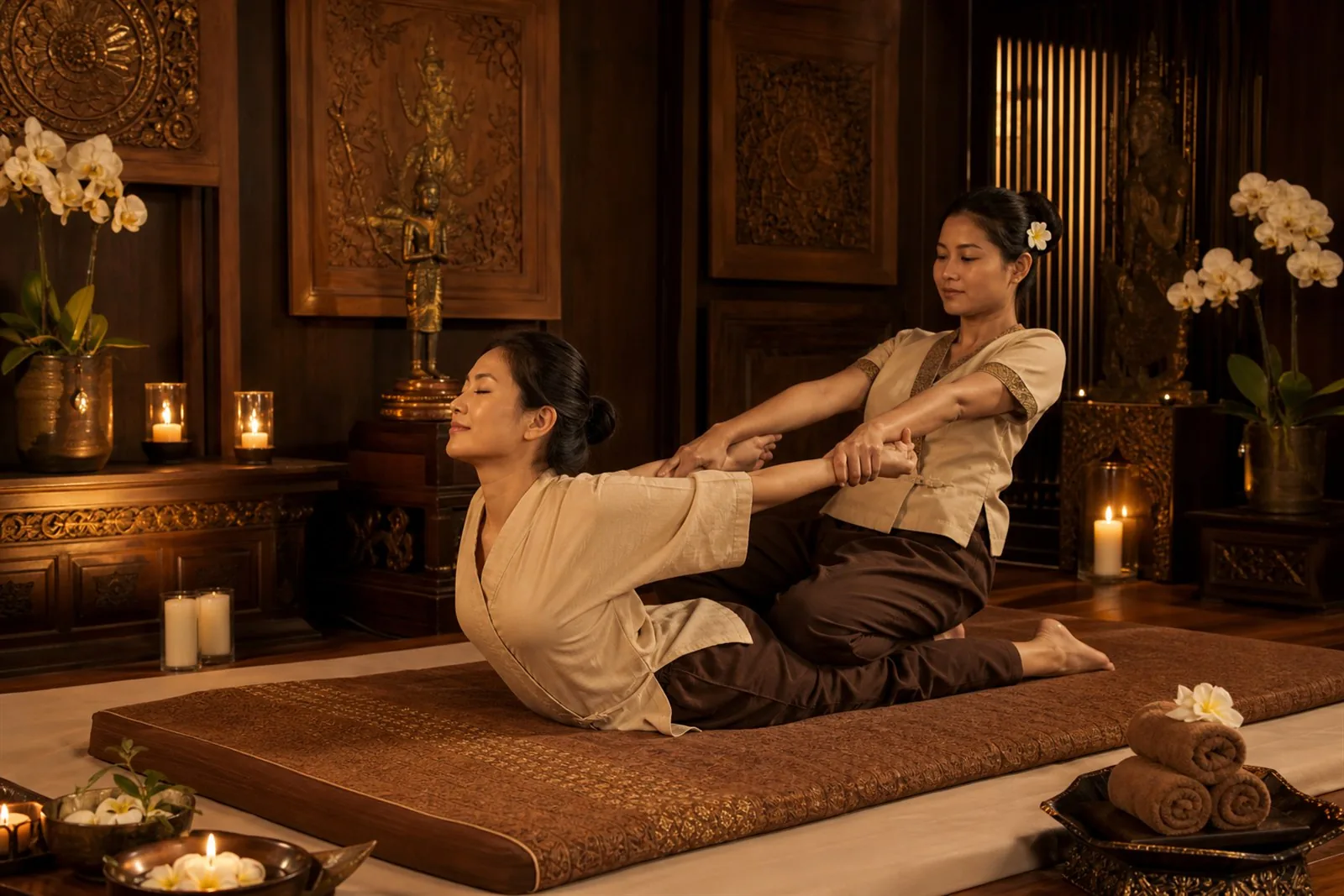
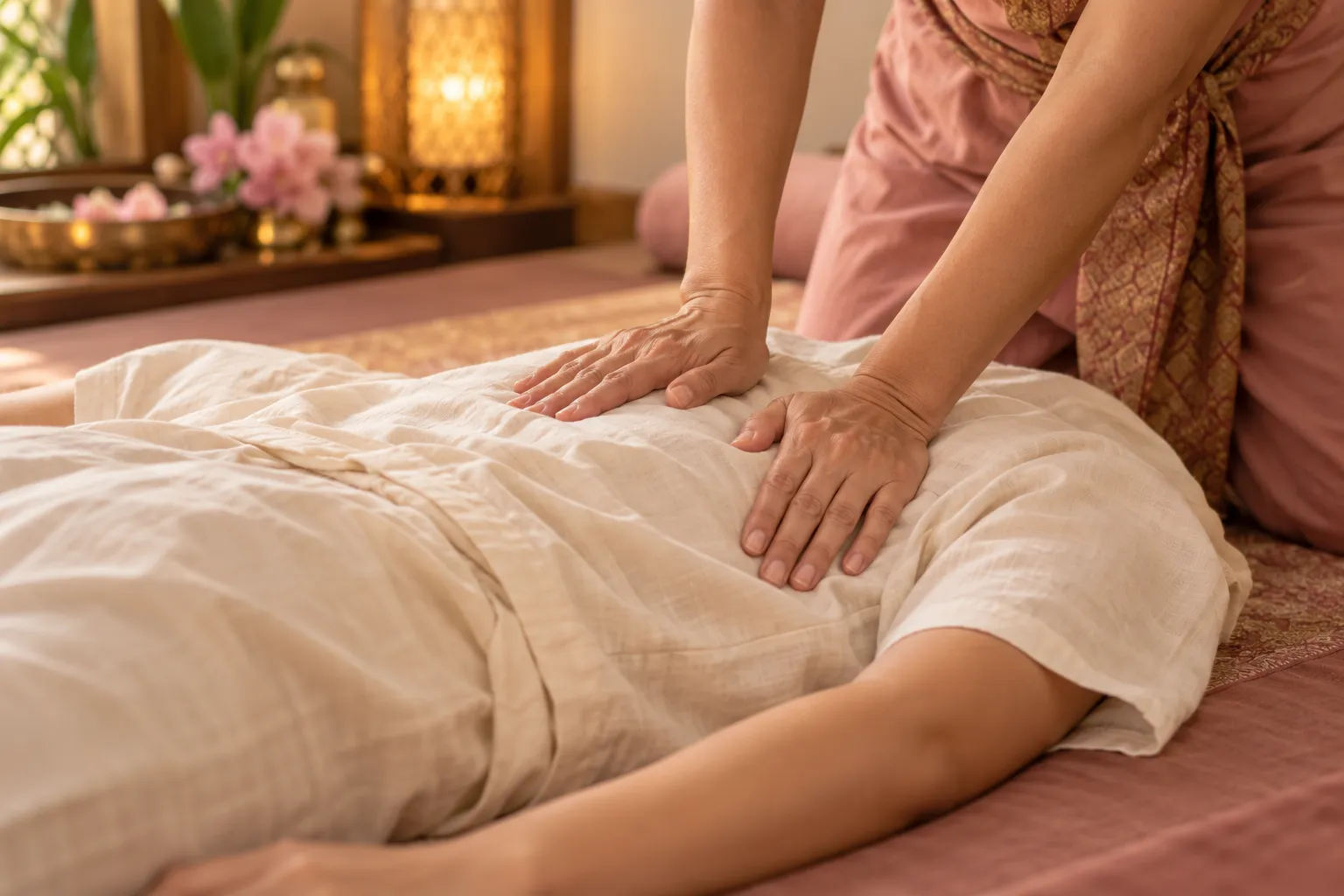
Traditional Thai massage moves you. The therapist uses palms, thumbs, forearms and body weight in a steady rhythm along the lines of the body, then lifts, folds and rotates your arms and legs through a series of stretches. Much of the time goes on the legs, hips and back, and you will change position several times: on your back, on your side, face down, and often sitting up at the end.
Because the stretch is held for you, muscles can lengthen without bracing. The result is less about any single knot and more about the whole chain (hips, hamstrings, lower back, shoulders) moving more freely. Our piece on the benefits of Thai massage goes into what people commonly notice in the days afterwards.
How a deep tissue massage works
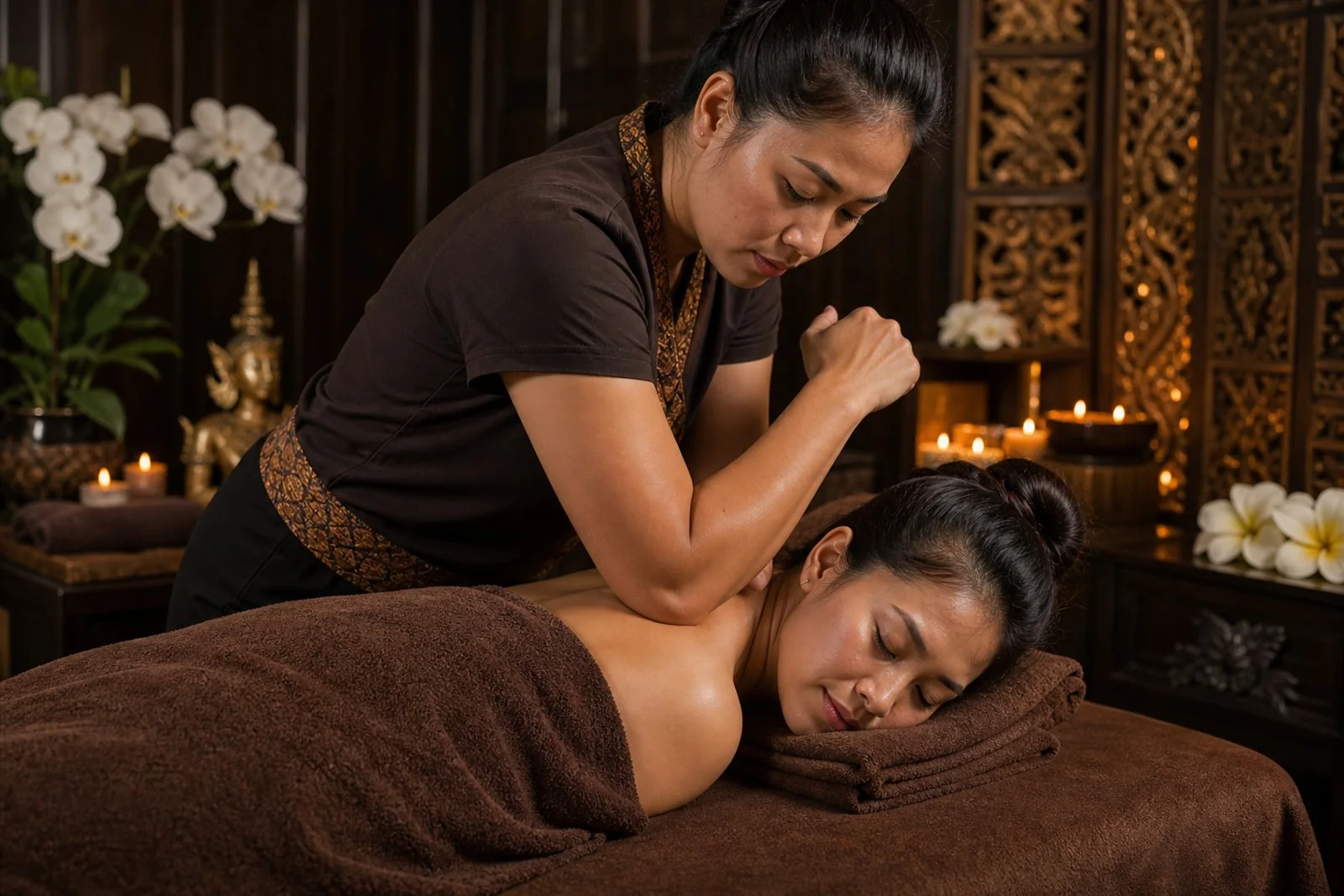
Deep tissue massage, listed on our menu as sport massage too, keeps you on the table and goes slowly. The therapist uses oil, firmer pressure and long, sustained strokes, sinking gradually into the deeper muscle layers and the fascia around them, and staying on tight areas until they soften. You set the agenda: name the spots and that is where most of the time goes. Expect the area to be warmed with broader strokes first; the depth arrives gradually over several minutes, not with the first press.
It is the better tool for tightness that builds from repetitive load: the mouse-side shoulder, a runner's calves, a lower back that lifts things all day. Our therapist's notes on deep tissue and sport recovery cover when firm work helps and how to time it around training.
Which one suits you
Choose Thai massage when
- the problem shows up when you move: reversing the car, bending down, reaching overhead
- it feels as if the whole back of your body has shortened, not one point
- you have been sitting for weeks and have not stretched since
- you have a busy afternoon ahead and want to leave clothed, oil-free and alert
Choose deep tissue when
- you can put a finger on the spot
- the same knot keeps coming back in the same place
- you train hard or do physical work, and the tightness follows the load
- you like firm pressure and know you can stay relaxed under it
"If you can point to it with one finger, book deep tissue. If you need your whole hand to show us, book Thai."
Siri therapist team
Intensity does not settle it either way. Both can be firm, and in both you choose the strength. The difference is where the intensity goes: in Thai it comes through stretches and broad pressure spread over the whole body; in deep tissue it is concentrated, slow and specific.
How you feel afterwards
This is worth planning around, because the two leave you in quite different states.
After a Thai massage, most people feel longer and lighter, with more spring in their step than they arrived with. There can be a mild ache in the hips or thighs the next day, much like after a first yoga class, but it rarely gets in the way. It suits a lunch break, a weekend morning, or an evening when you still have plans.
After deep tissue, the worked areas can feel tender, almost bruised, for a day or two before they feel freer. That is normal after firm work, as long as it eases rather than builds. Book it when you can take things easy afterwards, not the day before a race or a heavy training session. With either, drink water and keep warm; our aftercare guide covers the rest.
When to choose neither
Sometimes the honest answer is that both are too much. If you are run down, sleeping badly or coming off a stressful few weeks, your body is not asking for stretches or firm pressure. It is asking to be left alone for an hour. Book aromatherapy massage instead: gentle, slow strokes with blended essential oils, at the same price.
If you want oil and some firmness but not the full depth, Swedish massage sits in between: full body, firm and brisk, with sweet almond oil.
And neither is right on a fresh injury. Deep tissue is a vigorous technique. A US National Institutes of Health guide to massage therapy notes that serious side effects from massage are rare, and that some reported cases involved vigorous techniques such as deep tissue massage, or people at higher risk of injury such as older adults. Thai stretching on a recently injured joint carries its own risk. If you have a recent strain or sprain, numbness or pins and needles, osteoporosis, recent surgery, or are pregnant, see your GP, midwife or physiotherapist first, and tell us when you book.
Alternating the two
You do not have to pick a side for good. If you sit all week and also train, a sensible pattern is to alternate: Thai one visit to keep the hips and hamstrings moving, deep tissue the next for the spot that keeps returning. Within a Thai massage you can also ask for a little extra time on a sore area. It will not be deep tissue, but it helps.
Keep notes on what worked, too. "The hip stretches made the biggest difference" or "the work under my shoulder blade lasted a week" is exactly the briefing that makes the next booking better.
Same price, so choose for your body
At Siri, traditional Thai and deep tissue cost exactly the same at each branch, so the decision never has to be about budget.
- Viaduct, Auckland CBD: 30 mins $65 · 60 mins $115 · 90 mins $165 · 120 mins $220
- St Heliers: 30 mins $60 · 60 mins $105 · 90 mins $145 · 120 mins $195
For a first try of either, 60 minutes is right. Thirty minutes suits deep tissue on a single problem area better than it suits Thai, which needs time to work through the body. Book 90 for deep tissue with more than two problem areas, or for Thai with time for the full sequence. Still unsure? Phone the branch (Viaduct 027-722-6564, St Heliers 027 654 6642), describe where it hurts and when, and let the team point you to the right one.
Common questions
Thai massage is done clothed without oil, using rhythmic acupressure and assisted stretches across the whole body. Deep tissue uses oil and slow, sustained pressure into the deeper muscle layers of specific areas, with you lying still under a towel.
Neither should be painful. Deep tissue tends to feel more intense on specific spots, while Thai can feel strong in the stretches. In both you choose the pressure and should be able to breathe normally throughout.
If your back feels locked and moves as one block, many people find Thai stretching helps more. If there is one knot you can point to, deep tissue is the better booking. After an injury, or with numbness or leg weakness, see a GP or physiotherapist first.
Yes. At Siri's Viaduct spa both are $65 for 30 minutes, $115 for 60, $165 for 90 and $220 for 120. At St Heliers both are $60, $105, $145 and $195.