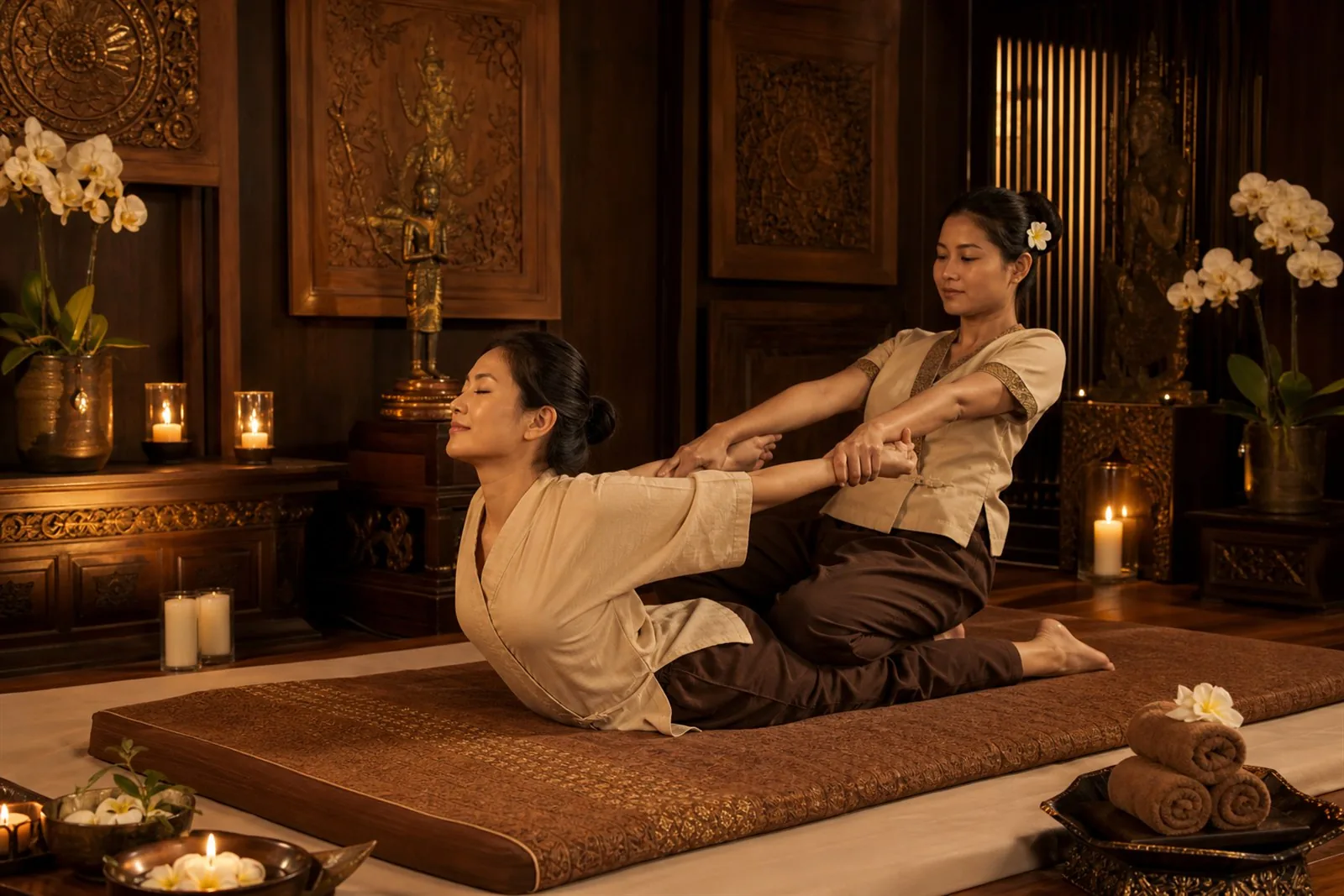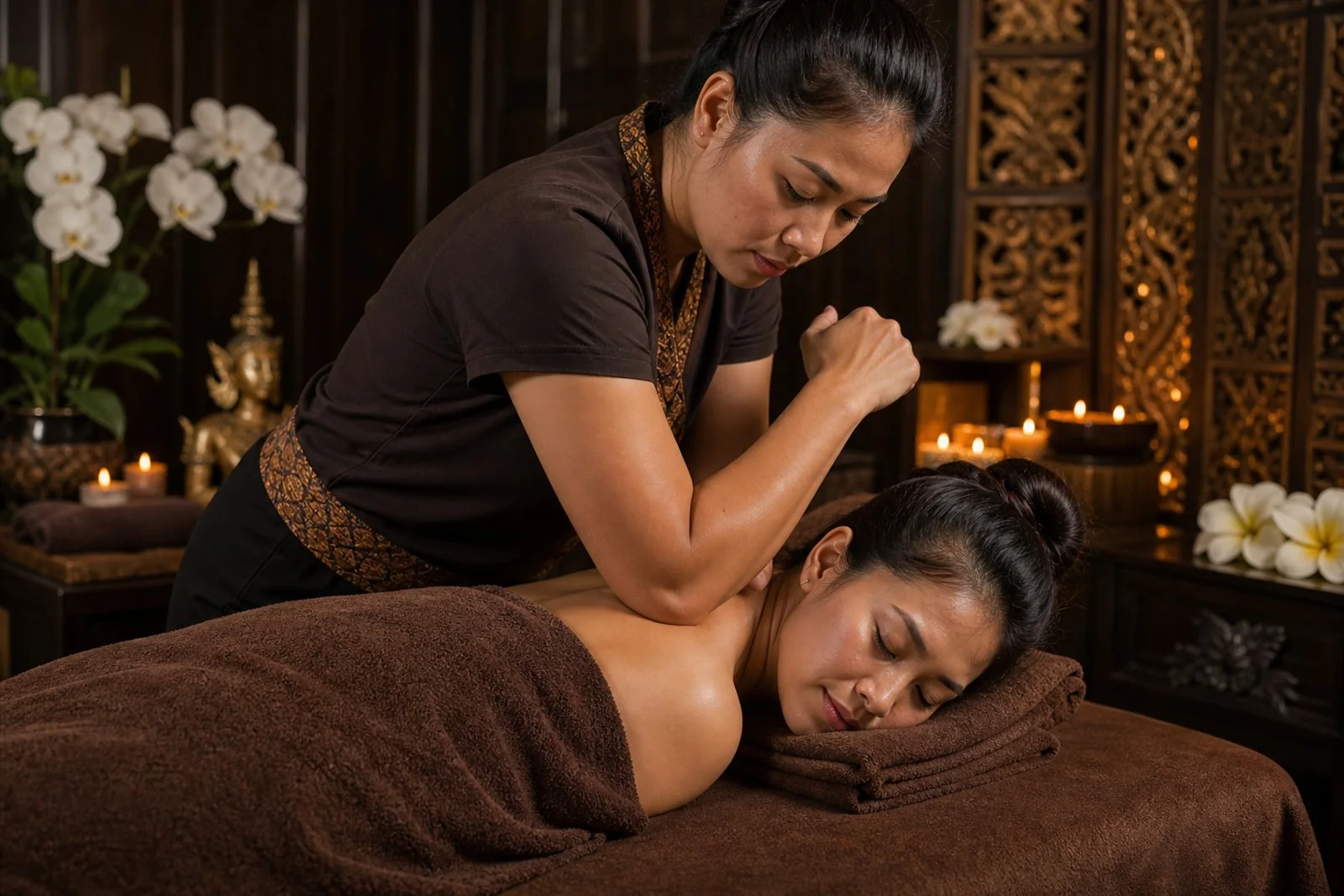
Swedish massage is the one most people picture when they hear the word massage: a quiet room, a towel, warm hands and long strokes running the length of the back. It is the backbone of western massage, and the first oil massage many people ever book.
Siri's version keeps that shape and adds something. It blends western strokes with Thai massage technique, uses sweet almond oil, and sits on the firm, invigorating side rather than the gentle one. If you want a Swedish massage in Auckland that leaves you loosened and awake rather than half asleep, this is the one. It is on the menu at the Viaduct and St Heliers, from $60 for 30 minutes.
What is Swedish massage?
Classic Swedish massage is built from a small set of strokes, used in a loose order and repeated as the therapist moves around the body:
- Long gliding strokes (effleurage) to spread the oil, warm the tissue and link one area to the next
- Kneading (petrissage): lifting, rolling and squeezing the muscle, the stroke that does most of the loosening
- Friction: small, firmer circles with the thumbs or fingertips over tight spots
- Rhythmic tapping (tapotement): light, quick percussion, often used to wake an area up
- Finishing strokes that slow everything back down before the therapist moves on
At Siri, those western strokes are blended with Thai technique, which is why our Swedish is firmer and more invigorating than you might expect. It is a full-body treatment aimed at getting the circulation going, releasing tight muscles and leaving you revitalised.
Why sweet almond oil
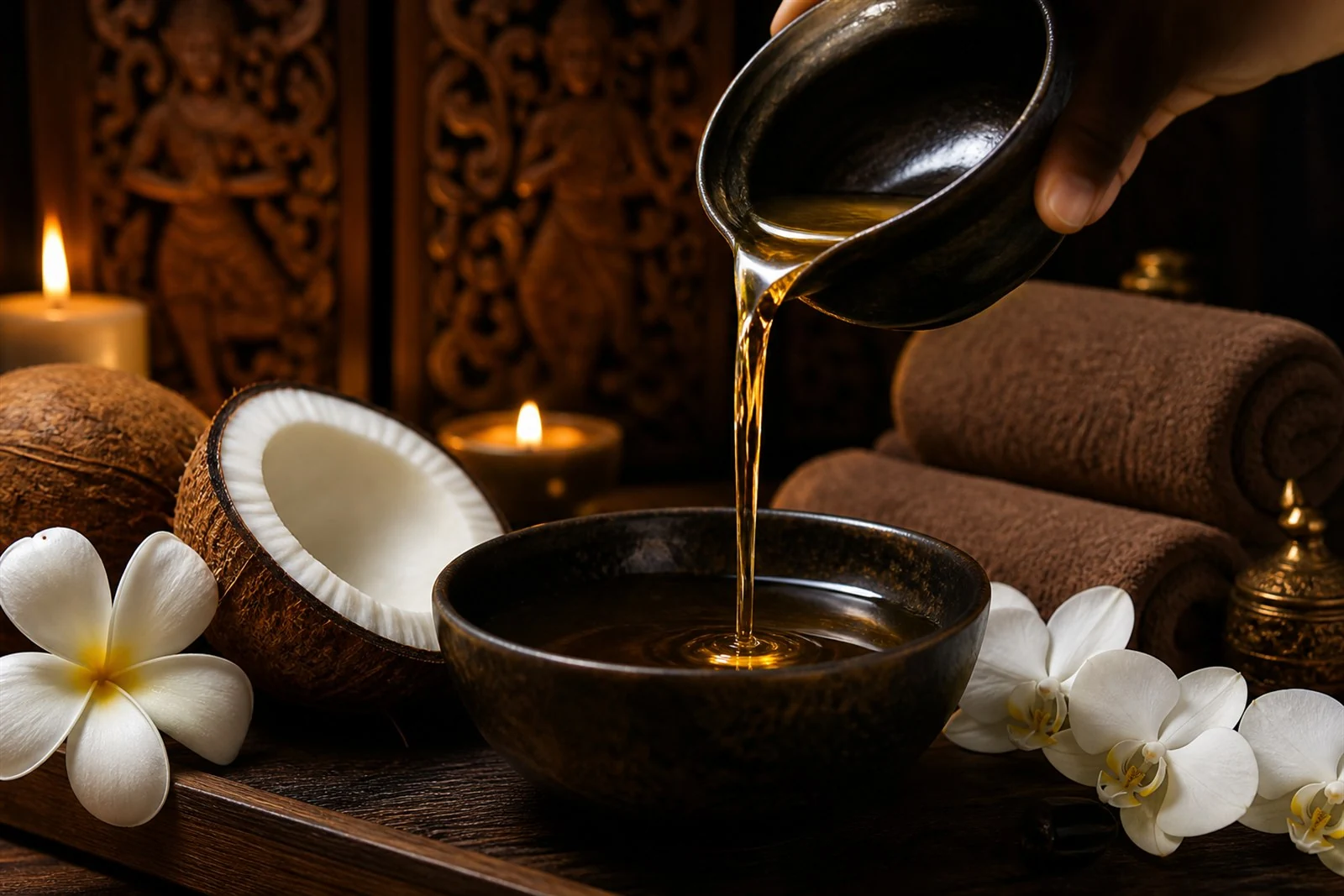
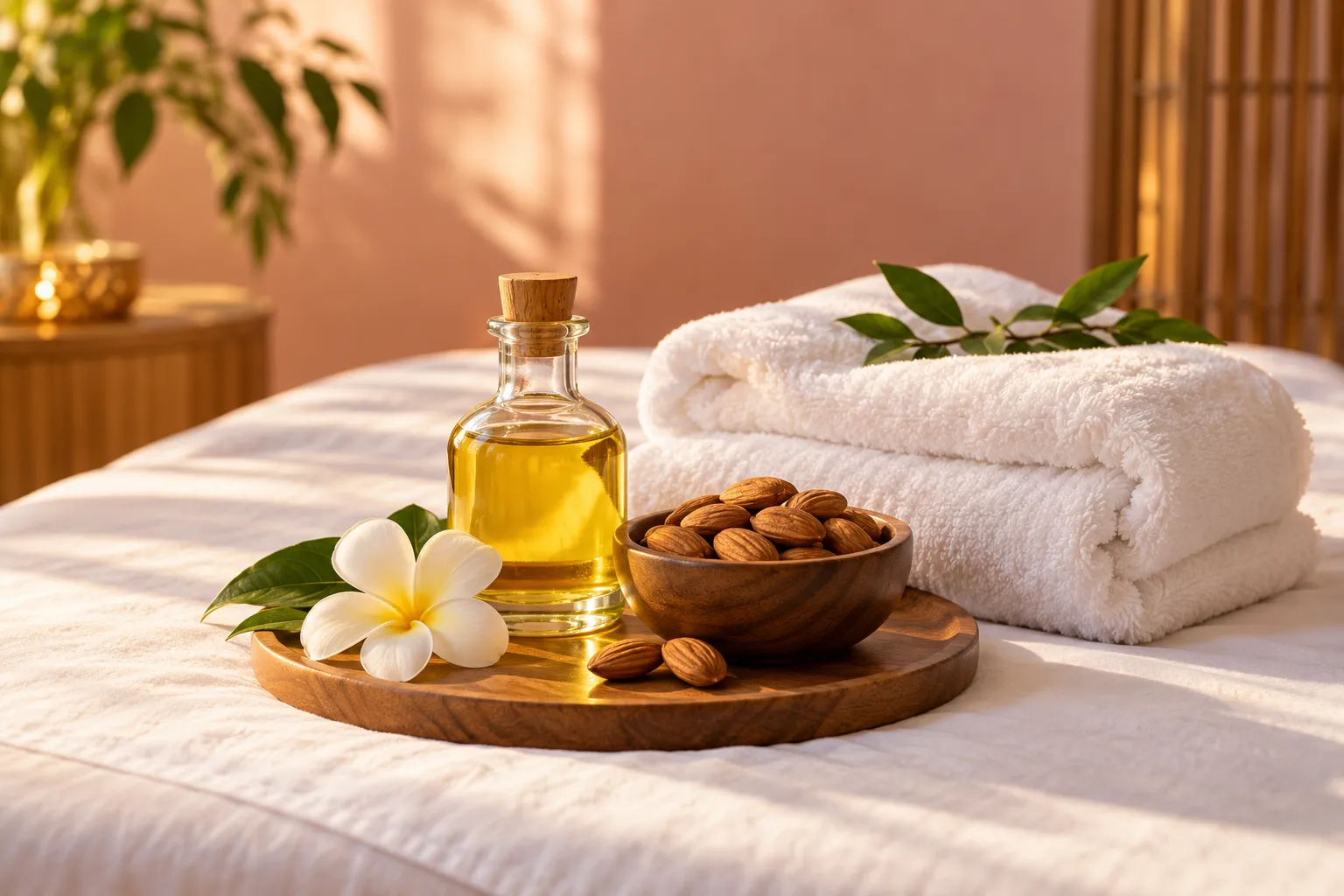
The oil is part of how the massage works, not decoration. Sweet almond oil is lighter than the warm coconut oil on our menu, so the therapist can work at a brisker pace and with firmer pressure without dragging on the skin. That is what makes the strokes feel continuous even when the pressure is high.
It is also what separates Swedish from our other oil massages. Warm coconut oil is richer and slower-moving, chosen for comfort and skin. Aromatherapy uses blended essential oils, chosen for calm. Almond oil is the working oil of the three.
Before you book: Sweet almond oil comes from almonds, and Healthify lists almonds among the tree nuts that are a main cause of food allergy in New Zealand. If you have a nut allergy or very reactive skin, tell us when you book and ask whether a different oil or a different massage style would suit you better. If your allergy is severe, check with your GP first.
Who Swedish massage suits
Our menu describes Swedish as ideal for people who do light-to-medium workouts and sport, or who work in physically demanding jobs. In practice, that covers a good share of Auckland:
- the weekend runner, gym-goer or netball player who is tight but not injured
- anyone on their feet all day: retail, hospitality, nursing, the trades
- a first oil massage, for someone who wants more than gentle
- guests who find deep tissue too much but feel short-changed by a light massage
- the day or two before a big event, when you want to feel loose without being sore. Our deep tissue recovery notes explain why Swedish is the better booking that close to a race
What a Swedish massage at Siri is like
You undress to your comfort and lie under a towel, which stays in place except over the part being massaged. A full-body session usually starts face down, with the back and shoulders, then the backs of the legs, before you turn over for the fronts of the legs, the arms, shoulders and neck.
The pace is steady rather than slow. The pressure should feel firm, a good solid working pressure, but without the slow, sinking depth of deep tissue. If it is more than you want, say so in the first few minutes. Our guide to massage pressure has simple phrases for it.
"Swedish should feel like a brisk walk for your muscles, not a nap. You get up warm and loose, ready to go to dinner."
Siri therapist team
Sixty minutes covers the whole body once. Ninety gives your therapist time to come back to the shoulders or calves after the full pass, and it is the length to choose if you train. Thirty minutes is enough for the back and shoulders only.
Afterwards, the almond oil leaves a light film on the skin. Most people simply dress and shower later in the day, but if you are heading back to work, tie long hair up before you start and allow a few minutes to get yourself together.
Swedish massage benefits: what many guests notice
Our menu describes Swedish as designed to stimulate circulation, release tight muscles, ease aches and revitalise the body. In plainer terms, this is what many guests notice when they get up:
- Warmth. Brisk strokes and kneading bring heat into the muscles, and it tends to linger for a while afterwards.
- Looser, lighter limbs. The legs especially, after a week on your feet or a weekend of sport.
- Shoulders that sit lower. The upper back and neck get generous time in a full-body session.
- Energy rather than drowsiness. The brisker rhythm tends to leave people alert, which makes Swedish a good daytime or pre-dinner booking.
None of that is a medical claim. It is simply a well-made full-body massage doing what a well-made full-body massage does.
Getting the most from a Swedish massage
- Name your two worst areas at the start, so your therapist can give them extra time inside the full-body pass.
- Say if you dislike the tapping. Some people find percussion more irritating than relaxing, and it is an easy thing to ask your therapist to leave out.
- Ask for more legs and less back, or the reverse, if that is where you are tight. The hour is yours to divide.
- Drink water and stay warm afterwards. Warm muscle stays loose for longer, and a cold walk to the car undoes more than you would think.
Swedish vs deep tissue vs aromatherapy
All three use oil, all three cost the same at each branch, and they are easy to mix up. The quickest way to choose is by how you want to feel when you get up:
- Swedish: firm and brisk, full body, sweet almond oil. For general tightness and active bodies. You leave loosened and awake.
- Deep tissue: slower and firmer, aimed at the deeper muscle layers in the areas you name. For stubborn knots and heavy training. You may be tender the next day.
- Aromatherapy: gentle and flowing, blended essential oils, light-to-medium pressure. For stress and poor sleep. You leave calm and sleepy.
If you would rather skip oil entirely, traditional Thai massage is done clothed and loosens you through stretching instead.
The honest limitation
Swedish is firm, but it is not deep. If you have one stubborn knot that has been there for months, long strokes will ease the area around it without truly getting to it. Book deep tissue and point at the spot. And if you are exhausted rather than tight, Swedish may be a little brisk for that week; aromatherapy is the kinder choice.
If you are pregnant, or have a heart condition, high blood pressure, a skin condition, a recent injury or recent surgery, check with your GP or midwife first and tell us when you book.
Swedish massage in Auckland: prices and booking
- Viaduct, Auckland CBD: 30 mins $65 · 60 mins $115 · 90 mins $165 · 120 mins $220
- St Heliers: 30 mins $60 · 60 mins $105 · 90 mins $145 · 120 mins $195
Both spas are open seven days, 10.00am to 8.00pm, and a 15% surcharge applies on public holidays. Book Swedish massage at the Viaduct if you are in the city, or Swedish massage at St Heliers if you are closer to the eastern bays.
Common questions
A full-body oil massage built on long gliding strokes, kneading and friction. At Siri it blends western and Thai technique with sweet almond oil, and sits on the firm, invigorating side.
No. Swedish is firm and brisk across the whole body, while deep tissue is slower and firmer, focused on the deeper muscle layers in the areas you name. Both cost the same at Siri.
At Siri's Viaduct spa in the CBD: $65 for 30 minutes, $115 for 60, $165 for 90 and $220 for 120. At St Heliers: $60, $105, $145 and $195.
Our Swedish massage uses sweet almond oil, and almonds are a tree nut. Tell us when you book and ask whether another oil or style would suit you. If your allergy is severe, check with your GP first.