It tends to announce itself on something small. Bending to pick a sock off the floor, lifting the washing basket, getting out of the car after forty minutes on the motorway. And there it is: a dull, deep band across the base of the spine that takes a few steps to walk off.
For that kind of everyday ache (stiff, tight, sore, but not injured), massage for lower back pain is something many people find genuinely eases it, alongside staying active. The short answer on which treatment: deep tissue massage for a deep, familiar ache that has built up over months; traditional Thai massage when it feels stiff and stuck rather than sore; hot stone when the whole area is guarded and tender. Book at least 60 minutes, because the lower back rarely works alone.
Why the lower back is rarely the whole story
Your lower back is the hinge between your ribcage and your pelvis, and it takes orders from both ends. Long hours of sitting keep the hip flexors at the front of the hips shortened, the glutes switched off and the hamstrings tight. Each of those tugs on the pelvis, and the muscles either side of the lower spine pick up the slack. All day, quietly, until they start to complain.
That is why a therapist working on a sore lower back will usually spend a good part of the session on the hips, the glutes and the backs of the legs. If it feels like they are working everywhere except where it hurts, that is usually deliberate. Most everyday lower-back aches fall into one of three patterns:
- The desk back. Dull and stiff when you first stand up, worse by late afternoon. If your desk shows up in your neck instead, our guide to desk posture and neck tension covers the top half.
- The lifting back. After a weekend in the garden, moving furniture, or a day with a toddler on one hip. Often one-sided, with the glute and the deep muscle along the side of the lower spine doing most of the complaining.
- The standing back. Retail, hospitality, teaching, nursing. An ache that builds through the shift, usually with heavy legs and sore feet to match.
Massage for lower back pain: matching the treatment to the ache
Deep tissue / sport massage, for the long-standing ache
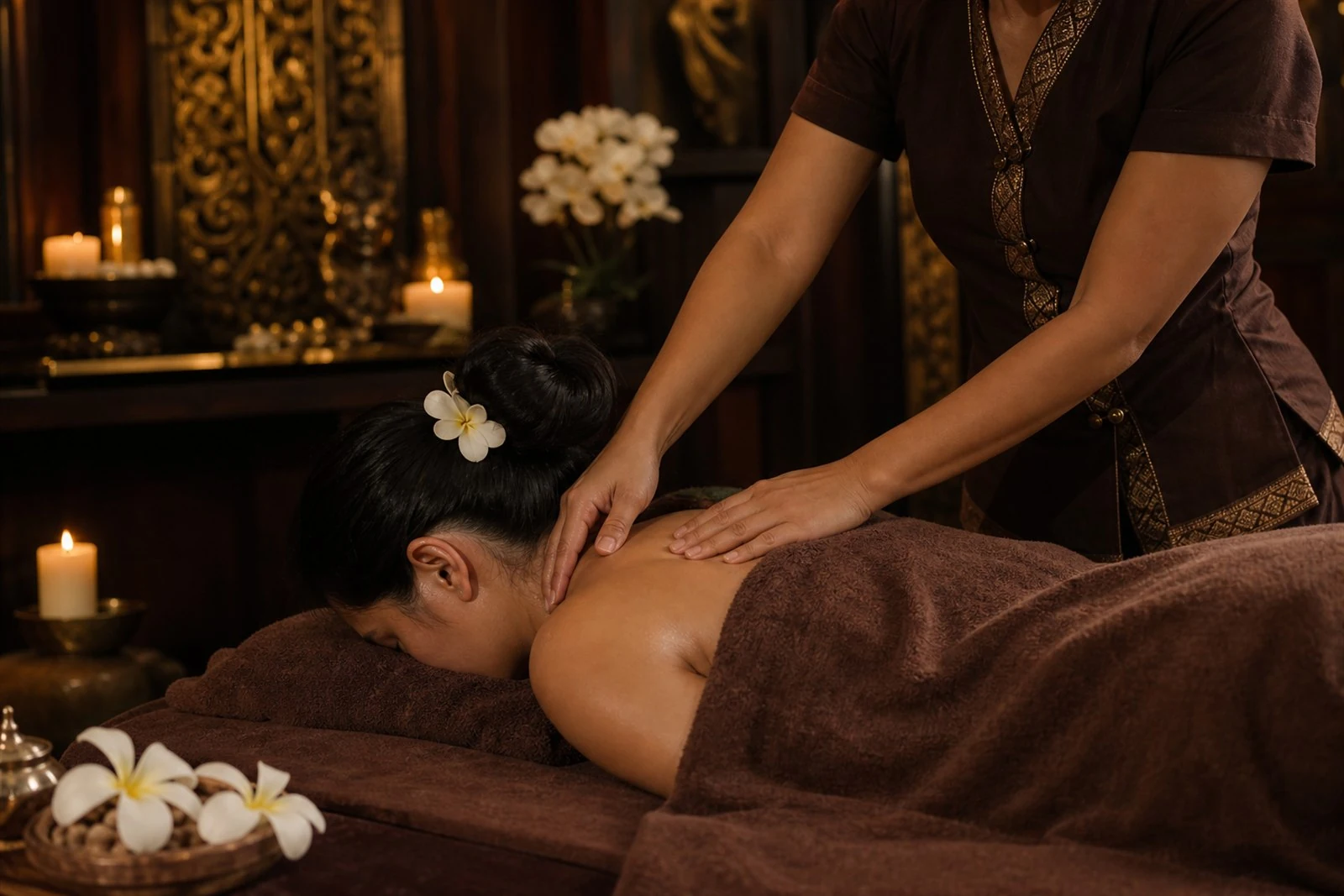
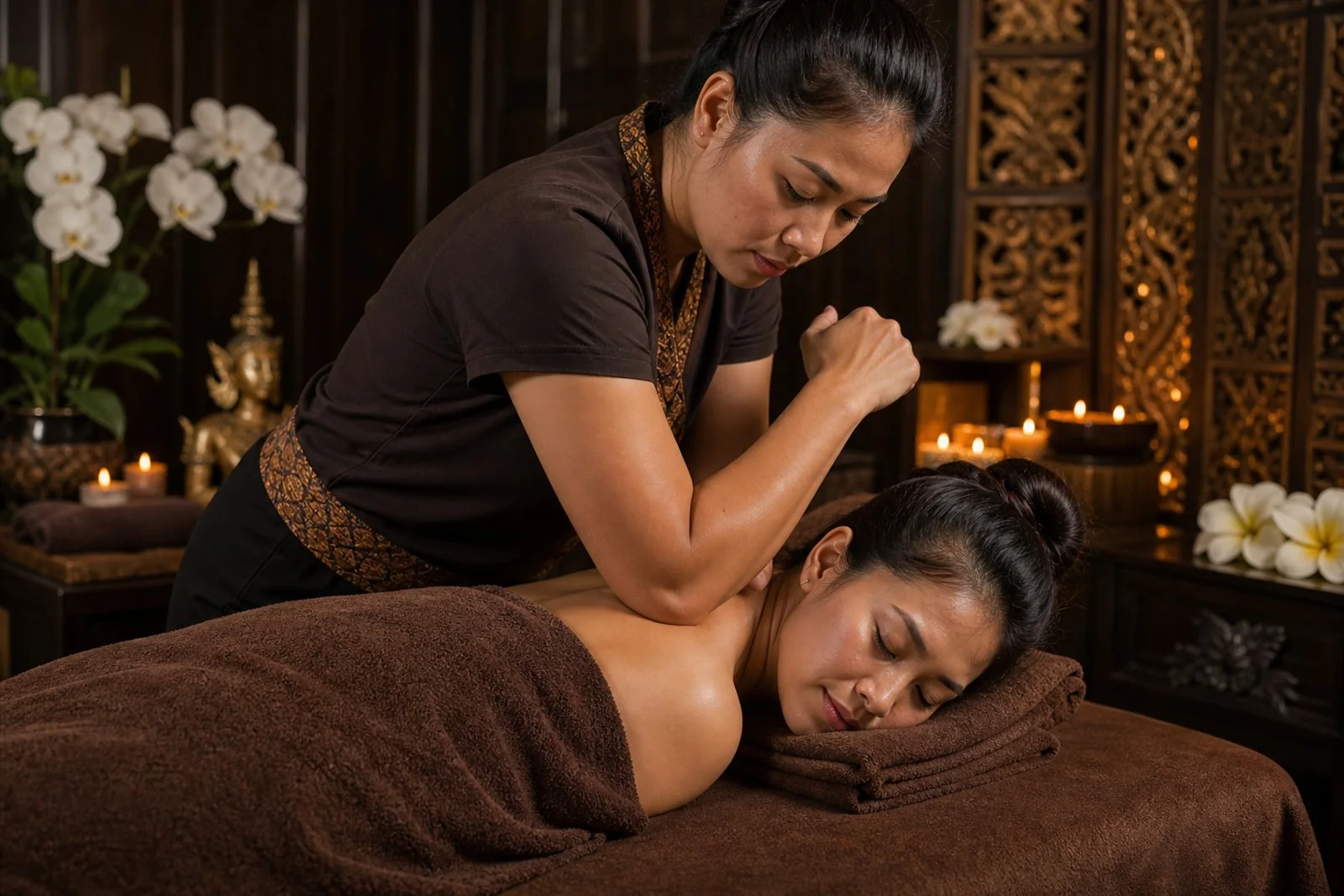
Slower strokes and firmer, sustained pressure into the deeper layers of muscle and the fascia around them. This is the booking for a desk back or standing back that has been building for months, the kind where you can press a thumb in and find the knot yourself. It is not the right first choice for a back that has only just flared up, or for your first-ever massage.
Traditional Thai massage, for stiffness
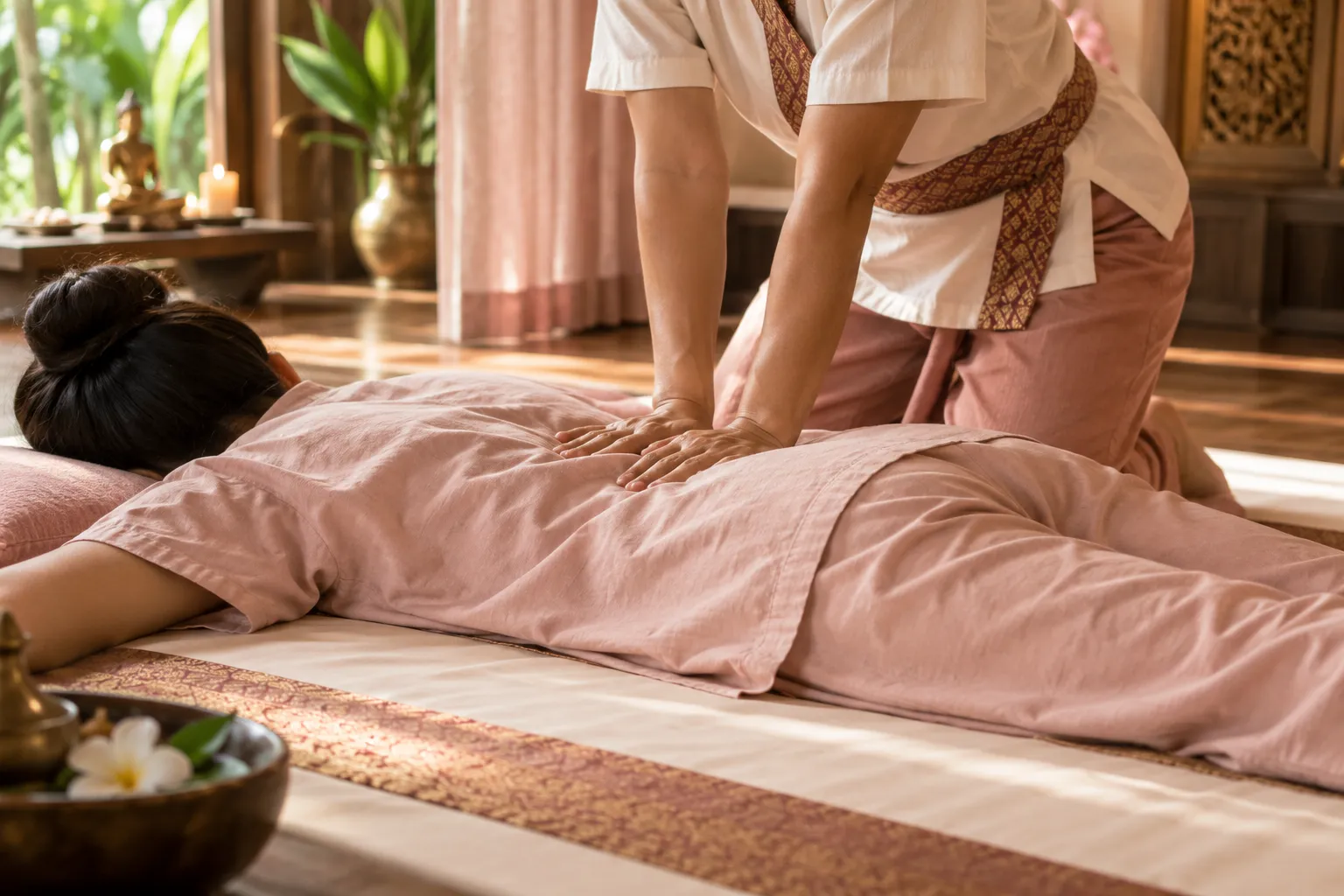
No oil and fully clothed, with acupressure and assisted yoga-style stretches at a smooth, steady tempo. It is one of the treatments our menu specifically associates with lower back pain, and it earns that when the problem is restricted movement rather than soreness: the stretches open the hips and the backs of the legs in ways that are hard to manage on your own. You choose the pressure.
Hot stone or herbal compress, when it is guarded
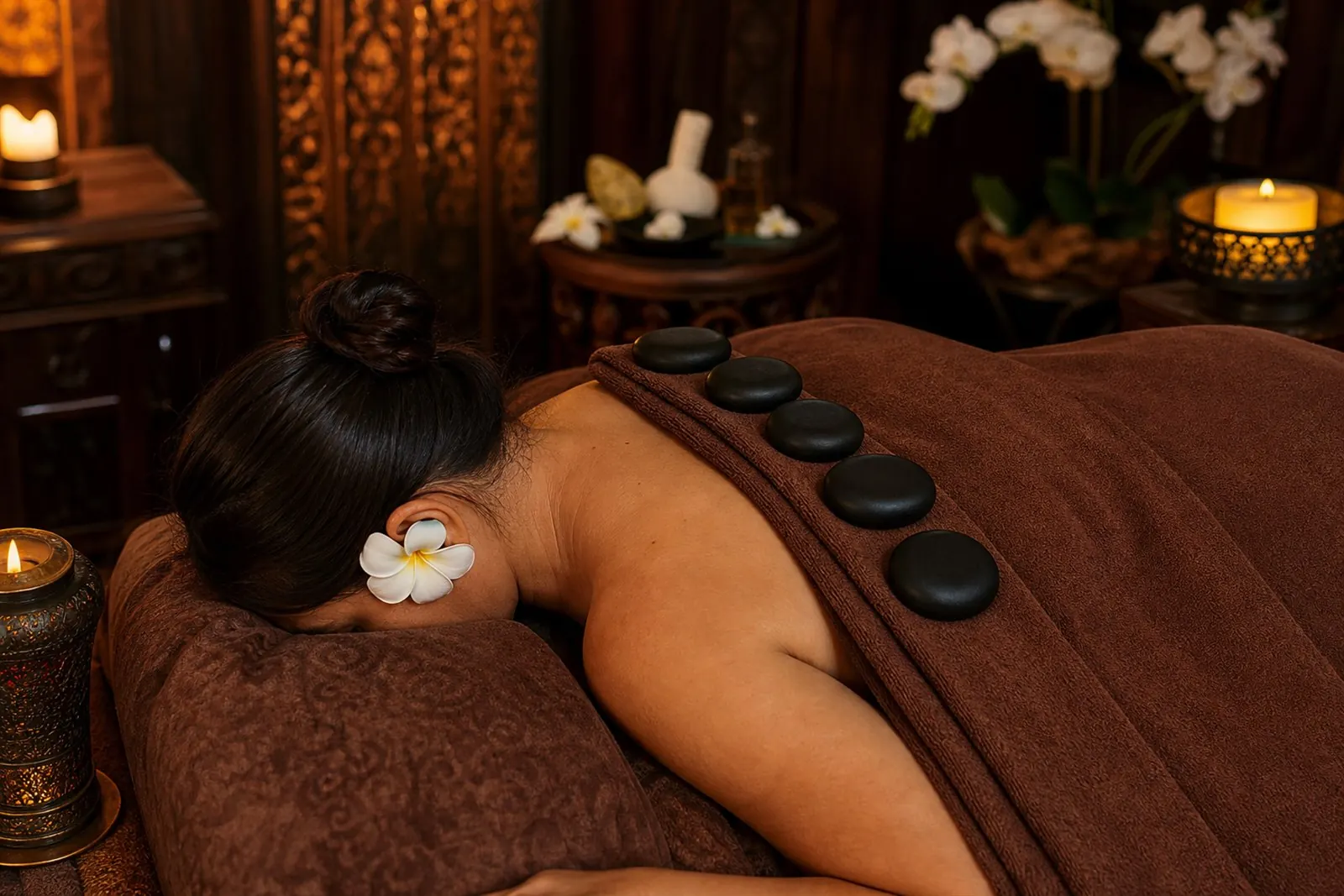
When the area is so tender that firm pressure just makes you brace, heat does the persuading. A hot stone massage rests warm stones along the back and works oil in with larger ones; the Thai herbal compress presses steamed bundles of lemongrass, turmeric and kaffir lime along the muscles. Both come in 90 or 120 minutes only.
Back and shoulder massage, with one limitation
Our targeted treatment for the head, neck, shoulders and back, in 30, 45 or 60 minutes. The honest limitation for a lower back: it is built around the upper body, so it will not reach the hips and legs where so much lower-back tension starts. If your problem is low, a full-body 60 minutes costs the same and covers more.
"When someone points at their lower back, we often spend half the session on their hips. That is where the extra work the back is doing comes from."
Siri therapist team
What the session is actually like
Before you start, tell your therapist three things: which side is worse, what sets it off (sitting, bending or standing), and whether anything ever travels into your buttock or leg. Those three answers change the whole plan.
If lying flat on your front makes the ache worse, say so. A pillow under the ankles or hips often makes it far more comfortable. Pressure goes into the muscles either side of the spine, not onto the bones of it, and it should feel like a strong, satisfying ache, never sharp. Our guide to massage pressure covers how to speak up without feeling awkward.
Mild soreness the next day, like after unfamiliar exercise, is common after firmer work and usually settles within a day or two. Pain that is sharper, or different from what you came in with, is not normal. Get it checked.
See your GP first if…
Massage is not a diagnosis, and it does not replace your GP or a physiotherapist. The reassuring part is that most back pain is not serious and improves with time. But some symptoms need medical assessment before anyone presses on your back.
Call 111 or go to the emergency department if back pain comes with any of these:
- It started with a fall, a car accident or another injury
- Numbness around your bottom or genitals
- New trouble passing urine or controlling your bowels
- Numbness or weakness in both legs
- A fever, or heavy sweating that wakes you at night
See your GP or a physiotherapist before booking a massage if you have weakness or numbness in one leg, shooting calf pain that is worse than the back pain, pain that is constant or worse at night, pain that is getting rapidly worse or spreading, difficulty walking, or redness, swelling or a rash where it hurts. Healthify, the New Zealand health information site, has a clear guide to back pain and when to get help.
Before you book: Tell us if you are pregnant, have had recent surgery, have osteoporosis, take blood thinners, or have a heart condition or high blood pressure, and check with your GP, midwife or specialist first. Heat treatments in particular are not for everyone. We do not have a dedicated prenatal treatment on the menu, so phone the branch and we will talk it through.
Between visits: small habits that help
Healthify's own self-care list for back pain starts with staying active and includes applying heat, and both line up with what we see on the table. Four habits worth the effort:
- Break up the sitting. Stand and walk for a couple of minutes every half-hour or so. A phone reminder does more than a new chair.
- Kneeling hip flexor stretch, 30 seconds each side. One knee down on a cushion, the other foot forward. Tuck your tailbone under and ease your hips forward until you feel it across the front of the back hip.
- Glute bridges, 10 slow repetitions. On your back with knees bent, squeeze your glutes and lift your hips, hold for two seconds, lower.
- Warmth on stiff evenings. A heat pack or a warm shower on the lower back. Many people find it loosens things enough to stretch comfortably.
Stop any stretch that produces sharp pain, tingling or numbness. And when you lift, bend your knees and keep the load close to your body.
How long, how often, and what it costs
Sixty minutes covers the whole body once. Ninety lets your therapist cover everything and then go back to the hips and lower back properly, and it is usually worth it for a first deep tissue session on a back that has been grumbling for months. Our guide to choosing between 60 and 90 minutes walks through it. If the same ache keeps coming back, a regular booking usually does more than an occasional rescue.
- Viaduct, Auckland CBD: deep tissue or traditional Thai, 60 mins $115 · 90 mins $165 · hot stone 90 mins $175
- St Heliers: deep tissue or traditional Thai, 60 mins $105 · 90 mins $145 · hot stone 90 mins $160
Both spas are open seven days, 10.00am to 8.00pm: the Viaduct at 1B/124 Customs Street West in the CBD, St Heliers at 417A Tamaki Drive. A 15% surcharge applies on public holidays. Book an evening slot if you can; a quiet couple of hours afterwards helps the work last.
Common questions
It depends on the ache. Deep tissue suits a deep, long-standing ache; traditional Thai suits stiffness and restricted movement; hot stone suits a back so tender that firm pressure makes you brace. For most lower backs, book a full-body 60 or 90 minutes so the therapist can work the hips and legs too.
Deep tissue or traditional Thai is $115 for 60 minutes and $165 for 90 at our Viaduct spa, and $105 and $145 at St Heliers. Hot stone is $175 for 90 minutes at the Viaduct and $160 at St Heliers.
See your GP or a physiotherapist first. Pain, numbness or weakness travelling into a leg needs assessment before massage. Numbness around the bottom or genitals, weakness in both legs, or bladder or bowel changes need urgent care: call 111 or go to the emergency department.
Mild soreness for a day or two after firmer work is common, a bit like after unfamiliar exercise. Drink water, keep warm and keep moving gently. Sharp or different pain is not normal, so get it checked.