Put a hundred office workers on a massage table and you will find the same three areas, in the same order, almost every time. It is so consistent that experienced therapists can guess someone's job within the first five minutes.
Here is the map, and what to do about each part of it.
The three places it lives
1. Upper trapezius — the sore one
The slope between the neck and the shoulder. This is what people point at and what they book a massage for. It is under continuous low-level load holding your head up and your shoulders slightly raised, and low-level continuous load is far more fatiguing than short bursts of hard work.
2. Levator scapulae — the sharp one
Runs from the top inside corner of the shoulder blade up the side of the neck. This is the one that produces the specific stabbing spot people can point to with one finger, and the one that makes turning your head to reverse the car unpleasant. It gets overloaded by a monitor that is off to one side, or a phone held against the shoulder.
3. Pectoralis minor — the actual culprit
Across the front of the chest, under the collarbone. It shortens over months of reaching forward to a keyboard, and a shortened chest pulls the shoulders round and forward. The upper back then has to work permanently to resist that pull, and that is why it aches.
This is the whole reason massaging only the sore spot gives two days of relief and no more. The tight thing at the front keeps re-creating the problem at the back.
"Everyone asks us to work harder on their upper back. The fastest change usually comes from ten minutes on the front of the chest."
Siri therapist team
The ninety seconds a day
- Doorway chest stretch — 30 seconds each side. Forearm flat on the door frame, elbow at shoulder height, step through until you feel it across the front of the chest. This is the important one.
- Chin tucks — 10 slow repetitions. Sitting upright, draw your chin straight back as if making a double chin, hold two seconds, release. Not a nod. This retrains the deep neck muscles that hold your head over your shoulders instead of in front of them.
- Levator stretch — 30 seconds each side. Turn your head 45 degrees towards your armpit, then look down towards it. Use one hand to add gentle weight to the back of the head. You will feel this exactly where the sharp spot is.
That is the whole programme. Ninety seconds, twice a day, at your desk. It works considerably better than a $400 chair used with the same habits.
Three setup changes that actually matter
- Top of the monitor at eye level. A stack of books works. Looking down is what starts the whole chain.
- Monitor directly in front of you. A second screen off to one side is the single most common cause of one-sided neck pain we see.
- Elbows supported at about 90 degrees. Unsupported forearms mean your shoulders carry the weight of your arms for eight hours.
Ignore everything else until those three are true.
Which treatment to book
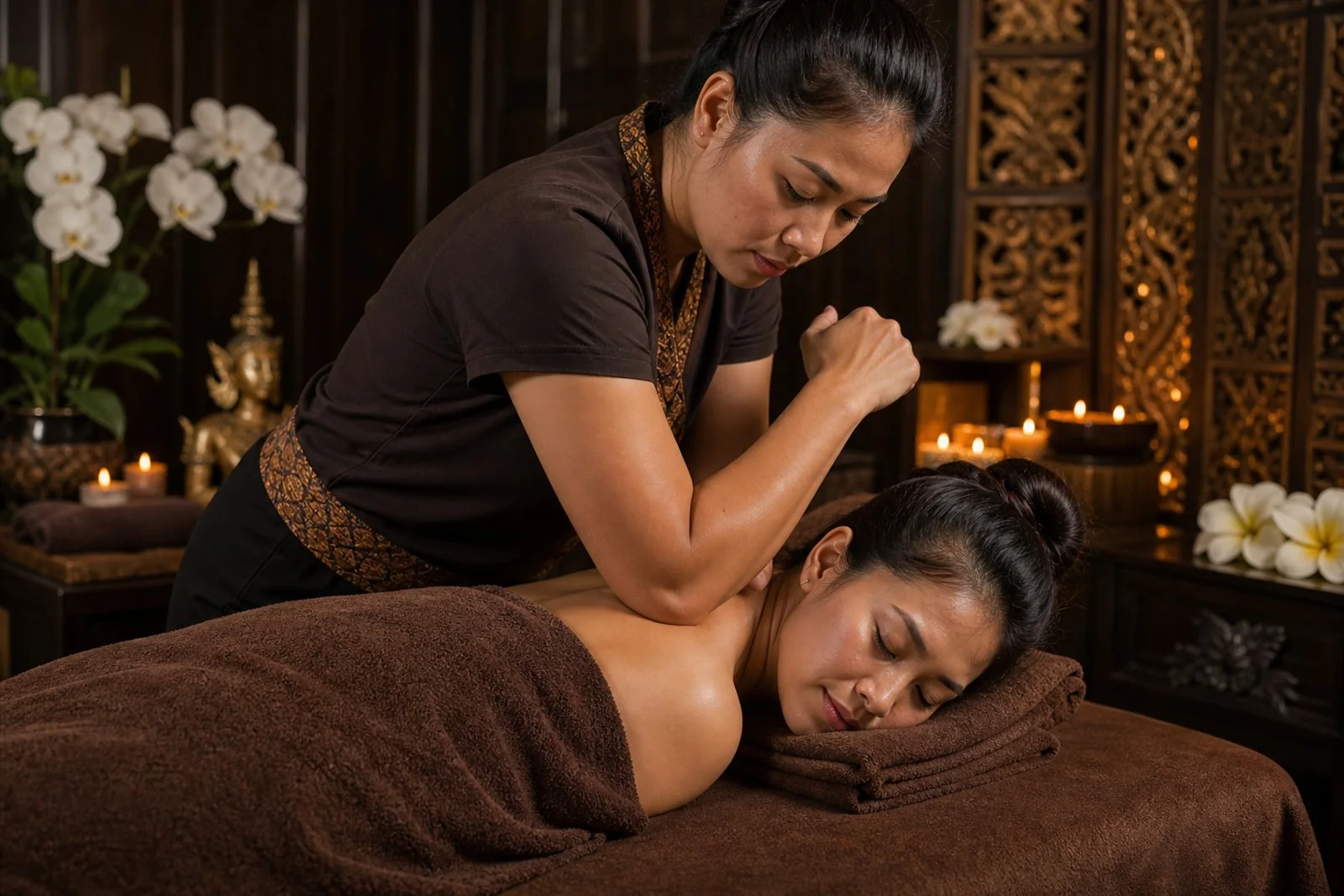
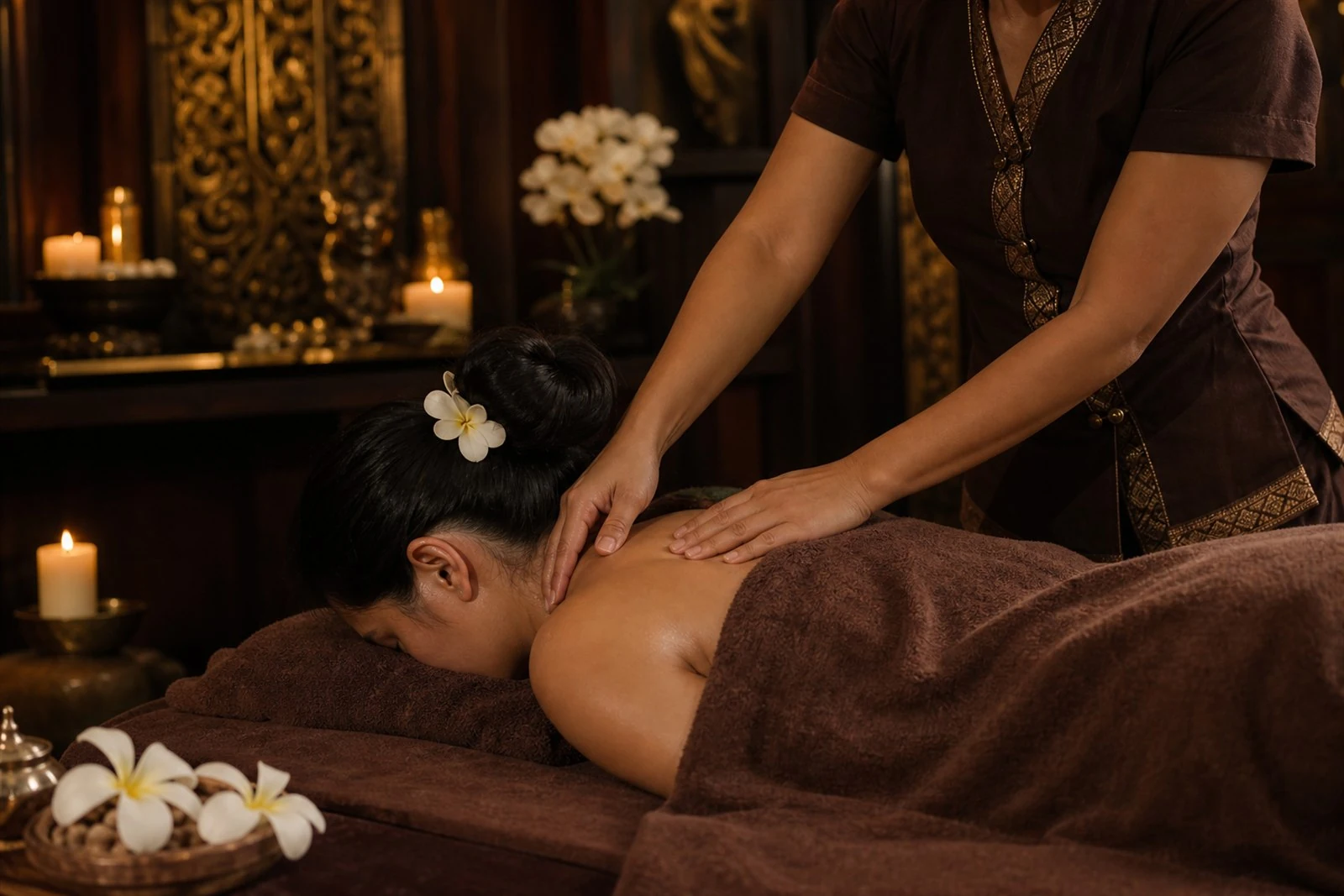
- Back and shoulder massage — the direct answer. 30, 45 or 60 minutes of nothing but the affected area. 45 mins is $95 at the Viaduct, $85 at St Heliers. On our menu this is the treatment specifically associated with desk-bound chronic tension and migraines.
- Deep tissue — if it has been building for months and you want the deeper layers addressed.
- Traditional Thai massage — if the problem feels like stiffness and restricted rotation rather than soreness. The assisted stretching reaches things oil work does not.
- Hot stone — when the whole area is guarded and tender and firm pressure would just make you brace.
Tell your therapist which side is worse, whether it refers into the head, and what you do for a living. Those three facts change the treatment.
When it is not a posture problem
See a GP or physiotherapist rather than booking a massage if you have pain or numbness travelling down an arm, pins and needles in the fingers, weakness in a hand or grip, headaches that are new or severe or different from your usual, dizziness, or neck pain that follows an accident or a fall. Those need assessment, not pressure.
Otherwise, the five small workday rituals are the natural companion to this — and they are all designed to be done without anyone noticing.
Common questions
Usually because the chest has shortened from hours of reaching forward, pulling the shoulders round. The upper back then works continuously to resist that pull — so the pain is at the back but the cause is at the front.
A back and shoulder massage, which spends the whole session on that area — $95 for 45 minutes at the Viaduct, $85 at St Heliers. Choose deep tissue if it has been building for months, or traditional Thai if it feels stiff rather than sore.
Chin tucks — draw your chin straight back, hold two seconds, ten slow repetitions, twice a day — plus getting the top of your monitor to eye level. Both matter more than any chair.
If you have pain or numbness travelling down an arm, pins and needles in the fingers, hand weakness, new or severe headaches, dizziness, or neck pain after an accident, see a GP or physiotherapist rather than booking a massage.