Most workplace wellbeing advice fails the same test: it assumes you have a spare forty minutes and a room with a door. Our Viaduct therapists spend their days with people who work two streets away, and the habits that actually stick are much smaller than the internet suggests.
Here are five, in the order of the day.
1. Three minutes outside before your first meeting
Not a walk, not exercise — just outside, without your phone in your hand. Daylight early in the day helps set your body clock, which is the single most useful lever you have on how you sleep that night. In the CBD you are four minutes from the water at Te Wero Island or the end of Customs Street West. That is the entire ritual.
It works because it is the one part of the day nobody else has booked yet.
2. The 20-20 rule, done properly
Every twenty minutes or so, look at something at least twenty metres away for twenty seconds. Out a window, down a corridor, at the far wall. Your eyes are focusing at arm's length for eight hours a day, and the muscles that hold that focus are as capable of getting tired as any other.
The neck version matters more, and almost nobody does it: while you look away, let your jaw unclench and drop your shoulders down and back. Ninety per cent of desk tension lives in the six inches between those two things.
3. A doorway chest stretch, twice a day
Stand in a doorway. Forearms flat on the frame, elbows at shoulder height, step one foot through until you feel a stretch across the front of the chest. Thirty seconds. Twice.
Desk posture is not really about the back — the back is the part that hurts. The cause is usually a chest that has shortened from hours of reaching forward, pulling the shoulders round. Our therapist's guide to desk posture and neck tension covers the rest of this properly.
"We can undo an afternoon of desk posture in an hour. We cannot undo three years of it. That is what the doorway is for."
Siri therapist team
4. Eat lunch somewhere that is not your desk
This is the one people resist most and benefit from fastest. Twenty minutes away from the screen changes the shape of the afternoon. In the Viaduct, that can be as simple as taking it down to the water.
If you genuinely cannot leave, at least turn your chair away from the monitor. The physical act of not facing the work is most of the effect.
5. A closing ritual at the end of the day
Your brain does not stop working because you closed a laptop. It stops when it has been told the day is finished. Pick one small, consistent action — writing tomorrow's three tasks on paper, clearing your desk, a two-minute walk around the block before getting in the car — and do the same one every day.
The specific action does not matter. The repetition does. Within a fortnight it becomes a signal, and the drive home stops being an extension of the meeting.
When small rituals are not enough
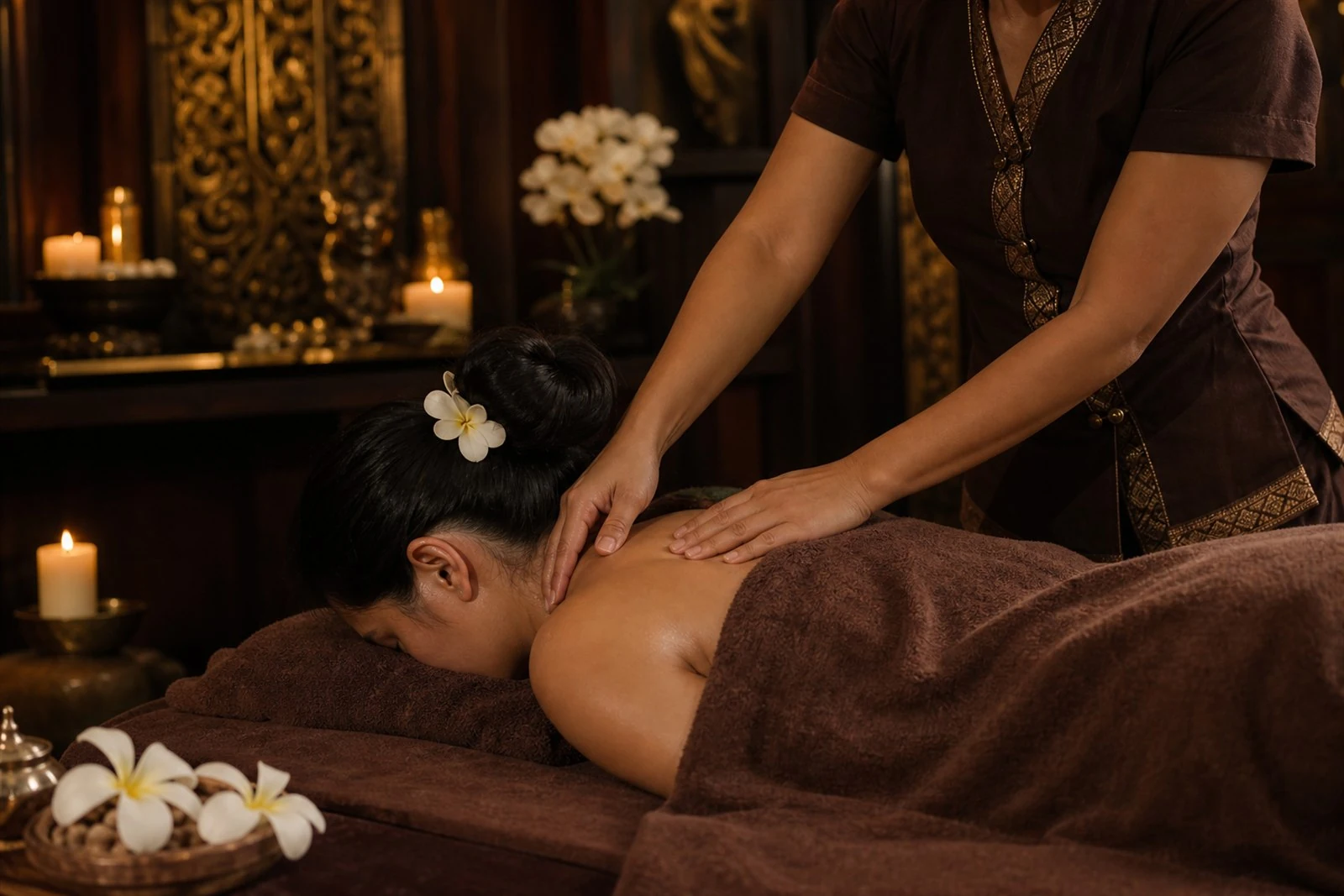
Habits maintain. They do not undo months of accumulation. If you can find the knot with your own hand, if you are getting tension headaches two or three times a week, or if your sleep has been thin for a month, that is the point to book something — a 30-minute back and shoulder massage at $65 fits inside a lunch break, and our Viaduct spa is a few minutes' walk from most CBD offices at 1B/124 Customs Street West.
And if the tiredness has an emotional weight to it rather than a physical one, the connection between massage, sleep and the nervous system is worth reading — it is usually the sleep that needs addressing first.
The five, in one list
- Three minutes outside, phone in pocket, before the first meeting
- Every twenty minutes: look twenty metres away, unclench jaw, drop shoulders
- Doorway chest stretch — thirty seconds, twice a day
- Lunch away from the desk, or at least facing away from it
- One consistent closing action at the end of every day
Nothing on that list takes more than three minutes, and none of it requires anyone else's permission. Start with the doorway.
Common questions
The doorway chest stretch — forearms on the frame, elbows at shoulder height, step through for thirty seconds. Desk pain shows up in the back but usually starts with a chest that has shortened from reaching forward all day.
Every twenty minutes, look at something at least twenty metres away, unclench your jaw and drop your shoulders down and back. Most desk tension lives between the jaw and the shoulders.
For one area, yes. A 30-minute back and shoulder massage is $65 at the Viaduct and $60 at St Heliers, and our Viaduct spa is a short walk from most CBD offices.
Use a consistent closing action — the same small thing every day, like writing tomorrow's three tasks on paper. After a fortnight your brain reads it as the signal that the day is over.