Ask ten people what reflexology is and you will get two answers. Half will tell you it is a foot massage. The other half will tell you it is a system in which every organ in the body has a corresponding point on the sole of the foot. Both groups will book it again.
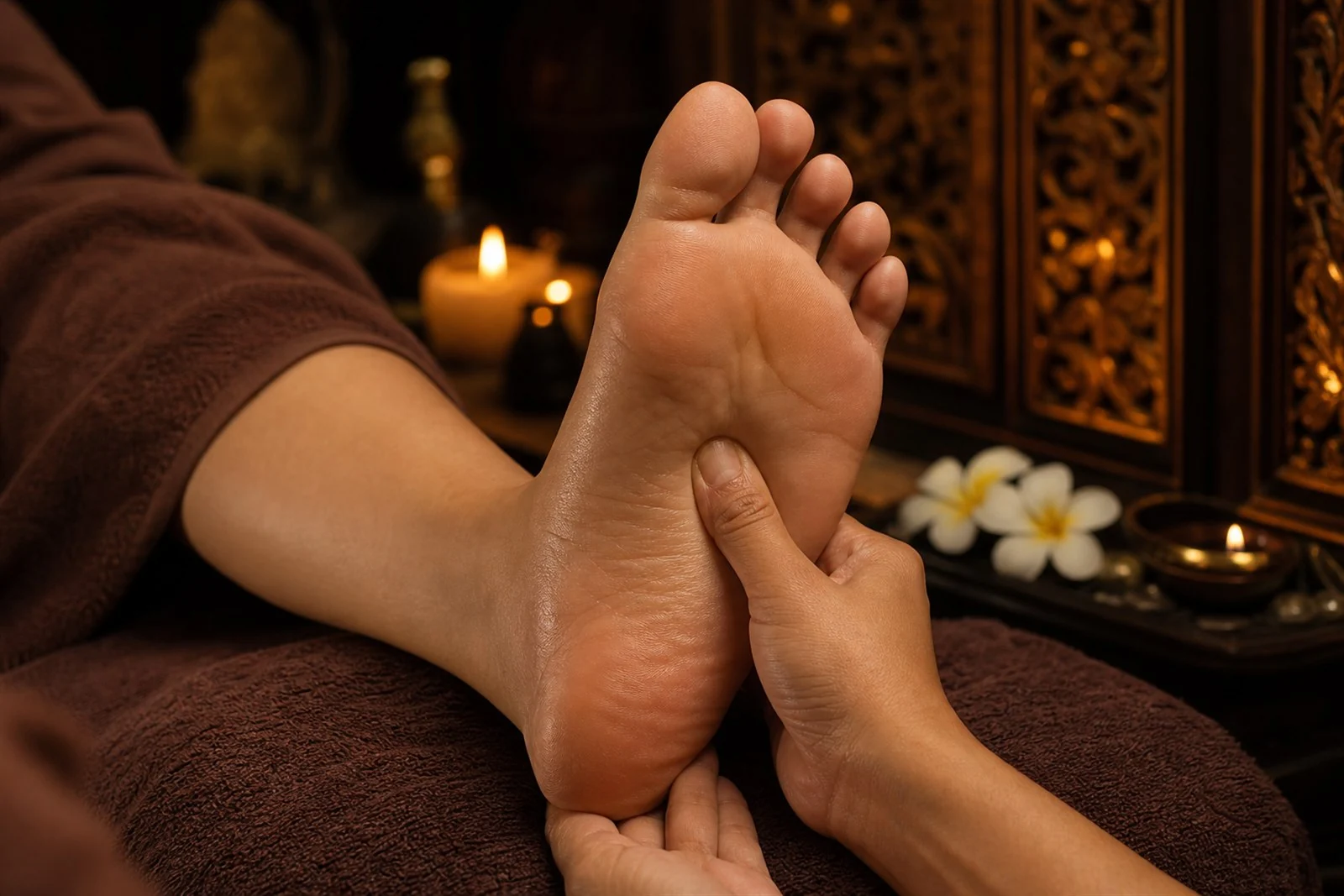
Thai reflexology sits somewhere between the two. It is a firm, structured treatment of the feet, ankles and lower legs, worked with thumbs, knuckles and often a smooth wooden stick, following traditional pressure lines. We offer it in 30, 45 or 60 minutes at the Viaduct and St Heliers, and it is the treatment we send hospitality workers, nurses, retail staff and anyone who has just done a long-haul flight straight to.
About that map
The traditional charts divide the sole into zones said to correspond to areas throughout the body — the toes to the head and sinuses, the ball of the foot to the chest, the arch to the digestive area, the heel to the lower back and pelvis. This is a traditional framework rather than an anatomical one, and we will not tell you that pressing your arch does something to your intestines.
What we will tell you is what the map is genuinely useful for: it gives a therapist a systematic route. Instead of rubbing whatever feels tight, they cover every zone of the foot in order, which is why nothing gets missed and why an hour goes past so quickly.
Why feet respond so dramatically
Your feet carry your entire body weight over concrete all day, usually inside shoes that were chosen for other reasons. The sole is also one of the most densely nerve-supplied areas of the body. Put those two facts together and you get a part of the body that is simultaneously overworked and extremely responsive to touch — which is why a foot session so often produces the full-body sleepy feeling people expect from a much longer treatment.
"People arrive apologising for their feet. Nobody has ever needed to. Ten minutes in, they have stopped talking entirely."
Siri therapist team
What a session is like
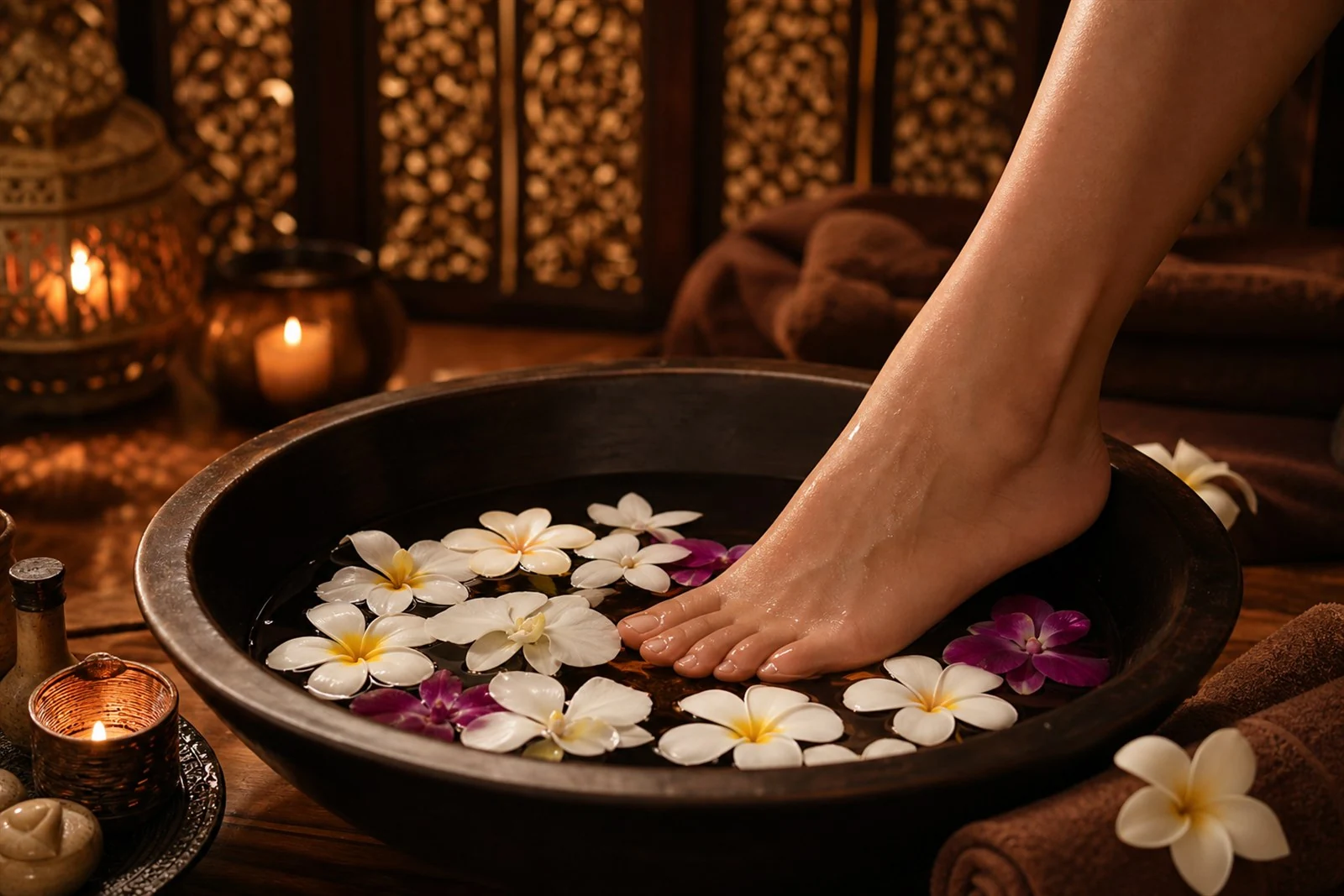
You stay clothed — trousers rolled up, or a change into loose spa clothing. You are seated or reclined rather than lying face down, so this is a good option if lying on your front is uncomfortable. Feet are washed first. Then the work begins at the toes and moves methodically through the sole, arch and heel, up through the Achilles, calf and shin, with oil or balm.
The pressure is firmer than most people expect. There is a specific sensation on a tight point — somewhere between an ache and a satisfaction — which is normal, and which you should still speak up about if it crosses into pain.
Sixty minutes covers both feet and both lower legs thoroughly. Thirty is enough for the feet themselves. Forty-five is the sensible middle, and the one most regulars choose.
Who it suits — and who should skip it
It suits people who stand or walk all day, people whose legs feel heavy by evening, runners between training blocks, and anyone who wants deep relaxation without undressing.
Tell us first if you have diabetes with any loss of foot sensation, an unhealed wound or ulcer, a current DVT or a history of blood clots, a fungal infection, or if you are pregnant — some traditional foot points are conventionally avoided in pregnancy, so please check with your midwife or GP. If your feet are simply too ticklish to bear, honestly, book a back and shoulder massage instead. Nobody wins that fight.
Prices
- Viaduct, Auckland CBD — 30 mins $65 · 45 mins $95 · 60 mins $115
- St Heliers — 30 mins $60 · 45 mins $85 · 60 mins $105
Because it is short, clothed and needs no recovery time, reflexology is the easiest treatment on our menu to fit into a working day — both spas are open until 8.00pm, seven days. If you want to keep something going between visits, our therapists have written up five foot pressure points you can work on yourself.
Common questions
It is firmer than a standard foot rub, and tight points have a distinct ache to them — but it should stay on the satisfying side of that line. Tell your therapist and the pressure changes immediately.
Viaduct: $65 for 30 minutes, $95 for 45, $115 for 60. St Heliers: $60, $85 and $105 for the same durations.
No. You stay clothed with trousers rolled up, or change into loose spa clothing, and you are seated or reclined rather than face down.
Thirty minutes covers the feet, forty-five is the popular middle, and sixty covers both feet and both lower legs without rushing. If your legs feel heavy rather than just your feet, book the hour.