The walk was the good part. It is the next morning, going down the stairs backwards because your quads refuse to bend, that is the problem. Sore calves, heavy thighs and feet that feel as if they have been through a mangle are normal after a long day on the track, and they are the reason massage after hiking is one of the most searched-for ideas on a Monday.
The short answer is yes, a massage can help sore legs and feet after a tramp, and it tends to help most from the second day, once the first stiffness has settled. Here is what to do in the meantime, which treatment suits which ache, and the cases where you should skip the massage and see someone else.
What helps first: the first 24 hours
Before any therapist gets involved, the basics do most of the work.
- Drink water and eat a proper meal. Hikers often under-eat and under-drink on the day, and legs recover better when they are fuelled.
- Keep moving gently. A slow walk around the block that evening and the next day keeps legs from seizing up better than lying flat.
- Get your feet up for a while, and take your boots and wet socks off as soon as you can.
- Warm, not scalding: a warm shower or bath helps tired muscles. Do a few easy calf and thigh stretches afterwards, never bouncing.
- Sleep. Muscles repair overnight, so an early night counts for more than any gadget.
That soreness has a name, delayed-onset muscle soreness, and it usually peaks a day or two after the effort, then fades. Downhill sections cause most of it, because your quads work hard to brake. If you pushed your limits this weekend, the guide to massage timing around exercise applies to tramping too.
When a massage helps most
A massage straight off the track feels tempting but is rarely the best moment. Muscles are fatigued, tender and sometimes slightly swollen, and firm pressure on tired tissue can feel like too much. Many guests find the sweet spot is the day after, or the day after that, once the first stiffness has begun to ease and you can say what hurts.
There is also a practical side. If you are heading off on another walk next weekend, book the session a few days before it rather than the day before, so any tenderness has time to settle. If you want it in a gentler form, a shorter session or lighter pressure is fine. You set the pressure at every Siri treatment, and our pressure guide has the words to use.
"Walkers usually say the same thing: it is not one spot, it is everything below the waist. We start with the calves and feet, because that is where it began."
Siri therapist team
Which treatment for which ache
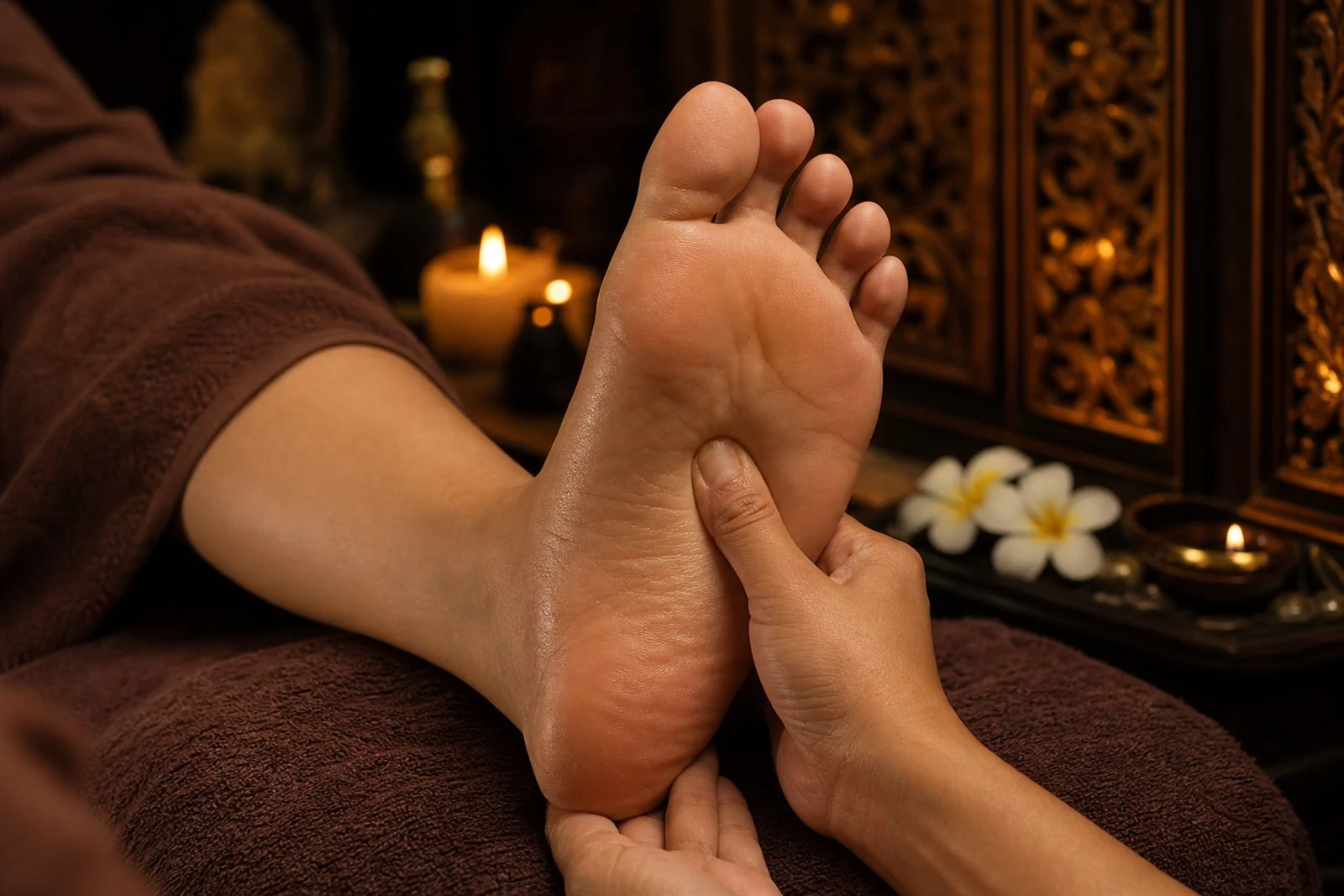
- Feet that burn, ache or feel flattened: reflexology foot massage. It works on feet and legs with pressure on tight, stiff and aching areas, and it is built for people who have spent the day on their feet. Thirty, 45 or 60 minutes. See our reflexology guide.
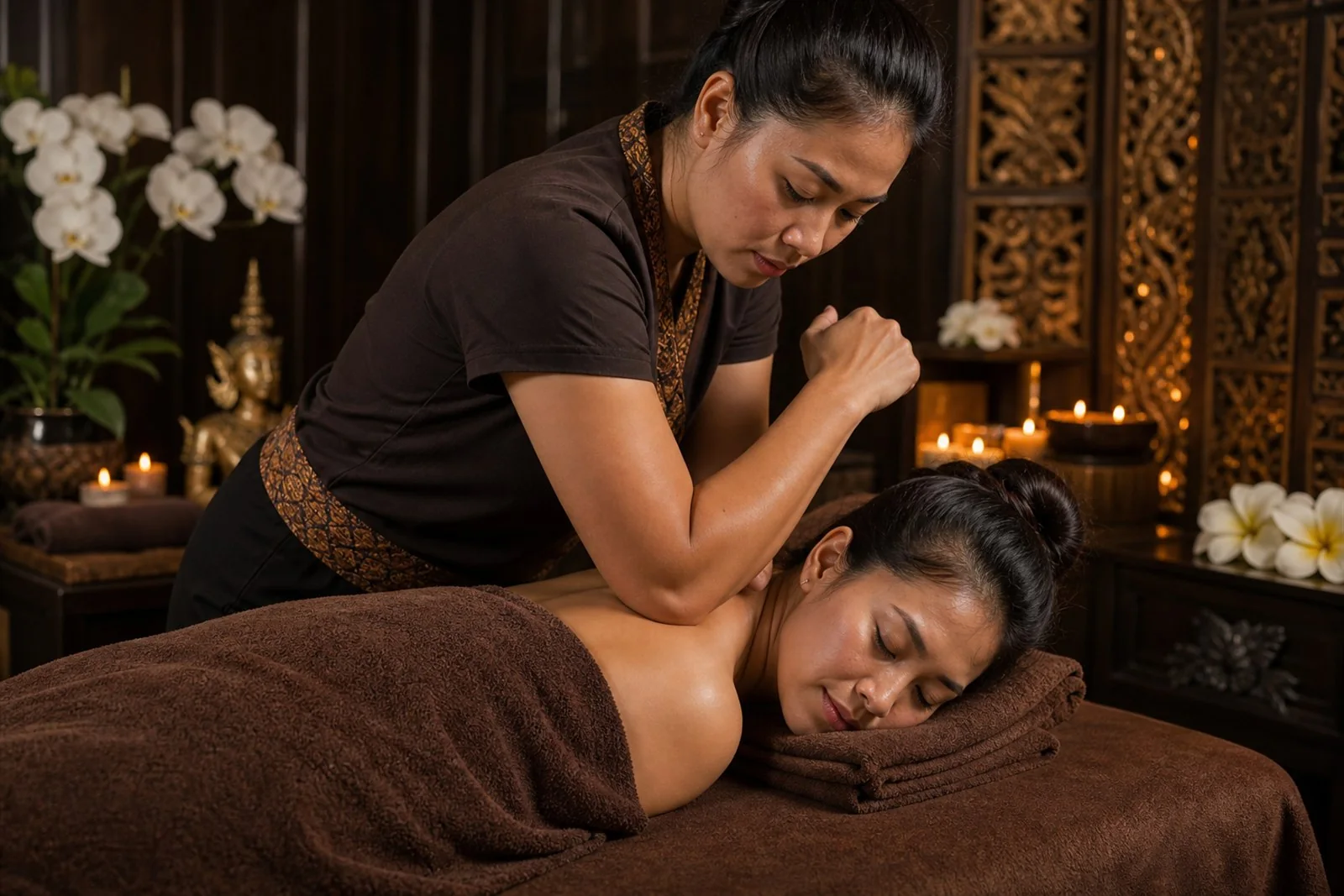
- Heavy quads, tight calves, sore hips: deep tissue massage. Firmer, slower work into the larger muscles, and the better choice if your legs are the main complaint. Our deep tissue for sport recovery article explains how it feels.
- Stiff all over, wanting to be stretched out: Traditional Thai massage. Acupressure plus yoga-style stretches through the hips, hamstrings and calves, no oil, in loose clothing.
If you are not sure, a 60-minute deep tissue session with a few minutes on the feet at the end is a sensible mix. Tell your therapist where it started and where it hurts now, because walkers often have knotted calves that feel like a foot problem, and tight hips that feel like a knee problem.
Looking after your feet at home
Feet take the pounding on any walk, and they are often the part people forget. After you take your boots off, give them ten minutes. Roll a tennis ball or a bottle under each arch, stretch your toes wide, and rub your calves with your thumbs. If you want to know why pressing on the foot feels so good, our guide to foot reflexology at home shows a short routine.
Wash and dry them properly, check between the toes and the heels for hot spots, and let your boots air out rather than shutting them in the car boot. Fresh socks for the drive home are a small luxury that is worth it.
Big day or short walk: does it change the plan?
It does, a bit. A flat stroll along the Tamaki Drive waterfront leaves most people with tired feet at most, and a reflexology session or an evening at home is plenty. A full day on a hilly track in the Waitakere Ranges, or the climb up Rangitoto, is the kind of effort that leaves quads and calves complaining for several days, and that is where deep tissue or Thai massage earns its place.
If you did a multi-day tramp, give yourself longer. Legs that have carried a pack over several days need rest first, and a longer session of 90 minutes lets a therapist cover calves, thighs, hips and feet without rushing. You will not need to decide everything at booking, since you can tell the therapist on the day where you want the time spent.
However long the walk was, ease back in. Gentle walking, easy stretches and a good meal beat a hard gym session the day after, and your legs will thank you the following weekend.
Safety: blisters, injuries and when to skip it
Massage is for tired muscles, not for damaged ones. Tell your therapist about any blisters and do not expect firm work over broken skin. The Mountain Safety Council's tramping blister guide is worth reading before your next trip: it says to stop at the first hot spot, because ignoring it almost guarantees a blister, and it recommends carrying a foot first aid kit.
See your GP or a physio before booking a massage if you have:
- a swollen, bruised or very painful ankle or knee after a twist or a fall
- pain in one calf with swelling, warmth or redness
- numbness, pins and needles, or sudden weakness in a leg
- pain that is sharp and getting worse instead of easing after a couple of days
If you are pregnant, have a heart condition or high blood pressure, or have diabetes with reduced sensation in your feet, check with your GP or midwife first and tell the therapist when you book.
Planning the next one
Most trampers recover faster when the next walk is better prepared. The Department of Conservation's plan your walk page points to checking track conditions and making a plan with the Mountain Safety Council before you go. Good boots, merino or wicking socks and a gradual build-up of distance do more for your legs than any treatment.
What it costs, and where to go
Reflexology and deep tissue are both $65 for 30 minutes and $115 for 60 minutes at the Viaduct, and $60 and $105 at St Heliers. Reflexology also has a 45-minute option, at $95 and $85. Deep tissue goes to 90 minutes, at $165 and $145. The Viaduct is in the Auckland CBD and St Heliers is on Tamaki Drive, and both are open seven days, 10am to 8pm. A 15% surcharge applies on public holidays. Prices are on the Viaduct pricing page and the St Heliers pricing page.
Common questions
Many guests find it eases sore calves, quads and feet, and it tends to work best a day or two after the walk once the first stiffness has settled. Skip it if you have a swollen joint, an injury or open blisters, and see your GP or physio first.
Deep tissue suits heavy quads and tight calves, reflexology is aimed at tired feet and lower legs, and Traditional Thai adds stretching through the hips and hamstrings. All three are available at our Viaduct and St Heliers spas.
Often the next day or the day after is the sweet spot, when you can say what hurts and the first soreness is easing. If your legs feel very tender, ask for lighter pressure or a shorter session.
A reflexology foot massage is $65 for 30 minutes, $95 for 45 minutes and $115 for 60 minutes at our Viaduct spa, and $60, $85 and $105 at St Heliers. A 15% surcharge applies on public holidays.