You have landed after a long-haul flight, checked into a city hotel, and it is three in the afternoon. Your neck is stiff from sleeping upright, your ankles feel puffy, and your body clock is still somewhere over the ocean. The question is whether a massage will help, or just send you to sleep at five o'clock.
A massage after a long flight is one of the better things you can do with arrival day, as long as you choose a gentle-to-medium treatment and time it well. Our Viaduct spa is at 1B/124 Customs Street West, in the Auckland CBD near the waterfront, open seven days from 10.00am to 8.00pm. Here is what to book, when to go, and the one situation where you should see a doctor instead.
Why a long flight leaves you so stiff
Nothing dramatic happens to your body on a plane. It is the sitting: hours with your hips and knees bent and almost no room to change position. The front of the hips stays shortened, the lower back holds one shape for far too long, and the legs barely move.
Add a neck propped at an odd angle while you dozed, shoulders hunched under a thin blanket, dry cabin air and the hauling of bags at both ends, and most travellers step off stiff in three places: neck and shoulders, lower back, and calves and feet. Many also notice their feet and ankles feel swollen or heavy, which generally eases once you are up and moving again.
What to book after a long flight
The aim on arrival day is to loosen and settle, not to be worked on hard. These are the treatments we would point a fresh arrival towards at the Viaduct.
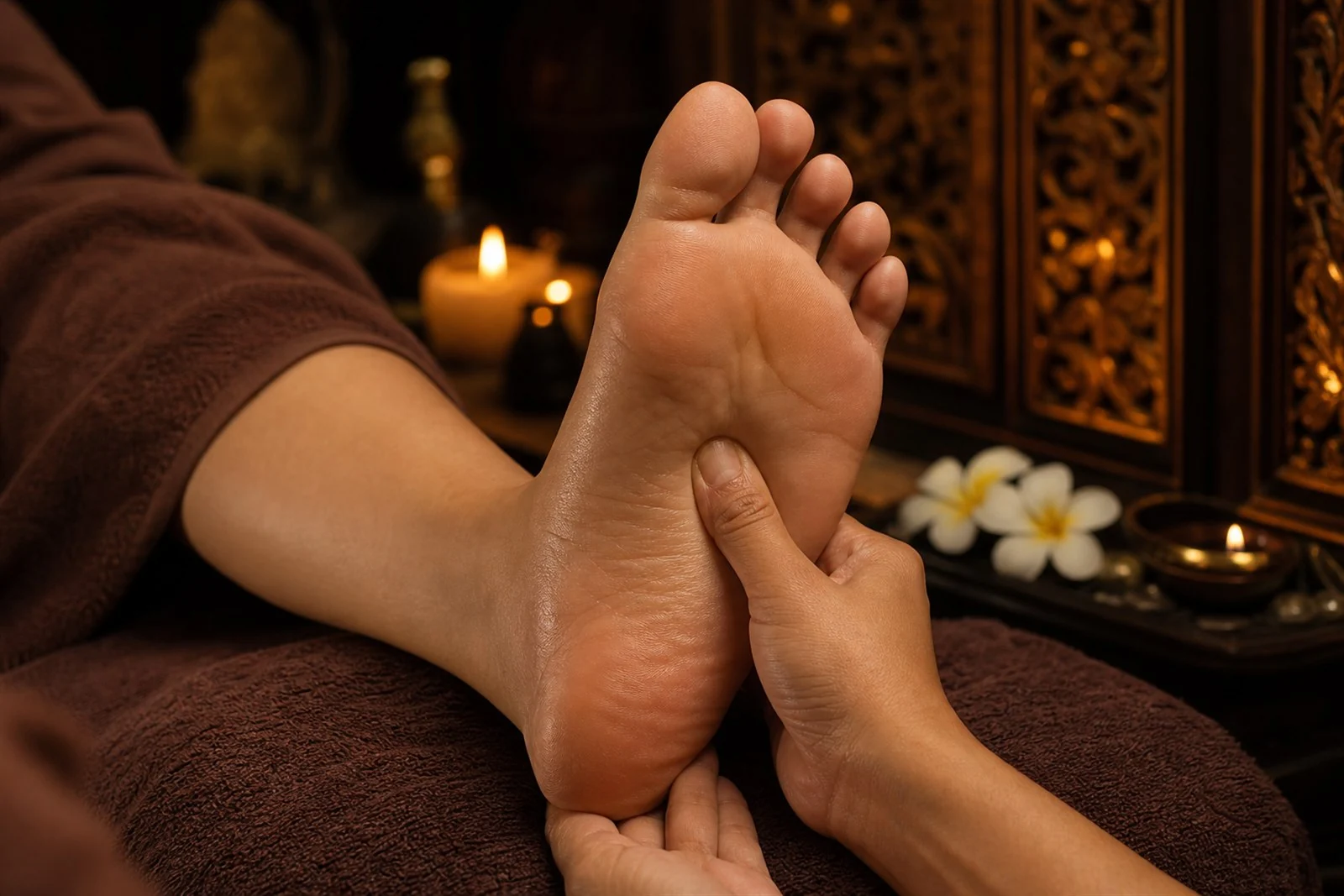
- For heavy legs and tired feet — reflexology foot massage at the Viaduct: 30 minutes for $65, 45 for $95 or an hour for $115. Firm, targeted pressure on the legs and feet, which did the least moving on the flight. It works the lower body only, so it is the simplest treatment to walk into straight from the hotel.
- For feeling wired and exhausted at once — aromatherapy massage: 60 minutes for $115 or 90 for $165. Blended essential oils and gentle, rhythmic pressure over the whole body. The best choice if what you mostly feel is frazzled.
- For a back that has set in the shape of the seat — traditional Thai massage: 60 minutes for $115. Done clothed, without oil, using stretches and acupressure to open up the hips and back. Ask for medium pressure on arrival day.
- For a neck that slept upright — back and shoulder massage: 30 minutes for $65. The quick option if you have a dinner or a meeting later.
What we would leave until later in the trip is deep tissue. Slow, firm work into tired, under-slept muscles can leave you sorer than when you walked in. If a particular knot is still bothering you on day two or three, once you have slept, that is the time to book it.
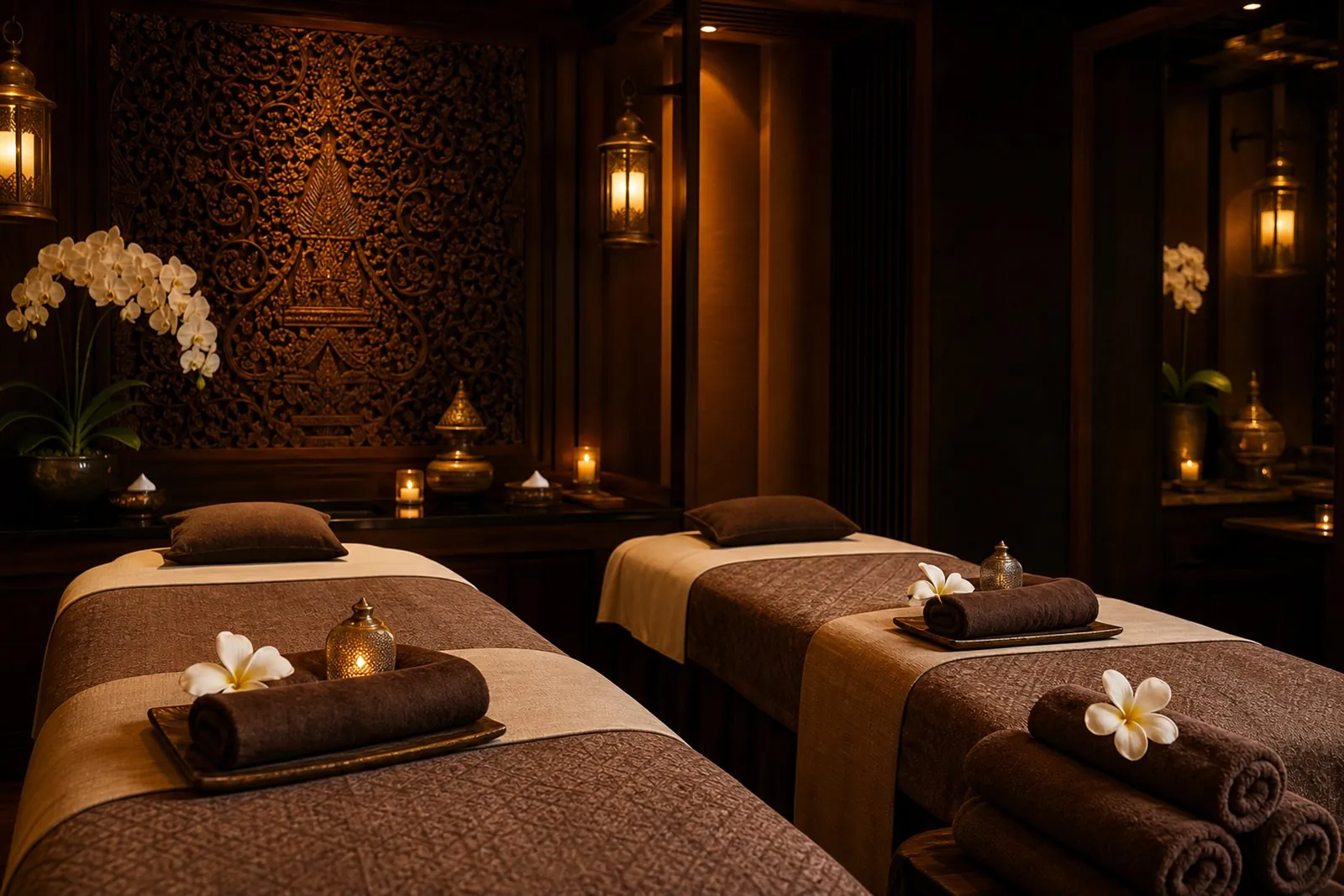
Travelling as a pair? The Viaduct has two couple rooms, and a 60-minute couple massage is $220 for two people, in any of the massage styles above. Side by side in a quiet room is a far better first evening in a new city than two people dozing off in a hotel room at six.
When to book it: timing on arrival day
The best slot is usually late afternoon or early evening on the day you land, once you have done three things first.
- Drink water and eat something. Cabin air is dry, and lying face down for an hour on an empty stomach after airline food is not a recipe for feeling good.
- Shower, then get outside. The NHS advice on jet lag is to switch to the new time zone as quickly as you can and to get out in natural daylight during the day. A walk along the waterfront does both.
- Then the massage. An early-evening booking means you finish relaxed, eat a light dinner and go to bed at a sensible Auckland hour, rather than napping at four and lying awake at two.
One firm rule: do not come straight from the airport if you feel dizzy, light-headed or unwell. Rest, rehydrate and book for the next day. A massage on top of exhaustion and dehydration is more likely to leave you feeling worse than better.
If you land in the evening, book for the following day instead. The Viaduct spa opens at 10.00am, and a morning massage followed by a day outdoors is a good way to spend your first full day in the city.
Before you book: If one calf is painful, swollen, warm or a different colour after a flight, do not book a massage — see a doctor first, because these can be signs of a blood clot in the leg (deep vein thrombosis). If you also feel short of breath or have chest pain, call 111. Healthify's guide to deep vein thrombosis explains the signs, and for most people the risk from a long journey is very small. Tell us when you book if you are pregnant, take blood-thinning medication or have had recent surgery, and check with your GP or midwife first.
Getting to the Viaduct from a city hotel
Our Viaduct spa is at 1B/124 Customs Street West, in the Auckland CBD close to the waterfront and Viaduct Harbour. If you are staying in the central city you are already nearby — check the map on our contact page against your hotel's address before you set out, or phone 027-722-6564.
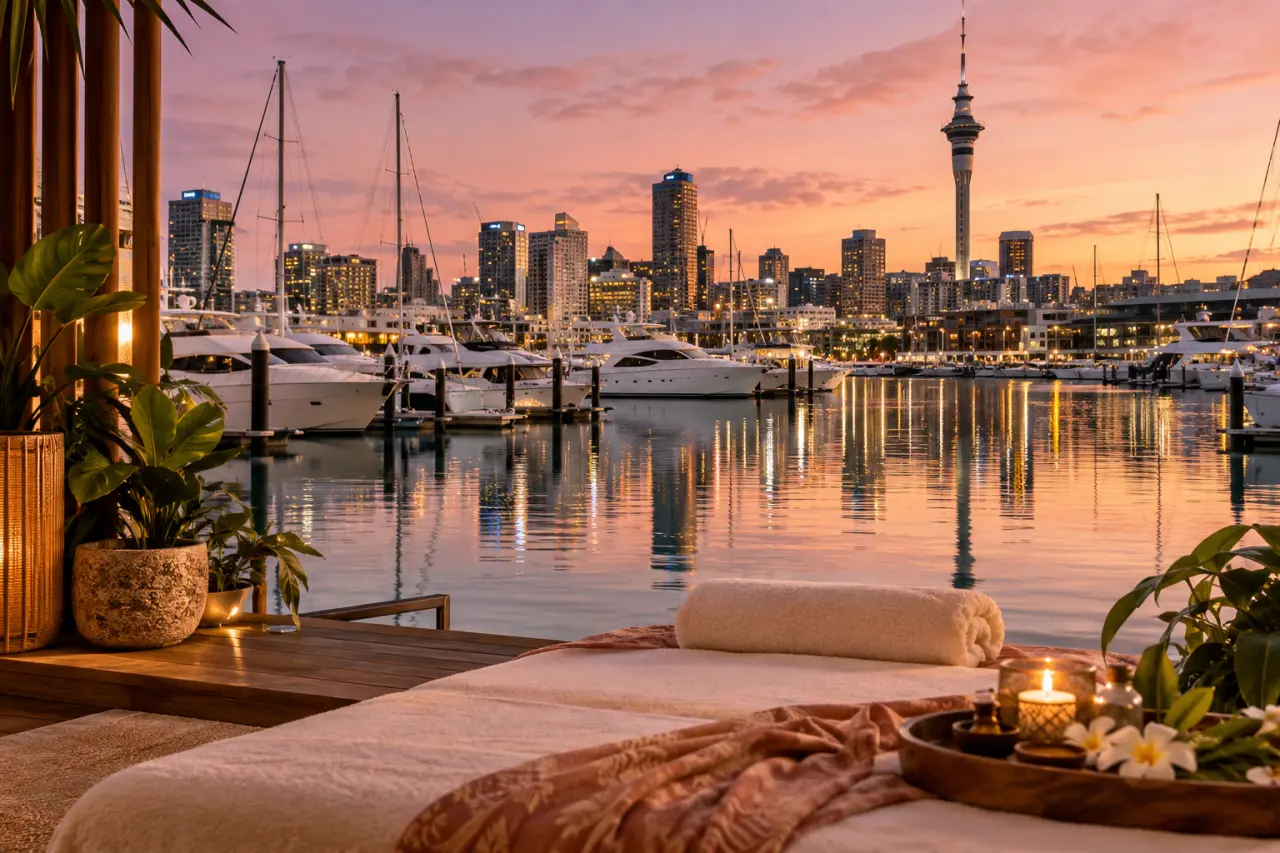
Afterwards, the harbour is right there. A slow walk by the water in the last of the daylight is exactly what the jet lag advice asks for, and our guide to unwinding around Viaduct Harbour has a flat, easy loop that suits tired legs.
What to tell your therapist
- That you have just flown in, and roughly how long the journey was. It helps them pitch the pressure.
- Where you are stiffest — neck, lower back or legs — so the time goes where you need it.
- Any swelling in your legs or feet, and whether it is on one side or both.
- Anything you strained lifting bags. A tweaked shoulder needs a lighter touch, not more pressure.
- Medications and health conditions, especially blood thinners, pregnancy or recent surgery.
And speak up straight away if the pressure is too much. Arrival day is not the day to be brave.
"On arrival day we usually suggest medium pressure. Firm can wait until you have had a night's sleep in the right time zone."
Siri therapist team
Afterwards, and the honest limitation
Drink water, eat something light, and resist the urge to lie down in your hotel room for just ten minutes. Our massage aftercare guide covers the rest of the evening.
Now the limitation. A massage will not reset your body clock. Daylight, meal times and sleeping at local time do that, and the NHS notes that jet lag usually improves within a few days. What a massage does well is the physical side: many travellers find it eases the stiffness of the flight and helps them settle, which makes that first night easier to get through.
If you are only passing through on a short layover, it is probably not worth the trip in from the airport. If you are staying a few days, book it for the afternoon you arrive and let the rest of the city wait until tomorrow.
The practical details
- Siri Thai Spa Viaduct — 1B/124 Customs Street West, Auckland 1010 · 027-722-6564
- Hours — open 7 days, 10.00am to 8.00pm
- Arrival-day picks — reflexology from $65, aromatherapy 60 minutes $115, Thai 60 minutes $115
- Public holidays — closed Good Friday, Christmas Day, Boxing Day and New Year's Day, and until 1.00pm on ANZAC Day; 15% surcharge on public holidays
Common questions
For most people, yes. A gentle-to-medium massage eases the stiffness of long hours in a seat and helps you settle. Choose aromatherapy, reflexology or Thai on arrival day, leave deep tissue until later in the trip, and see a doctor first if one calf is painful or swollen.
Once you have had water and something to eat and feel steady on your feet — usually later the same day. If you feel dizzy, light-headed or unwell, rest and book for the next day instead.
Aromatherapy massage is the most settling choice, and reflexology foot massage suits heavy legs. Neither will reset your body clock — daylight and sleeping at local time do that — but both ease the physical stiffness of a long flight.
Yes. Siri Thai Spa Viaduct is at 1B/124 Customs Street West in the CBD, near Viaduct Harbour, and is open seven days from 10.00am to 8.00pm. Phone 027-722-6564.