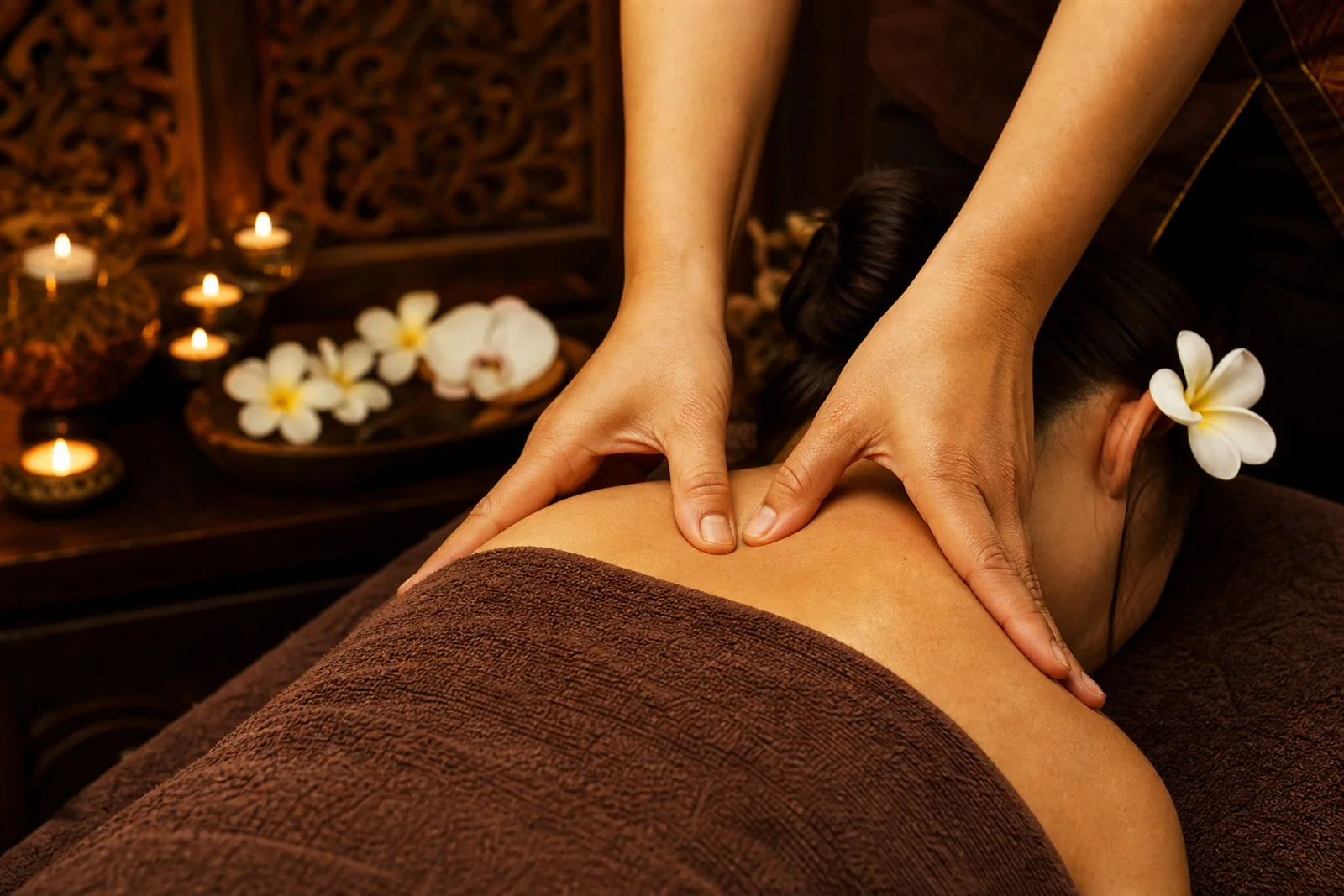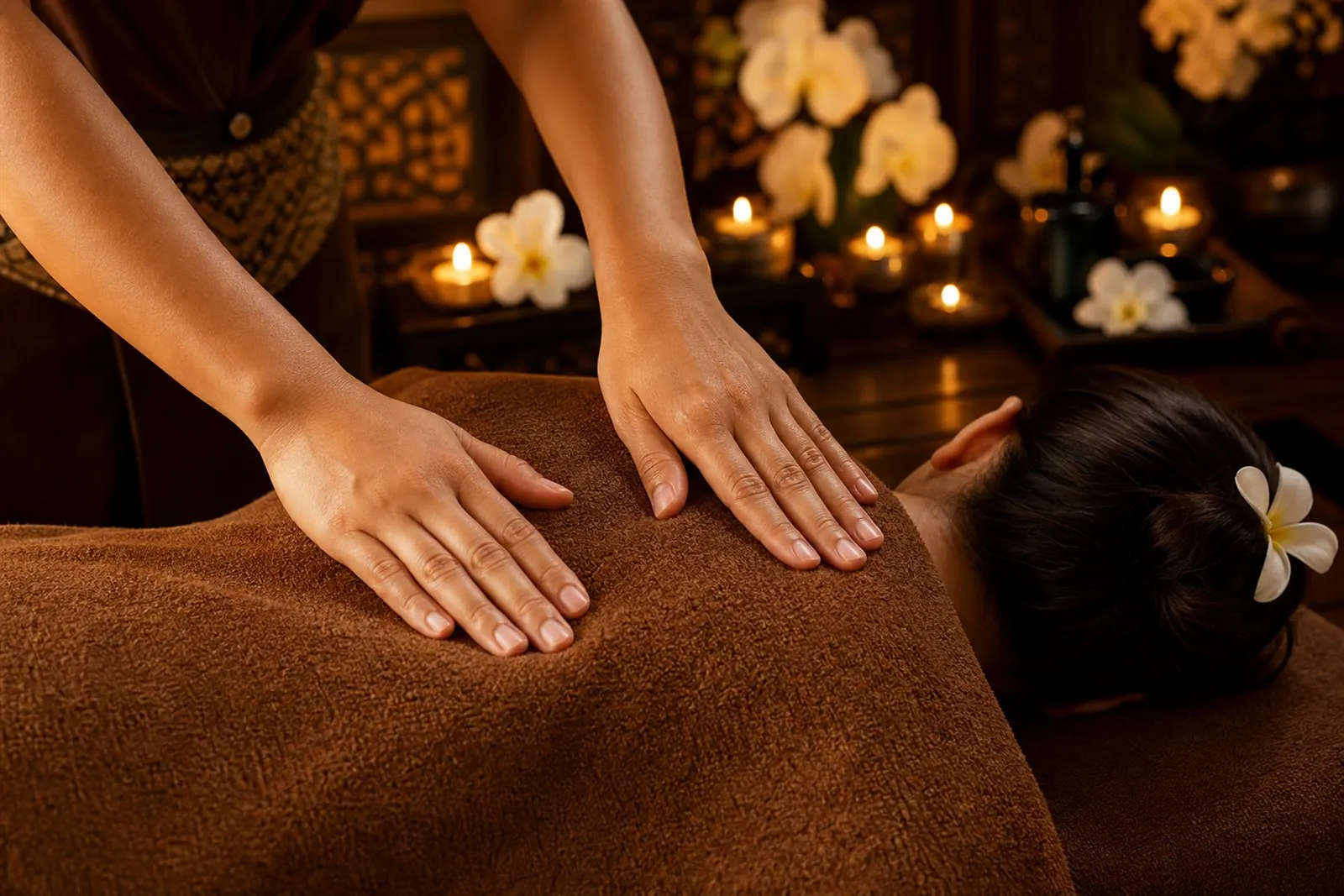
There is a moment about eight minutes into a good massage where something changes. The guest's breathing drops down into the belly, the shoulders finally let go of the table, and often there is one long involuntary sigh. Therapists notice it in almost everyone, and it happens at roughly the same point every time.
Here is what is going on, without the mysticism.
Skin is a sensory organ, not a wrapper
Your skin is densely supplied with nerve endings, and among them are receptors that respond specifically to slow, gentle, stroking touch at roughly the speed a person naturally strokes another person. These fibres do not report pressure or temperature — they appear to be involved in the affective, emotional quality of touch rather than the informational side.
In other words, part of your nervous system exists to register being touched kindly. That is not a metaphor, and it is the raw material a massage works with.
The gear change
Your autonomic nervous system runs between two states: sympathetic activation — alert, tense, ready — and parasympathetic, the rest-and-digest state where the body repairs, digests and settles.
Slow, rhythmic, predictable touch in a warm quiet room with nothing required of you is about as clear a safety signal as the body gets. Breathing slows and deepens. Heart rate typically drops. Muscle tone falls. Digestion often audibly restarts — the stomach gurgle that embarrasses guests is one of the clearest signs the treatment is working.
"Nobody has to be persuaded to relax. You just have to remove every reason not to, for long enough."
Siri therapist team
The three ingredients that make it work
- Predictability. Long, repeated, rhythmic strokes are safe precisely because they are boring. Your brain stops tracking them. Sharp or unpredictable pressure keeps the alert system engaged, which is one reason painfully hard massage is less effective than people assume.
- Warmth. Heat softens tissue and signals safety at the same time — the reason hot stone and the herbal compress are so sedating.
- Duration. The shift takes time. This is the single strongest argument for booking 90 minutes over 60: the first fifteen minutes are largely spent arriving.
Why the muscles matter less than you think
A lot of muscular tension is not a property of the muscle at all — it is your nervous system holding it in a state of readiness. A therapist can work mechanically on a knot for twenty minutes with modest results, and the same knot will often soften considerably once the guest has properly downshifted.
Which is why an unhurried hour of moderate pressure frequently outperforms a brutal thirty minutes, and why the pressure question matters so much.
How to get more out of the same appointment
- Arrive ten minutes early. You cannot downshift while still walking fast.
- Say you would rather be quiet, if you would. Conversation keeps part of you working.
- Breathe out longer than you breathe in. Four in, six or eight out. A lengthened exhale is one of the few direct voluntary inputs into this system.
- Book the evening rather than a gap between meetings. Both spas run until 8.00pm.
- Let the tears happen if they happen. Occasionally people get emotional on the table. Nothing has gone wrong, and it is more common than anyone admits.
Being honest about the evidence
Massage is well established as something that helps people feel calmer, sleep better and hurt less in the short term. It is not established as a treatment for any disease, and we are not going to quote you a statistic about cortisol — the research in this field is genuinely mixed, and anyone giving you a precise percentage is selling something.
What we can say is what we observe several hundred times a month: people arrive braced and leave unbraced, and they sleep well that night. If you are dealing with anxiety, depression, chronic pain or a medical condition, massage sits alongside proper care rather than instead of it. Talk to your GP — and in New Zealand you can call or text 1737 free, any time, to speak with a trained counsellor.
If you simply want the hour: aromatherapy at 90 minutes is the most reliable version of this experience on our menu — $165 at the Viaduct, $145 at St Heliers.
Common questions
Slow, rhythmic, predictable touch in a warm, quiet room is a strong safety signal to the nervous system. Breathing slows, heart rate typically drops, muscle tone falls and digestion restarts — the shift into the rest-and-digest state.
Because digestion restarts as your body moves out of the alert state and into rest-and-digest. It is one of the clearest signs the treatment is working, not something to be embarrassed about.
For relaxation, yes — the first fifteen minutes or so are largely spent arriving and settling, so 90 minutes gives you considerably more than 60 does, not just half as much again.
The research is genuinely mixed and we will not quote you a number. What is well established is that people report feeling calmer, sleeping better and hurting less in the short term after a treatment.