You press a thumb into the muscle beside your shoulder blade and find it: a hard, tender spot that is a bit like a pea under the skin. It aches when you press it, may ache when you do not, and has probably been there since the week of that deadline. Most people call these muscle knots.
The medical name is a myofascial trigger point, and the short version is a small, tight, tender patch within a muscle. They turn up most often in the neck, shoulders and back. They are common, usually harmless, and often respond to a mix of movement, warmth, stretching and massage. Here is how to tell what you have, what tends to help, and when it is worth getting checked.
What muscle knots are, and what is still debated
Cleveland Clinic describes muscle knots as small, tightly contracted muscle fibres that feel tender when pressed, and says they most often form in the neck, shoulders and upper or lower back. Its guide to muscle knots lists overexertion, stress and tension held for long periods as common causes, with long stretches of sitting adding to it.
What we should be honest about is that the science is not settled. Researchers still argue about what is physically going on inside a knot, whether it is a true contracted lump or a sensitive patch of tissue, and how best to treat it. So you will not hear us promise that a massage will "break up" or "release" a knot. What many guests find is that the spot feels softer, less sore and easier to move after the session, and for most people that is the point.
Why they show up where they do
Knots tend to sit where the body holds a position for hours. If that sounds like your job, you are in the majority.
- Desk work: shoulders creep up towards the ears, the head drifts forward and the upper trapezius, the muscle between neck and shoulder, does overtime. Our guide to desk posture and neck tension covers the set-up.
- Stress: many people clench the jaw and lift their shoulders without noticing. The tension settles in the same few spots.
- Repeated strain: carrying a toddler on one hip, painting a ceiling, a long drive, a new gym programme.
- Doing too much, too soon: a sudden jump in training without rest or stretching.
Neck and shoulder knots can also sit alongside tension headaches, which we cover in massage for tension headaches.
What helps, in order of effort
Start with the things that cost nothing. Cleveland Clinic's list includes staying hydrated, taking regular breaks to move, stretching muscles that feel tight, pausing whatever position aggravates it, and applying heat from a heat pack, warm bath or sauna.
- Move more often. A two-minute break every half hour does more than a two-hour fix at the weekend. Roll your shoulders, turn your head slowly side to side, stand and walk.
- Warm the area. A heat pack on the shoulder for ten minutes or a hot shower softens a guarded muscle before you stretch it.
- Stretch gently. Ease into it until you feel a pull, not pain, and breathe out as you hold. Never bounce.
- Add pressure with care. A tennis ball against a wall, or your own thumb, held on a tender spot for a short while. It should feel like a good ache, and ease as you hold it.
- Book a massage. A therapist can reach the places you cannot, and can adjust pressure to what your body tolerates on the day.
"A knot is rarely the whole story. The tight spot is where it hurts, but the cause is usually the shoulder, the upper back and the way you sit around it. We work the area and the neighbours."
Siri therapist team
What a therapist does with a knot
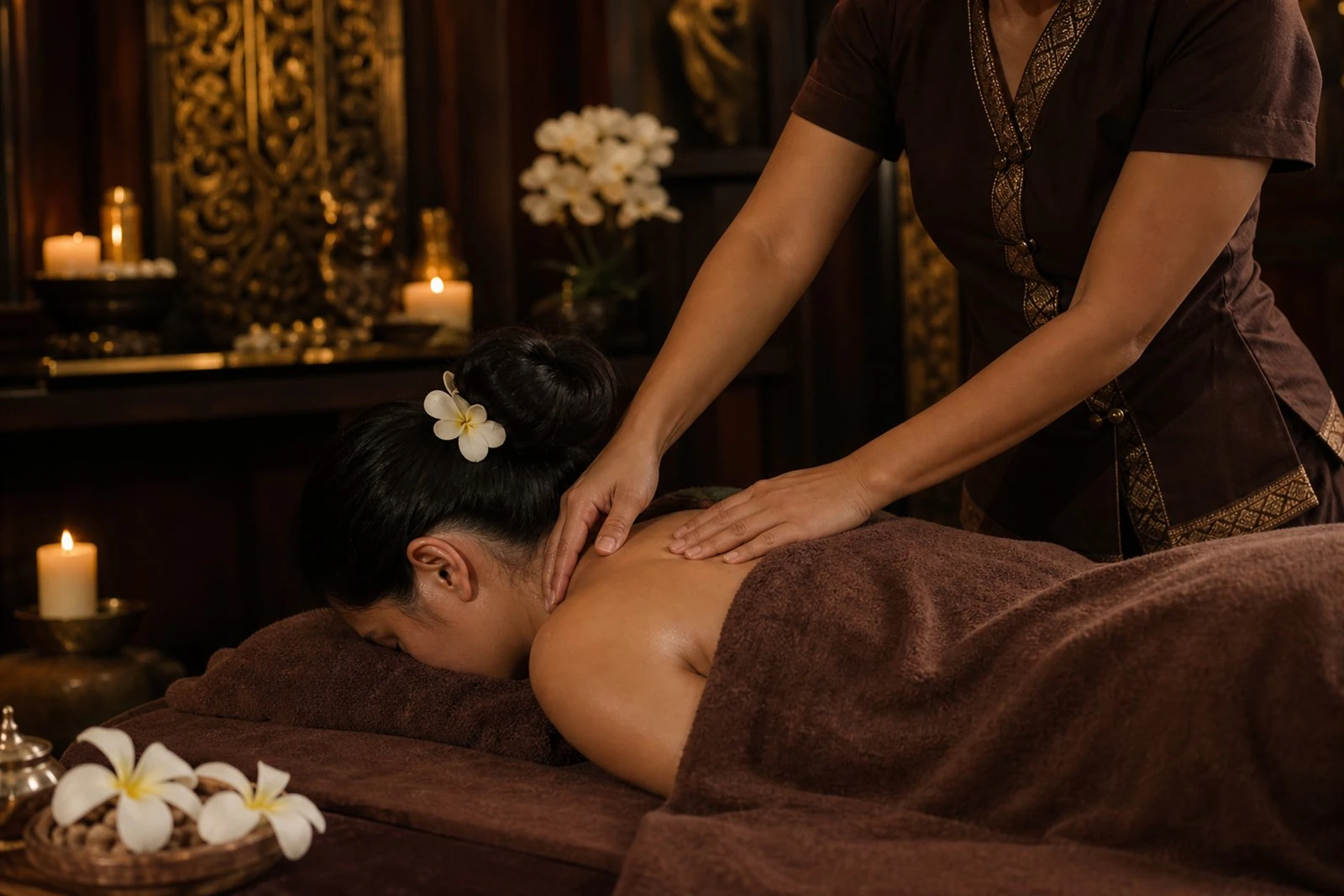
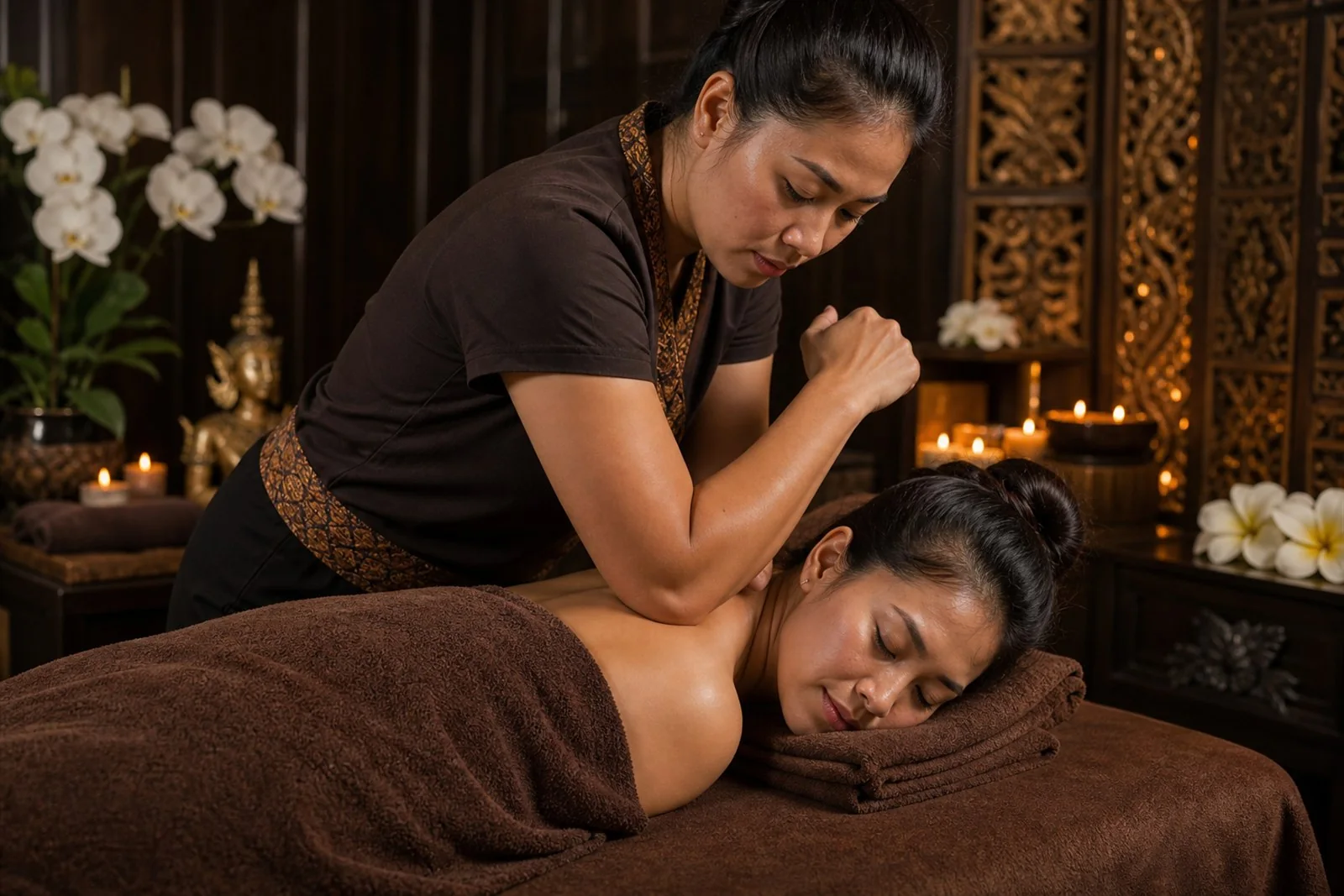
Sustained pressure, kneading, and stretches. That is it, and there is no mystery to it. A therapist finds the tender spot, holds steady pressure until it eases, then works the surrounding muscle with slower strokes so it does not simply tighten again. Warm oil or heat helps.
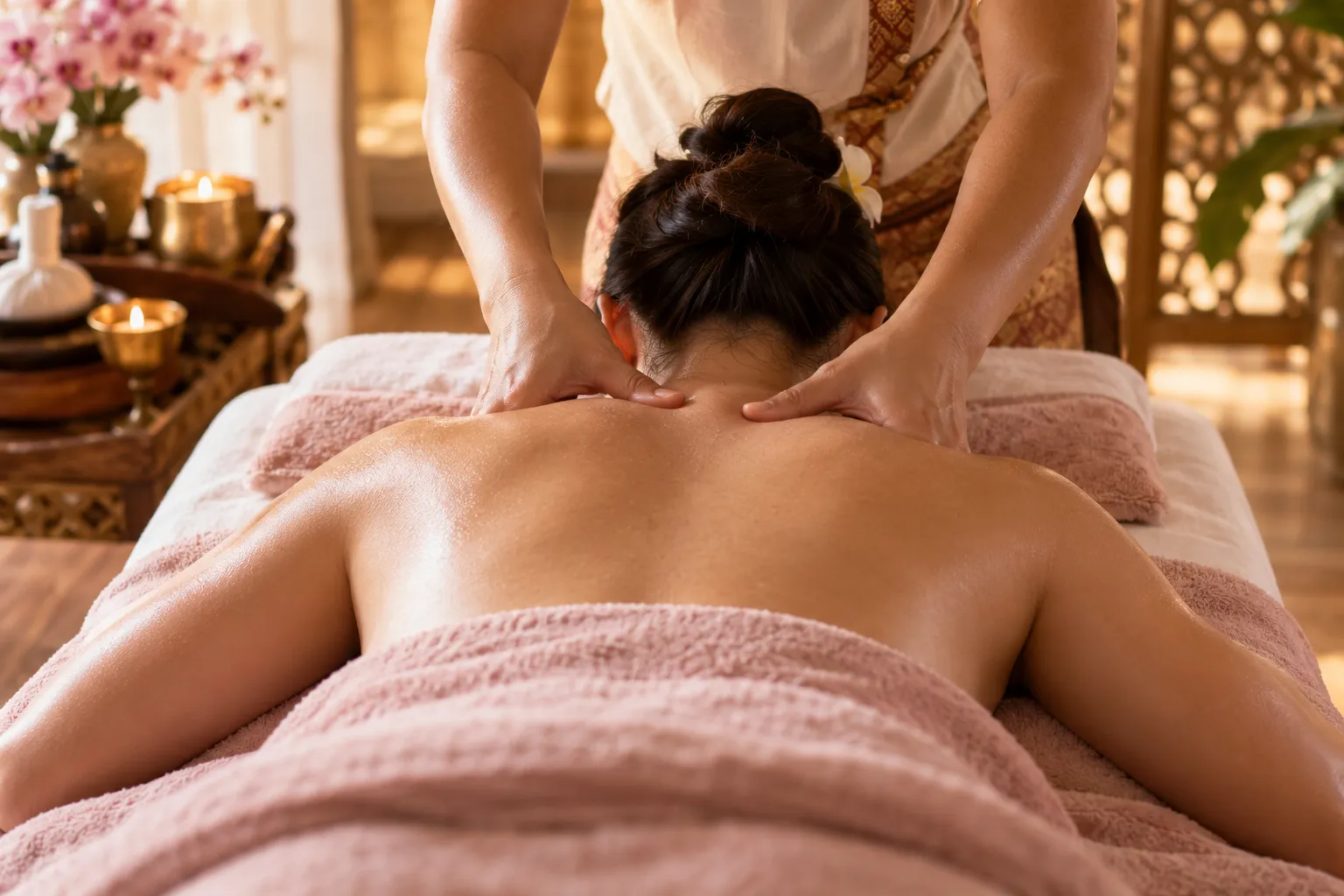
At Siri, three treatments suit knots best. Deep tissue massage at the Viaduct and at St Heliers uses slower, firmer pressure into the deeper layers and fascia, which suits long-held tension. Deep tissue for sport recovery explains how it works for active bodies. Back and shoulder massage (30, 45 or 60 minutes) is for the upper-body knots that come from desks and driving. And Traditional Thai massage combines pressing with stretches, which suits a body that has gone stiff all over.
If the idea of firm pressure makes you nervous, remember that you set the dial. Say "that is the spot" when the therapist finds it, and say "a touch lighter" if it is more than a good ache. Pushing through pain tends to make the muscle guard, which is the opposite of what you want.
Heat first: stones and herbal compress
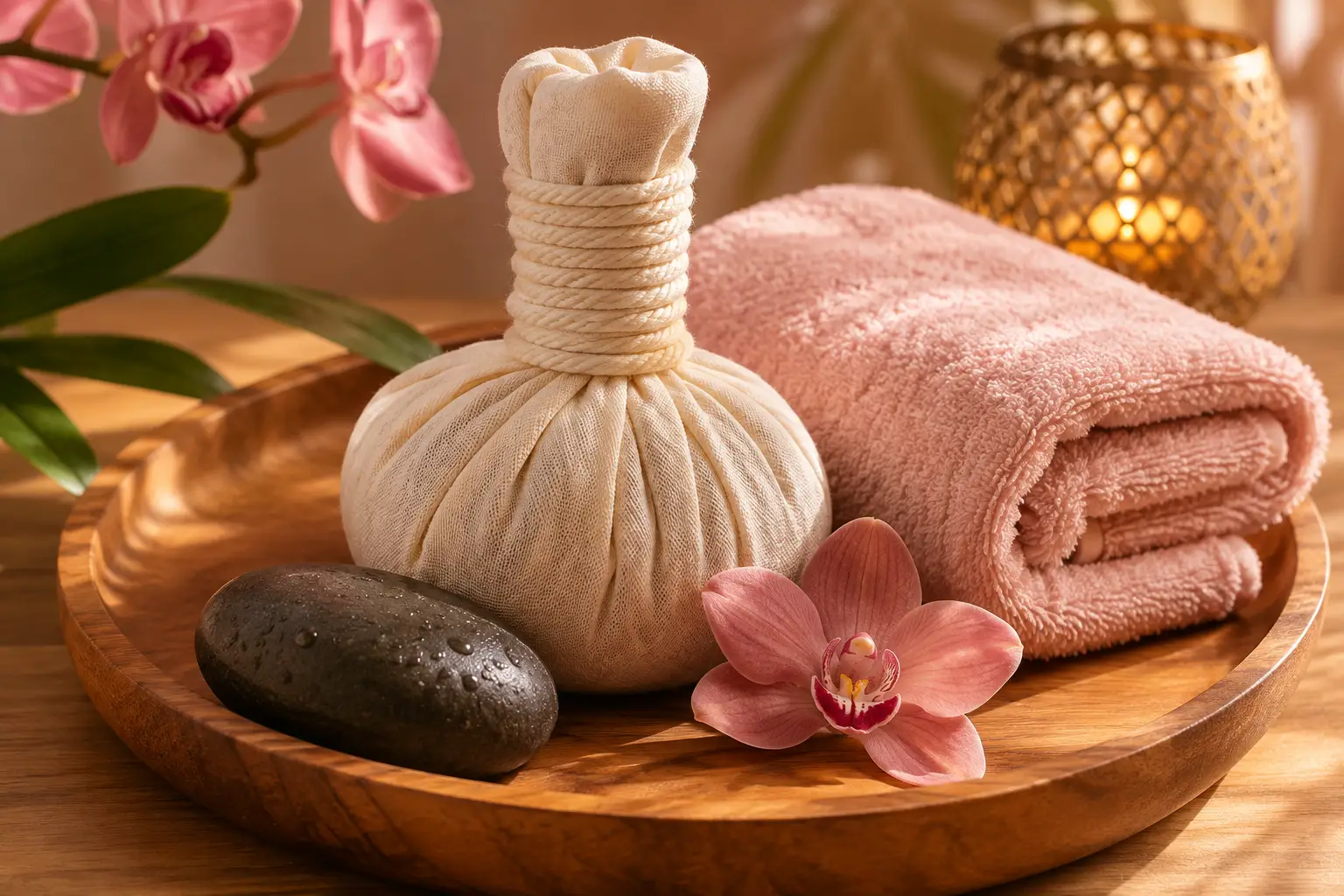
Warm muscle lets pressure go further than cold muscle, which is why heat shows up in so many knot routines. If your knots are the stubborn, guarded kind, a heat treatment can make the work feel gentler. Hot stone massage rests heated stones on key points while the larger ones are worked through oil, and the Thai herbal compress presses a steamed bundle of lemongrass, turmeric and kaffir lime over the body. Both come in 90 and 120 minutes.
Neither is the right pick if what you want is hard, specific pressure on one spot. For that, book deep tissue. And with any heat treatment, tell your therapist if you have a heart condition, blood pressure issue or reduced skin sensation, and check with your GP first.
How long relief lasts, and keeping it
Many guests feel looser straight away and for a day or two after. A little tenderness the next day is common after firmer work, which is the muscle recovering. Drinking water and keeping the area warm and moving, rather than resting it completely, usually helps. Our aftercare guide has the details.
A single session will not undo months of sitting hunched. Think of it as a reset that makes it easier to change what caused the knot. If you want a rough rhythm, how often to get a massage suggests how to space visits, and the cheapest habit of all is the two-minute movement break.
When to see your GP instead
A knot is a muscle problem. Some symptoms are not, and they are worth a call to your GP or a physio before you book anything.
- numbness, tingling or pins and needles running down an arm or leg
- weakness, or things dropping from your hand
- pain that wakes you at night, or does not ease with rest or changing position
- swelling, redness, heat in the area, or a lump that is growing
- pain after a fall, car accident or other injury
Cleveland Clinic also says to have an area evaluated if it stays painful or turns red, swollen or hot. If you have a heart condition, high blood pressure, a skin condition or are pregnant, check with your GP or midwife and tell your therapist when you book.
What it costs
Deep tissue is $115 for 60 minutes and $165 for 90 at the Viaduct, and $105 and $145 at St Heliers. Back and shoulder is $65 for 30 minutes, $95 for 45 and $115 for 60 at the Viaduct, and $60, $85 and $105 at St Heliers. Both spas are open seven days, 10am to 8pm, with a 15% public-holiday surcharge.
Common questions
Tight, tender spots in a muscle, often called trigger points, that are most common in the neck, shoulders and back. Researchers still debate exactly what is happening inside them, but they are usually linked with sitting for long periods, stress and repeated strain.
We would not promise that. What many guests find is that the spot feels softer and less sore after sustained pressure, kneading and stretching, and it often stays that way longer when you also move and stretch between sessions.
Deep tissue suits long-held tension, and back and shoulder massage is the targeted choice for the neck, shoulders and upper back. Both are available at our Viaduct and St Heliers spas. If you are stiff all over, Traditional Thai adds stretching.
See your GP if you notice numbness, tingling, weakness, pain at night or after an injury, or swelling, redness or heat in the area. Tell your therapist about any health condition when you book.