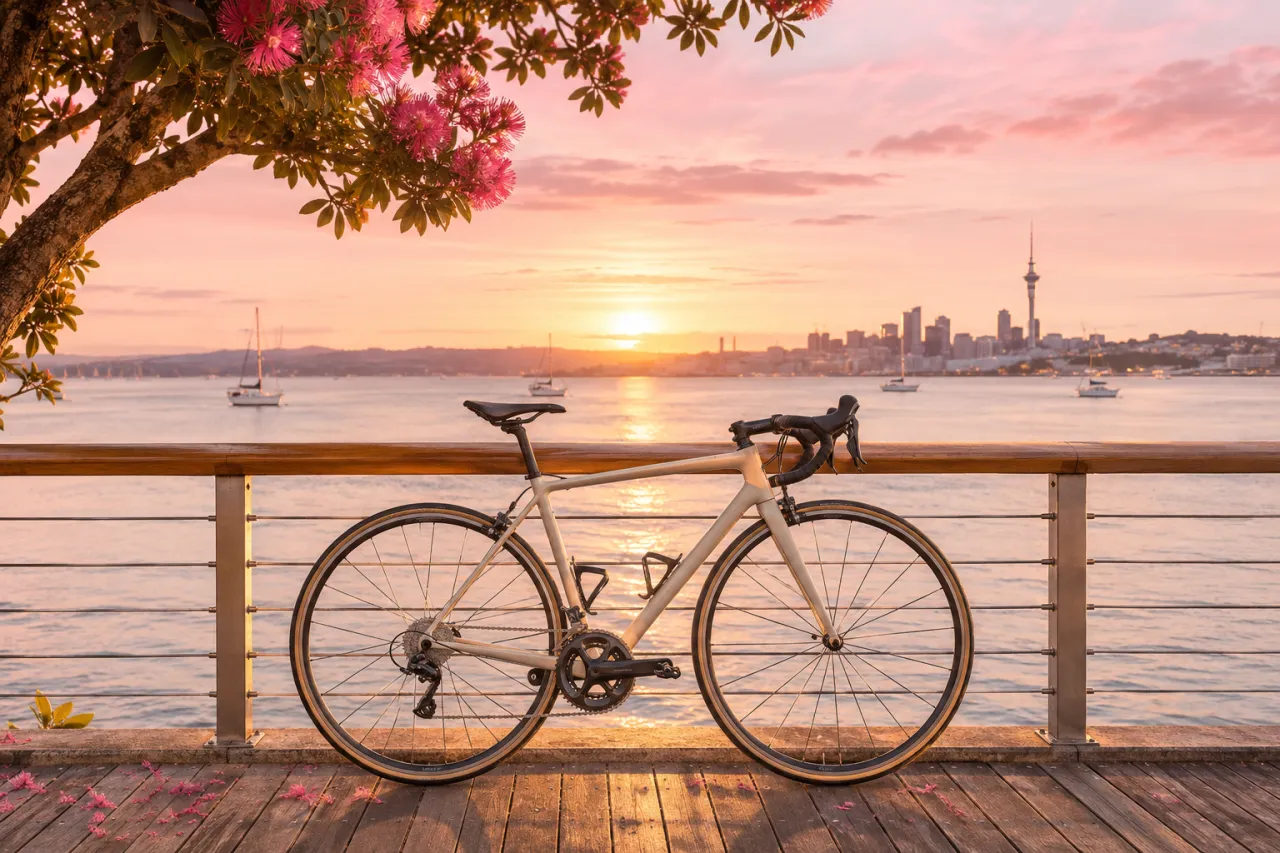
You can ride for three hours and never once think about your hip flexors. Then you stand up from the café table at the end of Tamaki Drive and they let you know. Massage for cyclists is less about the legs people expect and more about everything that holds you in the riding position: hips, lower back, shoulders and neck.
The short answer for most riders is a firm, steady session: deep tissue massage at the Viaduct or at St Heliers, with the time spent where the bike actually loads you. The rest of this guide explains where that is, and how to pick between the other options on the menu.
Where a bike leaves you tight
Cycling is repetitive and mostly forward-folded. Your hips stay bent, your quads and glutes do the pushing, your lower back holds a long curve, and your shoulders, forearms and neck hold up the front of your body for the entire ride. Nothing is wrong with any of that, but the same muscles working in one position for hours is exactly how tightness builds.
- Hip flexors and quads. Shortened for as long as you are in the saddle, which is why standing up straight can feel like unfolding.
- Glutes and hamstrings. They do much of the driving, and they often grumble on the days after a hilly ride.
- Lower back. It holds a long, steady curve while you ride, and many cyclists notice it most when they get off the bike.
- Neck and shoulders. Looking up the road with your head lifted while your arms take weight is a quiet recipe for a stiff neck.
- Hands and feet. Grip on the bars and pressure through the pedals can leave both feeling tired and tender.
If any of that sounds familiar, you are not unusual. It is the ordinary result of the position, and it is the part of cycling that a good massage is well suited to ease.
Which massage to book
There is no single right answer, because the treatment depends on what your body is asking for. These are the ones we would point a rider towards.
- Deep tissue / sport massage. Firmer pressure into the deeper muscle layers and fascia, for hips, glutes, quads and the long muscles either side of the spine. This is the default for riders who are comfortable with intensive work.
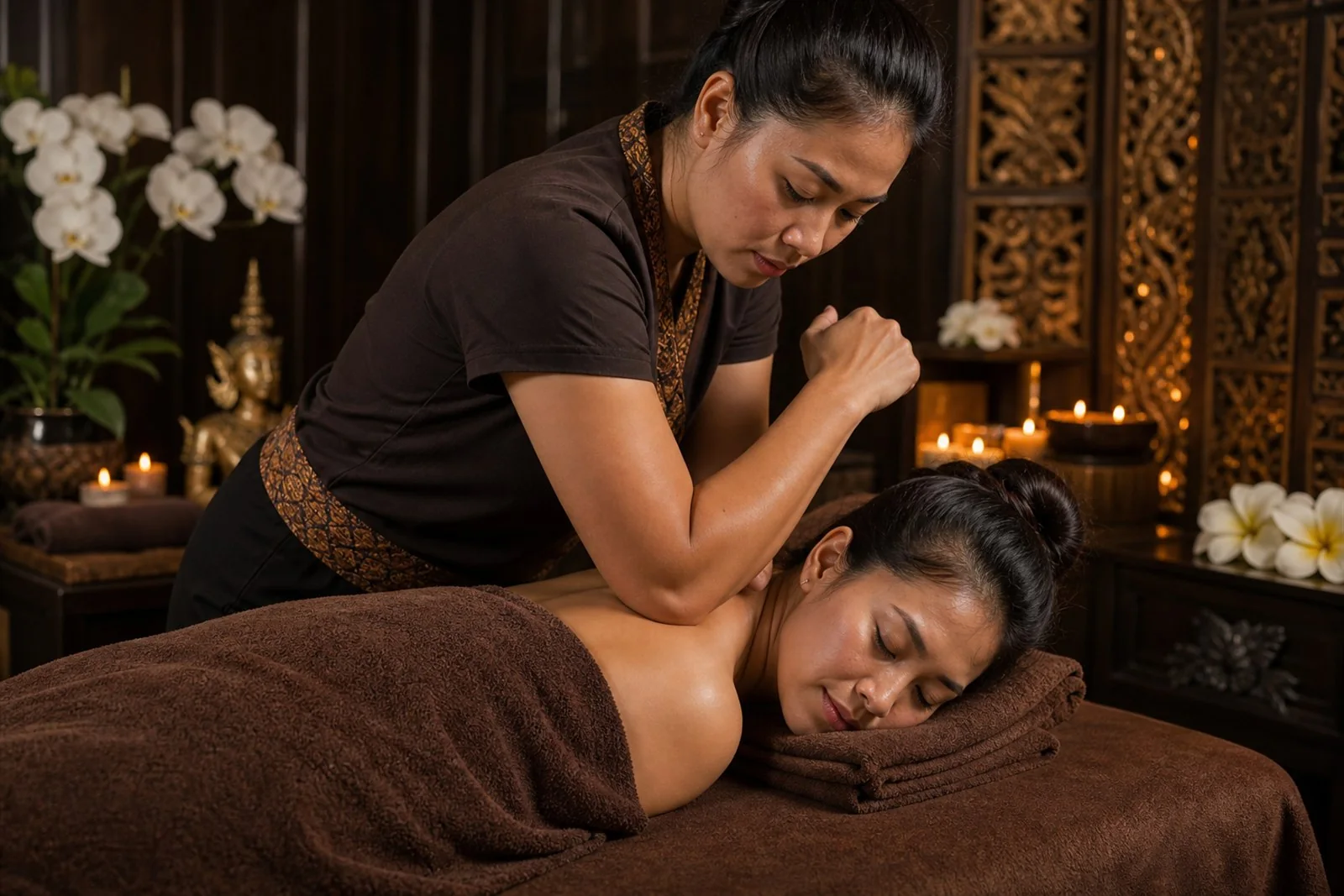
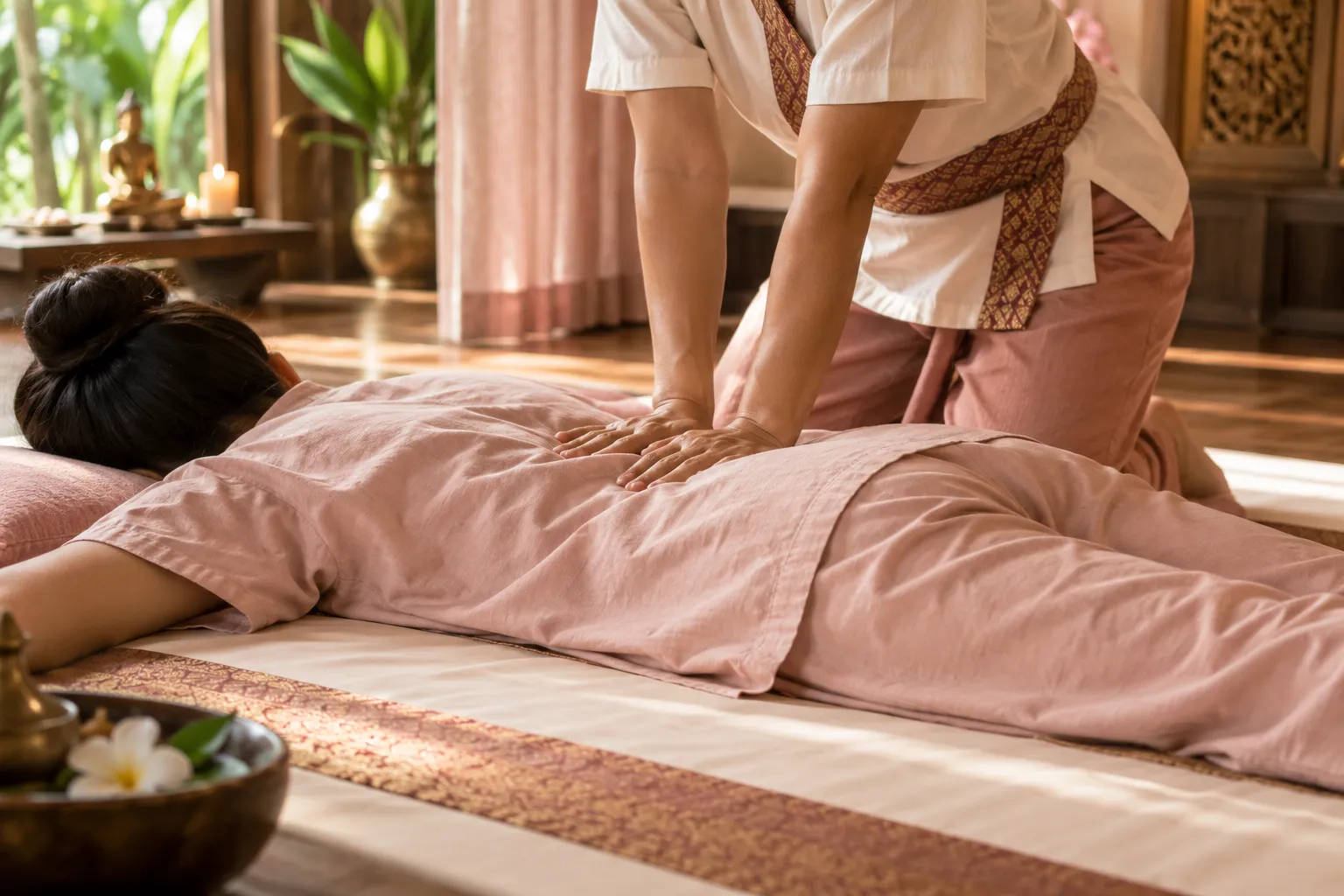
- Traditional Thai massage. Acupressure and yoga-style stretches, no oil, worn in loose clothing. The stretching side is the draw for riders: it opens the hips and hamstrings in ways a hands-only session does not.
- Back and shoulder massage. A short, focused session for the neck, shoulders and upper back. Handy after a long ride when your legs are fine but your neck is not, and it comes in 30, 45 or 60 minutes.
- Reflexology foot massage. Legs and feet, with pressure on tightness and aching in the lower body. A gentle choice after a day where your feet and calves took a hammering.
If you cannot decide between the first two, our comparison of Thai massage and deep tissue lays out the difference.
"Cyclists often tell us their legs are the problem. Half the time it is the hips and lower back doing the quiet work. Show us where the bike sits on you and we will start there."
Siri therapist team
Choosing the pressure
Riders tend to ask for the hardest pressure on the menu, and it is not always the best call. Tight, tired muscle can feel better under steady, sinking pressure than under something sharp. You are not trying to prove anything. Tell your therapist how firm you like it in the first five minutes, and keep telling them as they move around the body, because your glutes may take a lot more pressure than your neck will. Our guide to speaking up about pressure has the words that work.
There is a useful rule of thumb. Firm should feel like a good ache that eases as the therapist stays with it. If you are holding your breath, tensing your shoulders or flinching, that is too much. Say so and it will be adjusted straight away.
Timing around rides and events
General guidance only, because everyone's body is different. A firm massage can leave muscles feeling a little tender for a day or so, the way a hard session on the bike does. That is why we suggest not booking deep work the day before a big ride, a long event or a race. You want to roll out feeling like yourself, not like someone who was worked on yesterday.
- The day before a big ride: skip deep tissue. If you want something, a lighter back and shoulder session or an easy foot massage is the safer choice.
- A few days before: a good window for a firmer session, so any tenderness has time to settle.
- After a long ride: eat, drink, shower, then book. Many riders find the evening, or the next day, works well.
- In a heavy training block: a regular booking you can plan around tends to work better than a rescue appointment when something already hurts.
The same logic applies as for any workout: give hard efforts and hard massage some space from each other.
What a session looks like for a rider
You will fill in a short consultation, or go through it with your therapist when you arrive. This is the moment to say what you ride, how often, and where it feels tight. If you ride long distances, say so, and mention anything that has been niggling.
- Where it hurts. Point to hips, lower back, neck, whichever it is. A therapist can plan the order around that.
- Face down first. Back, glutes and the backs of the legs, which is where the riding position tends to sit.
- Turn over. Fronts of the legs, quads and the hip crease, then shoulders and neck.
- Finish slowly. A few minutes of lighter work to let everything settle before you sit up.
Choose the length to match the job. Sixty minutes covers the back, hips and legs reasonably well. If you have been riding for hours or your whole body is tight, ninety gives the hips and legs time without rushing the neck and shoulders.
What we cannot promise
A massage will not make you faster, and we do not claim it will. What many riders find is that tight muscles feel looser and more comfortable for a few days afterwards. That is worth having, and it is all we would say.
Massage is also not a substitute for a physiotherapist or your GP. If you have a sharp or specific pain, pain in a joint such as the knee, numbness or tingling in your hands or feet, a recent injury or crash, or anything you are unsure about, check with your GP or physio first and tell your therapist when you book. Firm pressure over an injury is not the right call. Our guide to massage for lower back pain explains when to get the back looked at before it is rubbed.
If you are planning a longer ride, Auckland Transport keeps its cycling and walking pages for paths, safety and events, which are worth a look before a longer ride.
Prices and where to book
Both spas are open seven days, 10.00am to 8.00pm, and a late-morning booking suits a dawn ride. Our St Heliers spa is on Tamaki Drive, so it is a natural stop at the end of a ride along the waterfront. The Viaduct spa is by Viaduct Harbour in the CBD. A 15% surcharge applies on public holidays. Every length and price is on the pricing pages.
- Deep tissue, Viaduct: 30 mins $65 · 60 mins $115 · 90 mins $165 · 120 mins $220
- Deep tissue, St Heliers: 30 mins $60 · 60 mins $105 · 90 mins $145 · 120 mins $195
- Back and shoulder, Viaduct: 30 mins $65 · 45 mins $95 · 60 mins $115
- Back and shoulder, St Heliers: 30 mins $60 · 45 mins $85 · 60 mins $105
Before you book: Tell the branch what you ride and when your next big ride or event is, and they can suggest the right treatment and day.
Common questions
Most riders do well with deep tissue, which works the deeper layers of the hips, glutes, quads and back. Traditional Thai massage suits riders who want stretching, and back and shoulder massage suits those whose neck and shoulders ache after long rides. The difference is explained above.
After is the safer default: eat, drink and shower first. Avoid firm deep work the day before a big ride or event, because muscles can feel tender for a day or so. A lighter back and shoulder session is a gentler option before a ride.
Deep tissue is $115 for 60 minutes and $165 for 90 at our Viaduct spa, and $105 for 60 minutes and $145 for 90 at St Heliers. A 15% surcharge applies on public holidays.
No. Massage can ease tight muscles around the hips and legs, but pain in a joint needs a GP or physiotherapist to look at your bike fit, your body and the cause. Tell your therapist about it when you book.