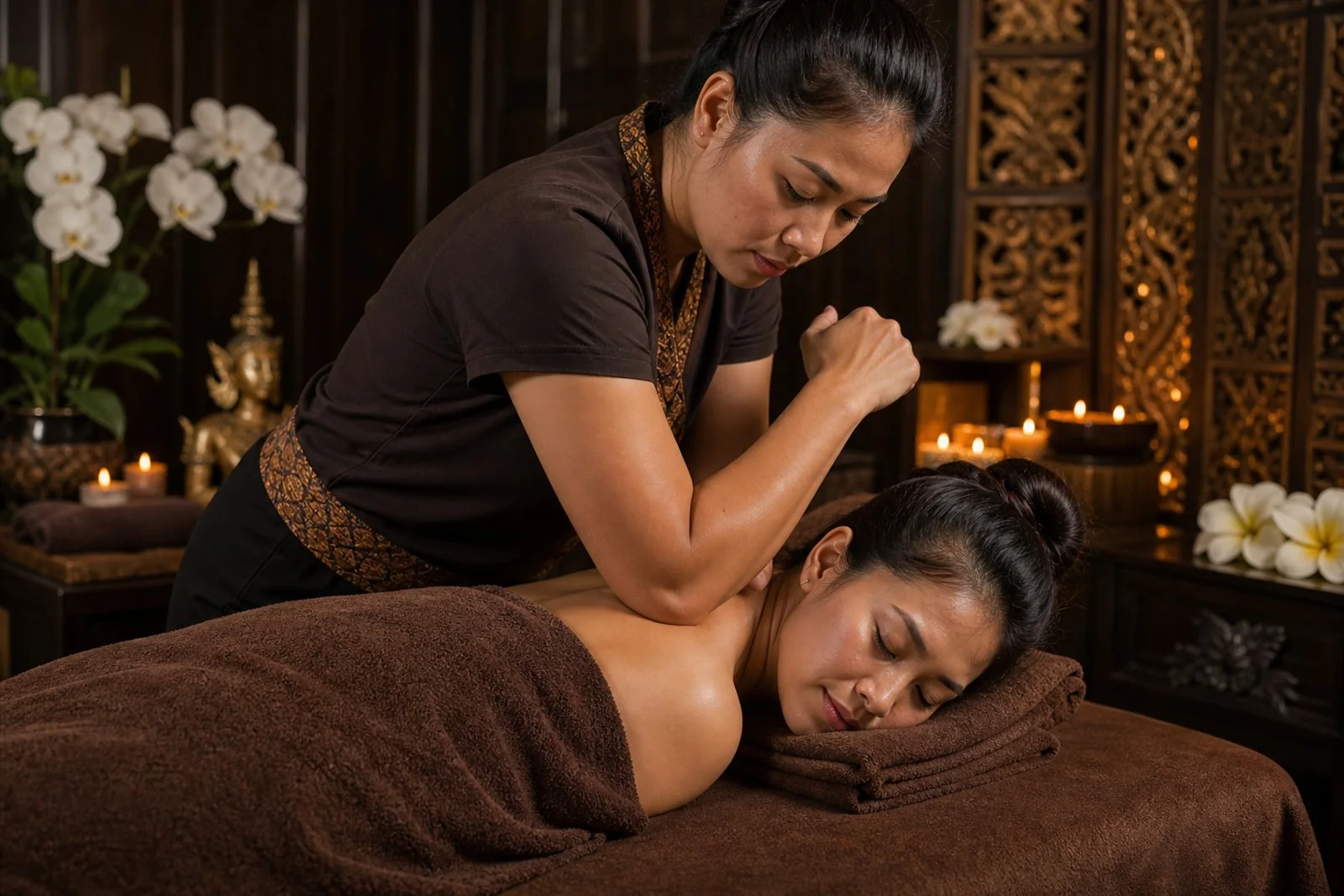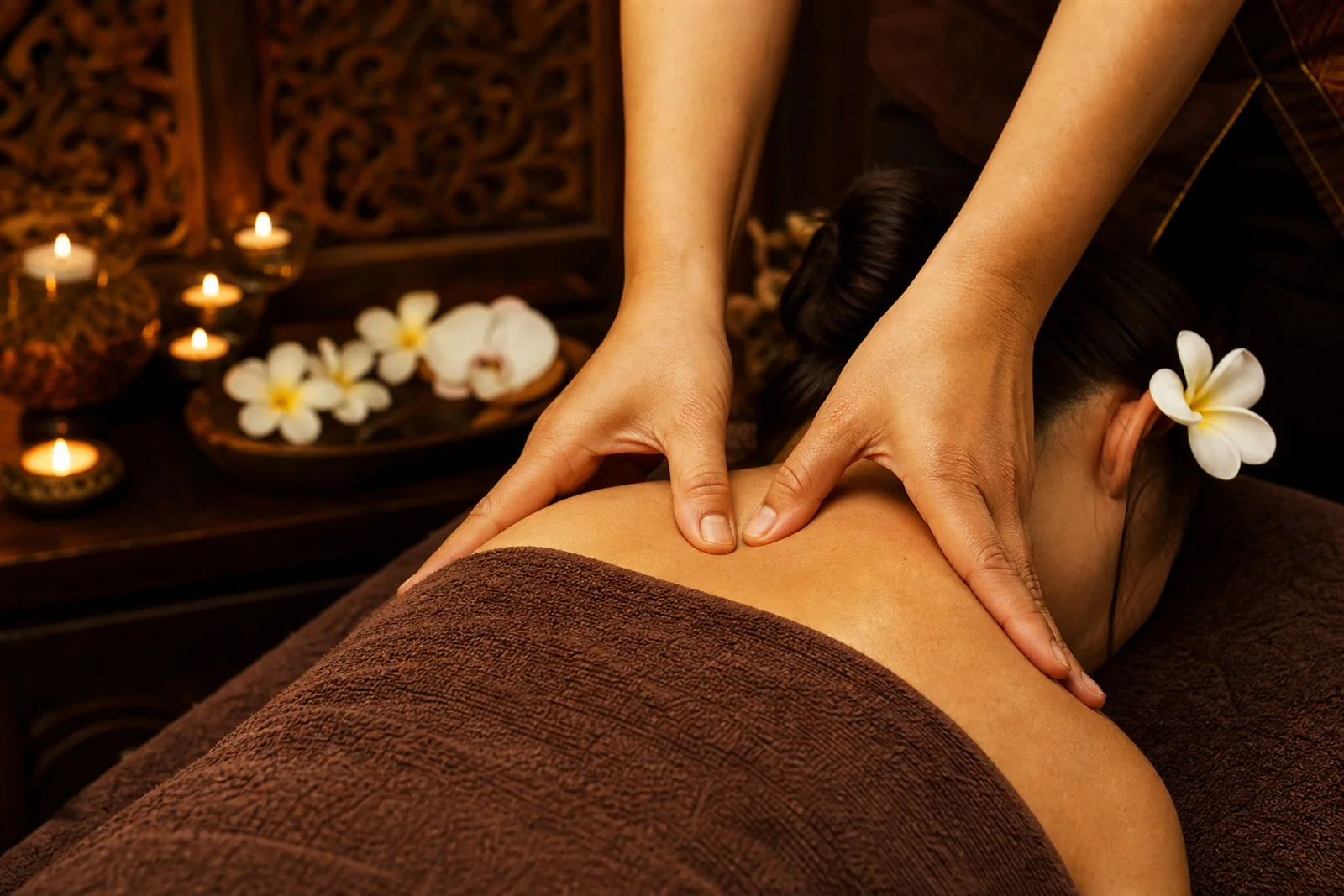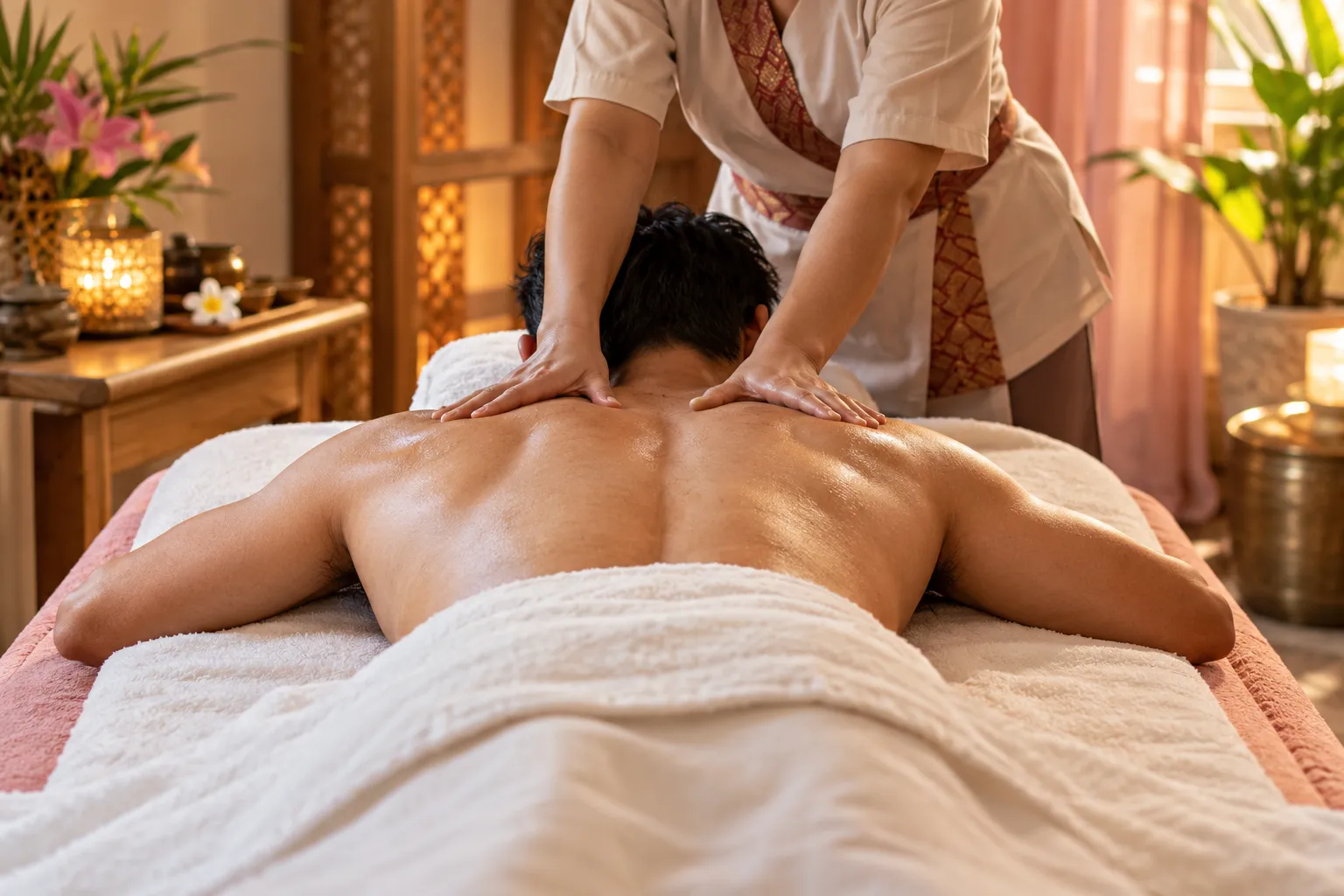
If you have never had a massage, the questions in your head are probably practical ones. What do I book? What do I take off? Will it be awkward? The short answers: deep tissue or a back and shoulder massage; only as much as you are comfortable with; and no. A professional massage is a matter-of-fact hour, and therapists work with every kind of body, every day.
This guide to massage for men in Auckland covers the rest: what to book first, how covering up works, how to ask for the pressure you actually want, and how massage fits around the gym or sport. Prices are given for both of our spas, the Viaduct in the CBD and St Heliers on Tamaki Drive.
Massage for men in Auckland: which treatment first
Pick the treatment that matches the problem, not the one that sounds toughest.
- Deep tissue / sport massage — for the gym, sport, trades or any physically hard job. Slower, firmer pressure into the deeper layers of muscle and the fascia around them. A good first booking if you already know you like firm pressure.
- Back and shoulder massage — for desk workers, drivers and anyone whose tension sits in the neck, shoulders and upper back. Thirty, 45 or 60 minutes on that area and nothing else.
- Swedish massage — firm but flowing, full body, with sweet almond oil. Our menu pitches it at light-to-medium training and physical work, and it is the easier way into oil massage if you have never had one. Sweet almond oil comes from a nut, so mention any nut allergy when you book.
- Traditional Thai massage — for stiffness rather than soreness, or if oil and undressing are what is putting you off. It is done fully clothed, with acupressure and assisted stretching, and no oil at all.
All four cost the same at each branch. Thirty minutes is $60 at St Heliers and $65 at the Viaduct; an hour is $105 or $115. Back and shoulder also comes in 45 minutes, at $85 or $95, and the other three come in 90 and 120 minutes. Still unsure? Ring the branch and describe what is bothering you in a sentence: Viaduct 027-722-6564, St Heliers 027 654 6642. You will be pointed at the right treatment and length.
What you take off, and what stays covered
For an oil massage, you undress to whatever level you are comfortable with. Most guests keep their underwear on, and nobody will ask you to do otherwise. Your therapist leaves the room while you get onto the table and under the towel, and during the massage only the area being worked on is uncovered. The towel goes back before they move on.
A few things men tend to wonder about and rarely ask:
- Body hair is not a problem. Oil works perfectly well on a hairy back or legs, and nobody expects you to have done anything about it.
- Coming from training? Shower at the gym or at home first. It is simply a courtesy, and you will relax better feeling clean.
- Traditional Thai is different. You stay dressed, so wear loose, comfortable clothing you can stretch in.
- You can rule out any area. Feet, glutes, scalp, stomach: say so at the start and it is left alone, no explanation needed.
Pressure: firmer is not the goal
The most common first-massage mistake is treating pressure as a test you have to pass. It is not one. If the therapist asks how it feels and you say "fine" through gritted teeth, your muscles tighten against the pressure, and the session achieves less, not more.
Use numbers instead of adjectives. Tell the therapist you would like it at about a seven out of ten, and say "that's an eight, back it off a touch" if it creeps up. It is precise, it takes three seconds, and it gives the therapist something they can actually work with. Our guide to massage pressure explains what light, medium and firm mean on the table, and why the hardest massage is rarely the most useful one.
"Nobody is impressed by how much pressure you can take, least of all your muscles. Give us a number and we will work to it."
Siri therapist team
Massage for men who train
If you lift, run, ride or play a weekend sport, timing matters as much as the treatment. Keep anything firm away from the day before a big session or event, and book deeper work a day or more after a hard one, once the worst of the stiffness has passed. Our guide to booking a massage before or after a workout sets out the timing properly.
Deep tissue is the usual recovery choice. Cleveland Clinic's overview of massage types describes sports massage as zeroing in on the muscles that take a beating from sport and repetitive activity, which is exactly the brief. Swedish suits the lighter weeks. Neither belongs on a fresh strain, sprain or tear: get that looked at by a physiotherapist or GP first, and come in for the tissue work once you are cleared.
Be specific when you arrive. "Left hamstring, tight since Saturday's game" gives your therapist a plan. "Everything's a bit sore" gives them a guess.
Professional, start to finish
A therapeutic massage is exactly that. Your therapist will ask what you have come in for and about any health issues, keep you covered throughout, and adjust whenever you ask. If you would rather not talk, say so; a quiet hour is completely normal. If you want to know what a technique is for, ask that too. Either is fine.
Before you book: tell us if you have an injury, high blood pressure or a heart condition, a skin condition, or have had recent surgery. If you are under a doctor's or specialist's care for any of these, check with your GP before booking. It changes which treatment and how much pressure is right for you.
Giving a massage to a man who won't book one
Some men will never book a massage for themselves, however much they need one. If you are buying for one, take the decision out of his hands.
- Choose a treatment, not just an amount. A voucher for a 60-minute deep tissue massage is harder to leave in a drawer than a dollar value. Vouchers can be for either at both branches: see the Viaduct gift vouchers and the St Heliers gift vouchers.
- Match it to his week. Desk job: back and shoulder. Trades, gym or sport: deep tissue. Stiff and inflexible: traditional Thai.
- Go with him. A couple massage, side by side in a private room, takes the awkwardness out of a first visit. The Viaduct has two couple rooms and St Heliers has one, so book ahead. Prices are for two people, from $200 at St Heliers and $220 at the Viaduct for 60 minutes.
The honest limitation
Massage is very good at tight, overworked muscle. It is not a diagnosis, and it will not fix an injury on its own. If you have pain that wakes you at night, pain or numbness running down an arm or leg, or a problem that has been getting steadily worse for weeks, see a GP or physiotherapist first. Massage works well alongside rehab; it is not a substitute for it.
Ready to book? An hour is the right first booking for most men: deep tissue if you train or work hard physically, back and shoulder if the tension lives above your shoulder blades. That is $105 at St Heliers or $115 at the Viaduct, and both spas are open seven days, 10.00am to 8.00pm, so an after-work slot is an easy fit.
Common questions
There is no separate men's version; choose by the problem. Deep tissue suits gym, sport and physical work, back and shoulder suits desk tension, and traditional Thai suits stiffness and is done fully clothed.
No. Undress only to your comfort level; most guests keep their underwear on. You are covered by a towel throughout, and only the area being worked on is uncovered.
The same as for anyone. At Siri, 30 minutes is $60 at St Heliers and $65 at the Viaduct, and an hour of deep tissue or back and shoulder is $105 or $115.
Only if you already know you like firm pressure. Otherwise start with Swedish or a back and shoulder massage at medium pressure, and go firmer next time.