The next time a therapist guides your leg into a slow stretch, you are taking part in something that has been passed from person to person for a very long time. Nobody can give you a tidy birth date for Thai massage, and anyone who does is probably guessing.
This is a short, respectful history of Thai massage: what is known, what is told as tradition, and where our own traditional Thai session fits. We have kept to what we can support and flagged legend as legend.
Where Thai massage comes from
The history of Thai massage begins well before it was a spa treatment. It grew up as one part of traditional Thai medicine, alongside herbal remedies, diet and the care of the body in everyday life. In Thai, the practice is called nuad Thai, or sometimes nuad boran, meaning ancient or traditional massage.
UNESCO's record of the practice says it grew from village self-care. People turned to local massage healers when farm work left their muscles sore, and over time that knowledge became a formal body of learning and a recognised occupation. That ordinary, practical beginning is worth remembering, because it is a long way from candles and soft music.
Thai medicine also draws on a view of the body as made up of four elements: earth, water, wind and fire. Traditional practitioners aim to restore balance between them. Whether or not that framework is how you think about your own back, it explains why the massage is as much about rhythm and balance as about any single muscle.
The legend of Jivaka Kumarabhacca
If you ask who started it, the answer you are most likely to hear is a name: Jivaka Kumarabhacca. According to tradition, Jivaka was a physician in the time of the Buddha and is honoured as the father of Thai medicine. Many Thai massage practitioners still honour him with a short respectful gesture before they begin work.
We should be careful here. Jivaka's story is told as tradition and teaching, and it is not documented in a way that lets anyone confirm who taught what and when. We tell it because it matters to the people who practise, not because we can date it.
Temples, teaching and Wat Pho
For centuries, Thai temples were not only places of worship. They were also centres of learning, where knowledge of medicine, herbs and massage was kept and passed on. Wat Pho in Bangkok is the temple most associated with this. According to tradition, medical and massage knowledge was set down there as inscriptions and images, and Wat Pho is still known today for teaching traditional Thai massage.
We have not given you any specific dates for these events because the accounts differ, and we would rather leave a gap than state something we cannot verify. If you visit Bangkok, Wat Pho is worth seeing for itself.
"Thai massage was never meant to be a luxury. It started as practical care, passed from hand to hand. We try to keep a little of that: you are looked after, not performed on."
Siri therapist team
Recognised by UNESCO in 2019
In 2019 UNESCO inscribed Nuad Thai, traditional Thai massage, on its Representative List of the Intangible Cultural Heritage of Humanity. The listing describes it as part of the art, science and culture of traditional Thai healthcare.
The record also describes how practitioners work: with hands, elbows, knees and feet, and with herbal hot compresses. It notes a project in the 1980s to revive knowledge of the practice, and it lists declining interest among young people as one of the things threatening it. Inscription is a recognition of a living tradition that needs looking after, not a prize for being old.
UNESCO does not make health claims about it, and neither will we. What it does show is that Thai massage is treated seriously as cultural heritage well beyond the spa world.
How to read claims about its age
You will see Thai massage described online as being 2,500 years old, or as coming from India, or as a direct line from one teacher. Treat those lines with care. Oral traditions pass through many hands, and the neat numbers usually come from retellings rather than records.
A fair summary is this. It is an old practice with roots in Thai traditional medicine, shaped over many generations by village healers, temple teaching and family knowledge, and influenced by the wider region. The exact route is debated, and honest practitioners say so. We would rather give you a smaller true story than a larger shaky one.
The ideas that are still in the room
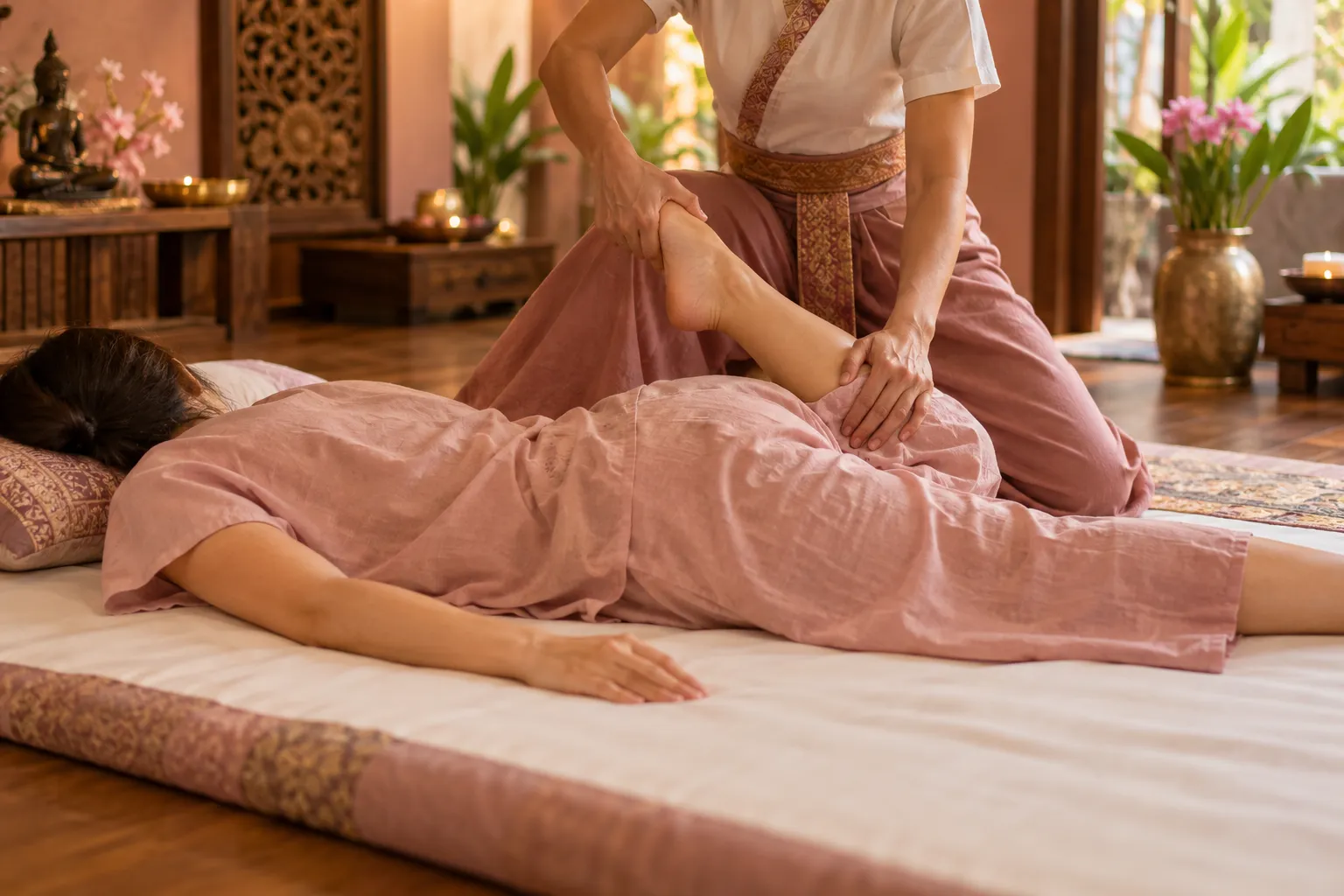
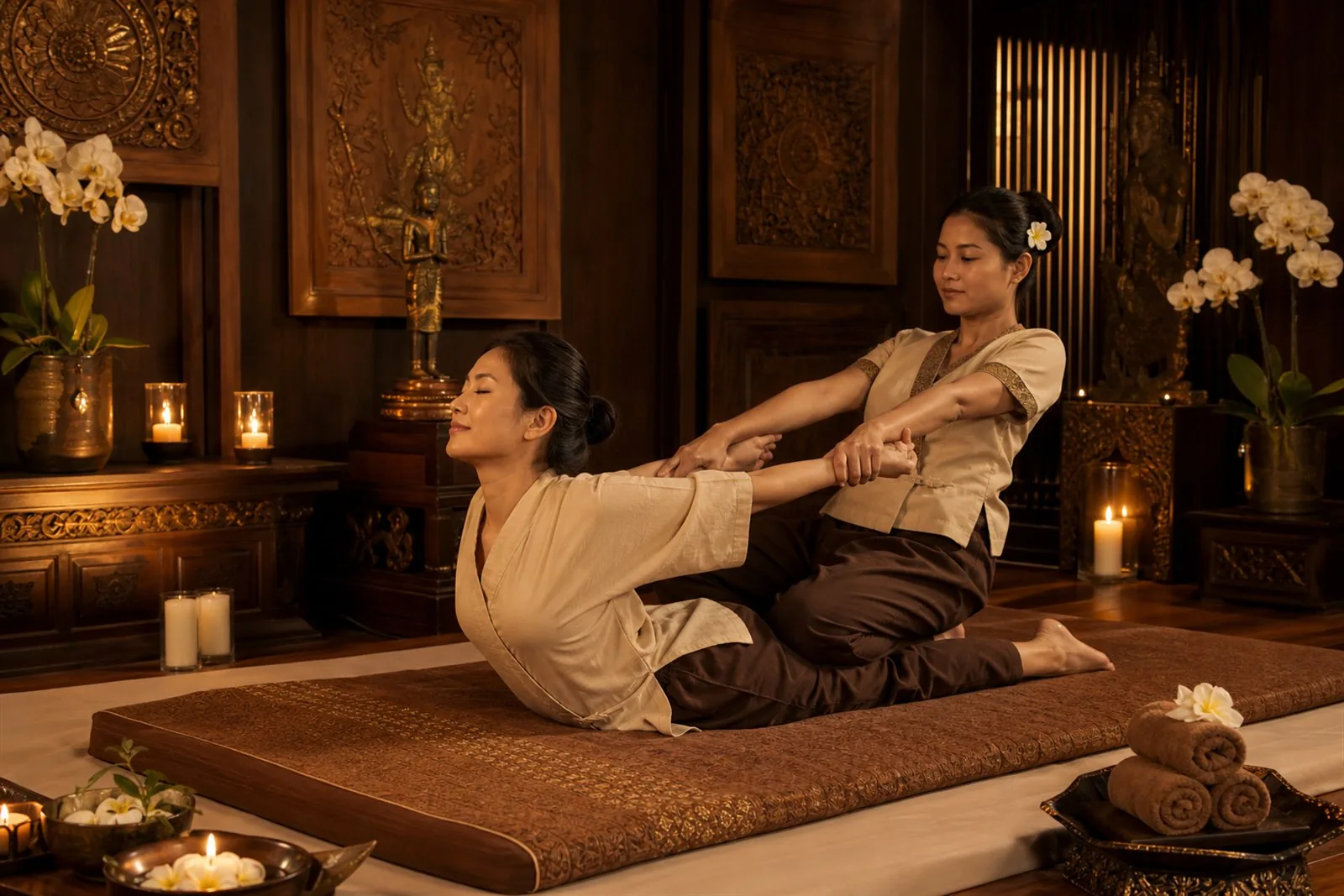
Several things from that history are still visible in a session today. The therapist uses their hands, thumbs, forearms, elbows and knees, rather than relying on oil to glide. Pressure is applied in a steady, rhythmic way instead of quick strokes. Your limbs are moved through stretches that are gentle enough to be repeated, and the pace is deliberately unhurried.
You may also notice a quiet, respectful manner. In Thai culture the wai, a small bow with palms together, is a common greeting. If you ever receive one, you are welcome to return it or simply smile. Nothing is expected of you except being comfortable.
How a traditional session at Siri relates to this history
Our traditional Thai massage follows the shape described above. It is done clothed, with no oil, using acupressure and yoga-style stretches in a smooth, unhurried tempo. You keep your clothes on, and you choose the pressure. That is the same set of ideas the tradition rests on, offered in an Auckland treatment room.
We should be plain about the limits. Our therapists work in Auckland, not in a Bangkok temple, and a 60 minute booking is not a complete course of traditional Thai medicine. It is a traditional-style massage, delivered with respect for where it comes from. Our guide to what an authentic session is like describes the session step by step.
If you are curious how it differs from oil styles, see our comparison of Thai and oil massage.
The herbal compress: a tradition within a tradition
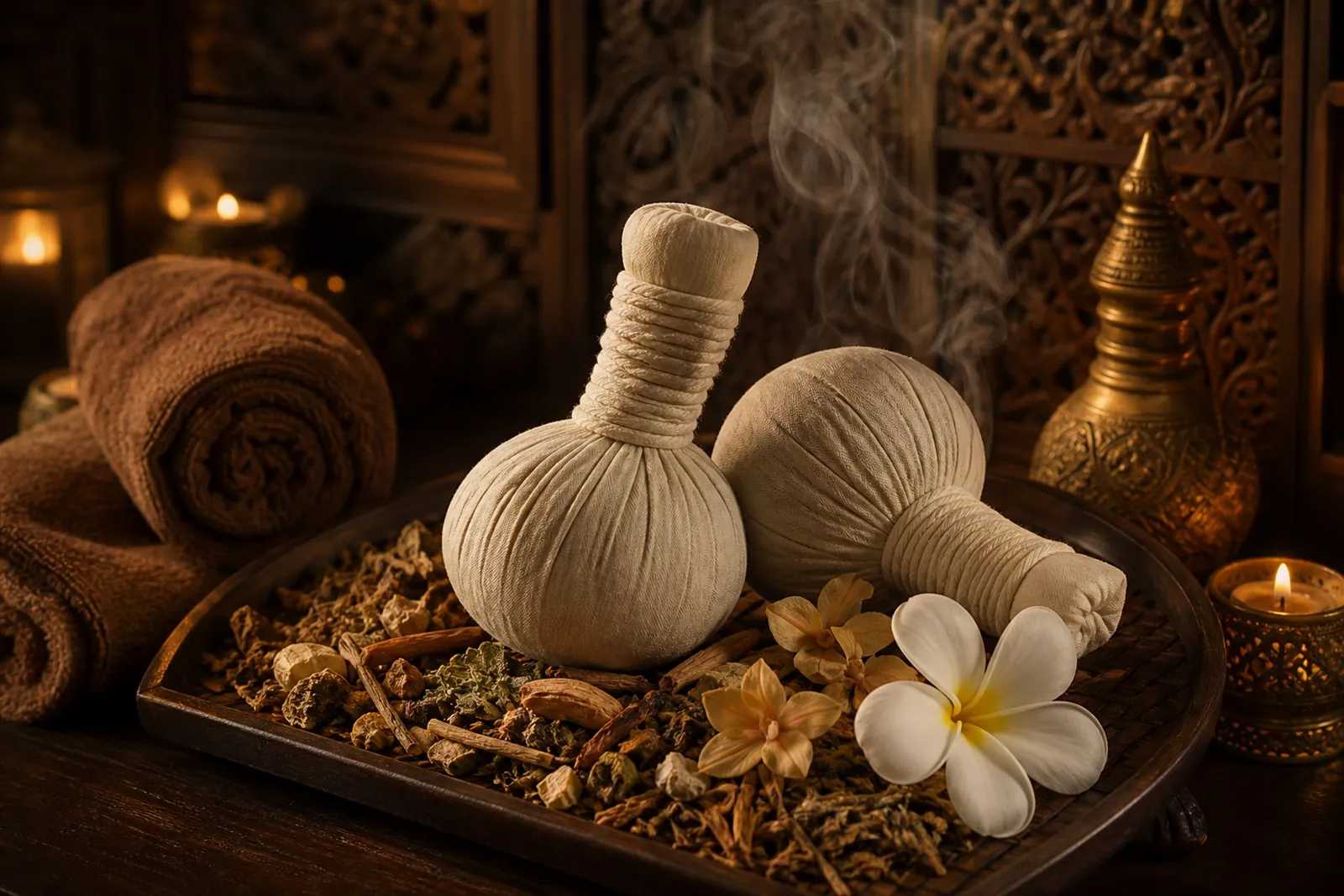
UNESCO's description mentions herbal hot compresses, and we offer one. The Thai herbal compress massage uses a steamed compress of Thai herbs, pressed and rolled over the body, with lemongrass, turmeric and kaffir lime among the herbs commonly named. It is available at 90 or 120 minutes. The tradition behind it is explained in our article on the Thai herbal compress.
What the history means for your booking
You do not need to know any of this to enjoy a Thai massage. But it helps to explain what to expect. Because the practice grew out of practical care, the focus is on movement and balance rather than on sliding oil over skin. Because it comes from a hands-on tradition, the therapist uses their body weight and a steady rhythm. And because it is a living practice, no two sessions follow exactly the same sequence.
Traditional Thai massage is not for everyone. If you have an injury, are pregnant, have heart or blood pressure concerns or a skin condition, check with your GP or midwife first and tell the therapist when you book. If you would rather have oil and a gentler flow, we have plenty of other styles.
Common questions
It comes from traditional Thai medicine. UNESCO records it as having grown from village self-care, with local massage healers helping people with sore muscles, and later becoming a formal body of knowledge.
According to tradition, Jivaka Kumarabhacca, a physician from the time of the Buddha, is honoured as the father of Thai medicine. This is a tradition and not a documented fact, so no one can say for certain who invented it.
Yes. In 2019 UNESCO inscribed Nuad Thai, traditional Thai massage, on its Representative List of the Intangible Cultural Heritage of Humanity.
Our traditional Thai massage is clothed and oil-free, with acupressure and yoga-style stretches, and you choose the pressure. It is available at both the Viaduct and St Heliers.