Let us be straightforward from the start, because this is a subject where vagueness helps nobody.
Siri Thai Spa does not have a dedicated prenatal massage on our treatment menu. What we can do is talk with you about your stage of pregnancy and what you are hoping for, and be honest about whether we are the right choice for you right now. Phone us before booking anything online — Viaduct 027-722-6564 or St Heliers 027 654 6642 — and please speak to your midwife, obstetrician or GP first. Their advice comes before ours, always.
With that said, here is the information most pregnant guests want, so you can have a well-informed conversation with whoever you end up seeing.
Why the aches happen where they do
Three things change at once during pregnancy, and they conspire against the same parts of the body.
- Your centre of gravity shifts forward, which tips the pelvis and increases the curve in the lower back. That is the classic late-pregnancy lumbar ache.
- Relaxin loosens the ligaments around the pelvis in preparation for birth. Looser joints mean the surrounding muscles work harder to stabilise — hips, glutes and the sides of the thighs take the strain.
- Fluid and blood volume increase, so legs, ankles and feet feel heavy and swollen, particularly in the third trimester and particularly in an Auckland summer.
Add broken sleep and a chest that is carrying more weight, and the upper back and neck join in too.
What safe pregnancy massage looks like
Whoever you book with, these are the things that should be true. If they are not, book elsewhere.
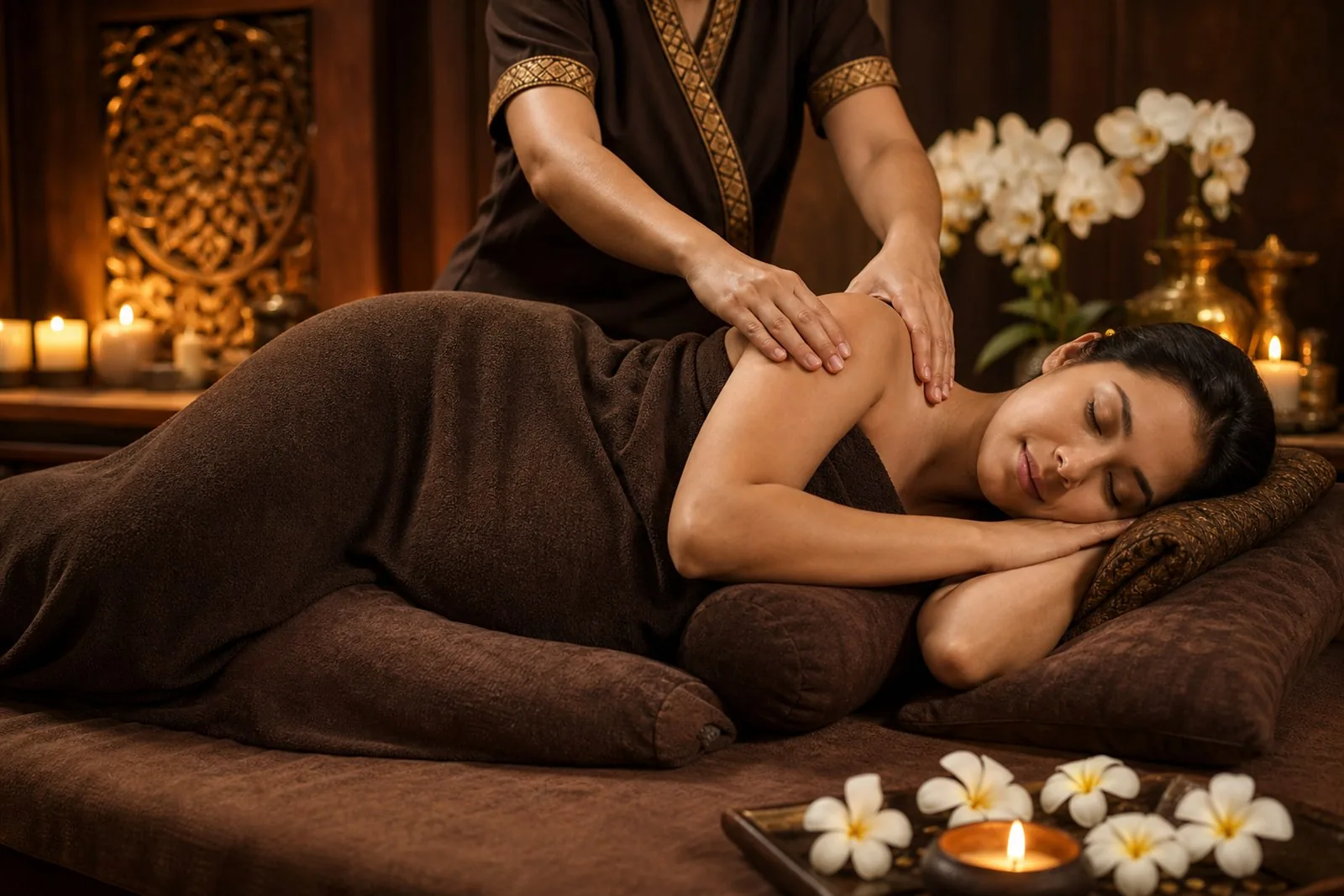
- Side-lying position, not face down. After the first trimester, lying on your front is out, and lying flat on your back for extended periods is generally discouraged in later pregnancy. Proper prenatal work is done on your side with pillows supporting the top leg, bump and arm.
- Lighter pressure throughout. Gentle to medium. Deep tissue work is not appropriate.
- No heat treatments. No hot stones, no herbal compress, no sauna. Raising core body temperature is avoided during pregnancy.
- Caution with essential oils. A number of oils are conventionally avoided in pregnancy. An unscented base oil removes the question entirely.
- Conservative around the abdomen, ankles and certain pressure points traditionally avoided in pregnancy.
- A therapist who asks questions first — how many weeks, any complications, what your midwife has said.
"The right answer for a pregnant guest is sometimes "not this treatment, and not with us." We would much rather say that than get it wrong."
Siri therapist team
Questions to ask before you book anyone
Because we do not offer a dedicated prenatal treatment, many people reading this will end up booking with a specialist prenatal therapist. These are the questions worth asking first, on the phone, before any money changes hands.
- Have you trained in pregnancy massage specifically? General massage training is not the same thing. Ask which stages of pregnancy they are comfortable working with.
- How will I be positioned? The answer you want is side-lying, with pillows or supports for your bump, top leg and arm.
- Which oils do you use? An unscented base oil is the simplest answer. If a strong essential-oil blend is the default and nobody asks, keep looking.
- Do you need anything from my midwife? A careful therapist will ask about complications and what your midwife or GP has said before the first session.
- What happens if I feel unwell during the session? Dizziness, nausea or feeling too warm should stop the treatment, no questions asked.
Vague answers to any of these are an answer in themselves. Ask us the same questions when you phone, too — we would rather give you an honest "not us" than a treatment that is not right for you.
When to wait, and when not to book at all
Please do not book, and speak to your midwife or doctor, if you have any of the following: a high-risk pregnancy, pre-eclampsia or high blood pressure, a history of preterm labour or miscarriage, placenta praevia, severe swelling, unexplained bleeding, reduced fetal movement, blood clots or a history of them, or if you are unwell in any way. Many practitioners also prefer to avoid massage entirely in the first trimester.
None of that is us being cautious for legal reasons. Pregnancy is the one situation where the sensible order is: midwife first, treatment second.
What genuinely helps at home
Whether or not you book anything:
- Sleep on your side, with a pillow under your bump and another between your knees. The knee pillow takes pressure off the hips and pelvis, and Healthify's guide to sleep in pregnancy explains why side-sleeping is the safest position in the last three months.
- Put your feet up for fifteen minutes in the evening for heavy legs and swelling.
- Warm — not hot — showers. Avoid hot baths, spa pools and saunas.
- Short, frequent walks beat long ones. Tamaki Drive is flat, which is not a small consideration at 34 weeks.
- Ask your midwife or GP about a pregnancy physiotherapist if the pain is significant. The NHS advice on back pain in pregnancy notes they can refer you to an obstetric physiotherapist, and for pelvic girdle pain in particular, that is the right specialist, not a spa.
After the baby arrives
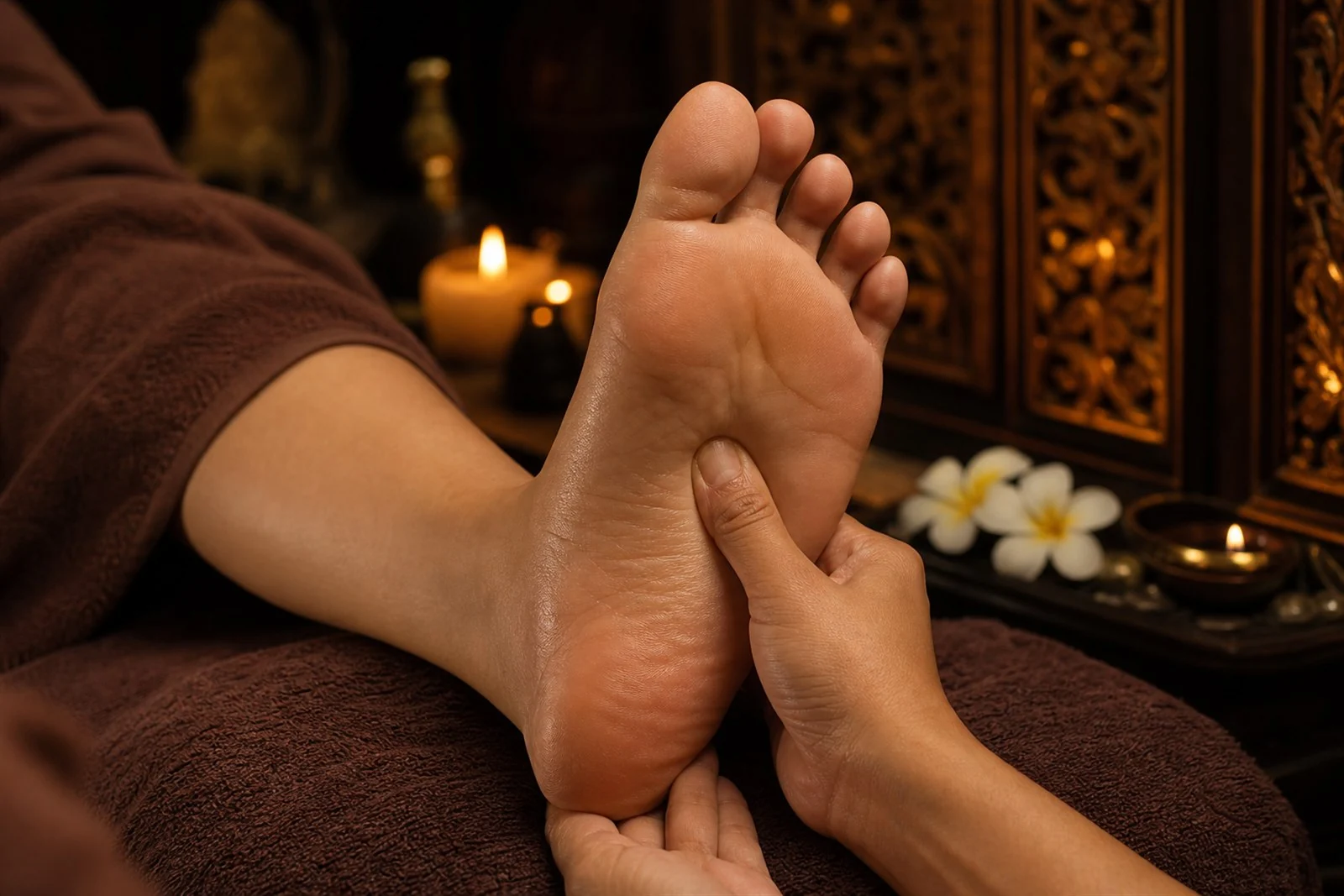
Postnatal is different, and it is where we can genuinely help. Once you have been cleared by your midwife or doctor — usually around six weeks, later after a caesarean — many new parents find the neck, upper back and shoulder tension from feeding and carrying eases with a straightforward back and shoulder massage, and reflexology suits tired legs and feet. Lifting a car seat and bending over a cot load the lower back as well; our guide to massage for lower back pain covers which treatment suits that. An hour of quiet is not the least of it either.
A gift voucher is also a genuinely good baby-shower present for exactly this reason — she can book it once she has been cleared and the newborn fog has lifted. Check the voucher terms when you buy. Our guide to choosing a spa voucher covers how to pick one.
The short version
Massage during pregnancy can be a real relief when it is done side-lying, gently, without heat, and with medical sign-off. We do not offer a dedicated prenatal treatment — so check with your midwife or GP, phone us, tell us where you are up to, and we will give you an honest answer about whether we can help you or whether you would be better served by a specialist prenatal therapist.
Common questions
We do not have a dedicated prenatal massage on our menu. Please phone us before booking — Viaduct 027-722-6564 or St Heliers 027 654 6642 — and speak to your midwife or doctor first, so we can tell you honestly whether we are the right choice for you.
Many pregnant people have massage safely, but it needs side-lying positioning, lighter pressure, no heat treatments and care with essential oils — and it should always follow advice from your midwife, obstetrician or GP.
No. Heat treatments — hot stone, herbal compress and the infrared sauna at St Heliers — are avoided during pregnancy because they raise core body temperature.
Once your midwife or doctor has cleared you, usually around six weeks and later after a caesarean. Back and shoulder work and reflexology are the two treatments new parents ask us about most.