Most guests never think about what is in the bottle. If you have a nut allergy, you have to. Massage oil goes on bare skin, stays there for an hour and is often scented, so the label matters in a way it does not at a cafe.
This guide is about massage oil and nut allergy at Siri Thai Spa. It tells you what our treatments use, so you can plan, and what to say when you book. It is not medical advice, and no oil is safe for everyone. Your doctor or allergy specialist is the person to ask about your own allergy.
The short answer
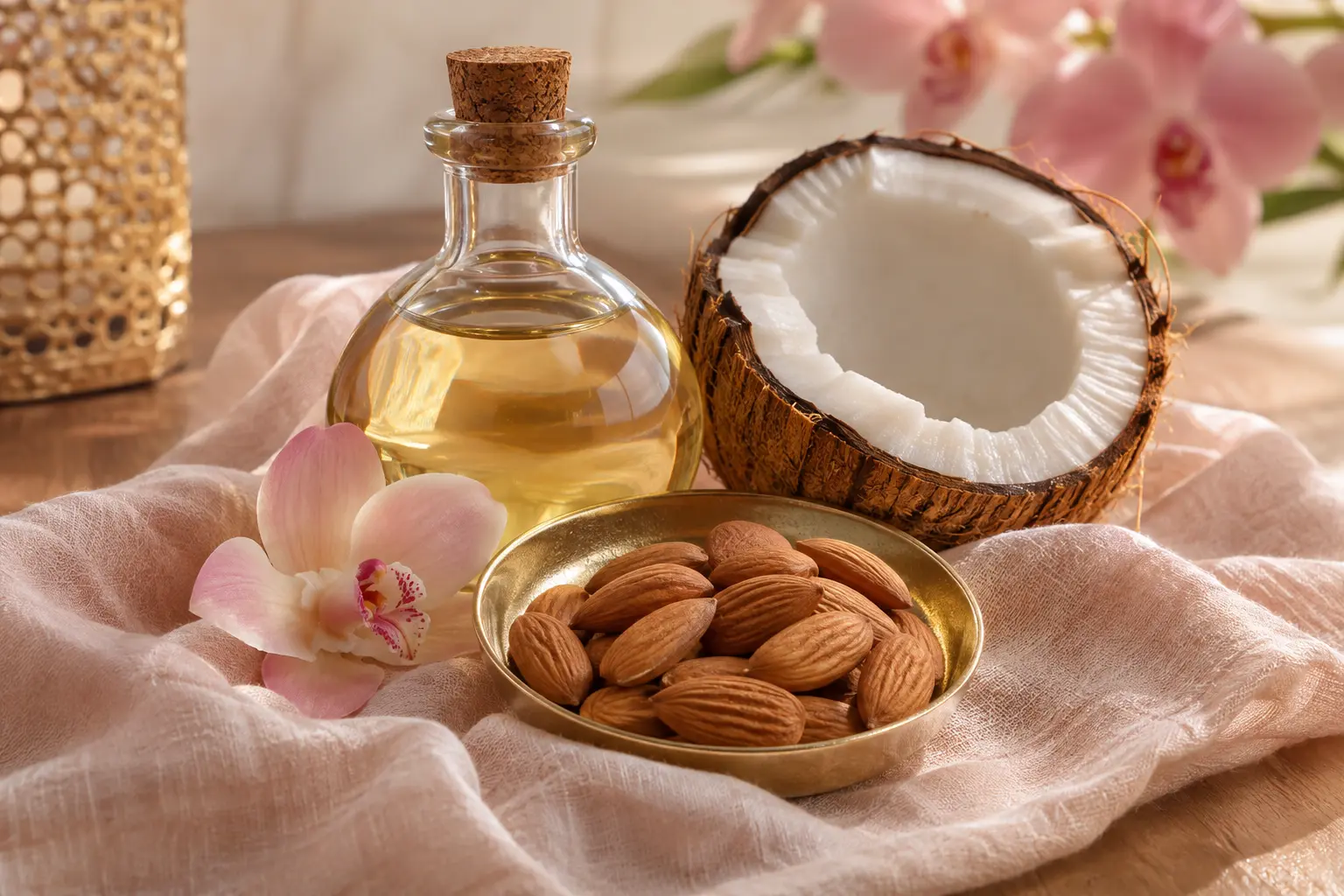
Our Swedish massage uses sweet almond oil. Almonds are a tree nut, and the NHS lists them among the most common allergic foods in its food allergy overview, alongside walnuts, hazelnuts, pecans, cashews, pistachios and Brazil nuts. Our warm coconut oil massage uses coconut oil. Traditional Thai massage uses no oil at all.
If you have a tree-nut or other allergy, tell the branch when you book, before you arrive, so the therapist can talk through your options. Please do not rely on a note in an online form alone. A phone call is better.
What each treatment uses
Here is what we can say from our own menu. For anything not listed, ask, and we will tell you what we know.
- Swedish massage: sweet almond oil.
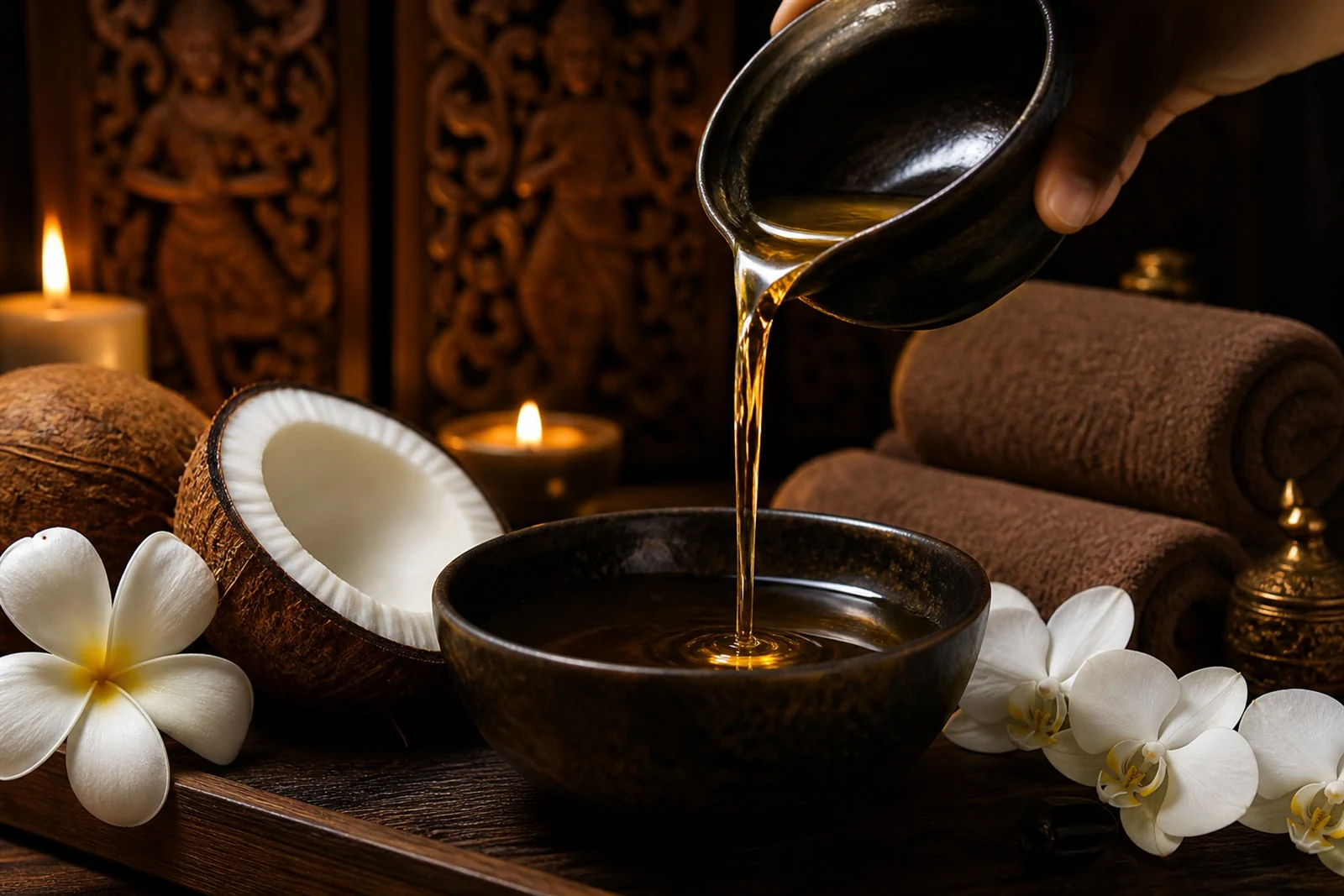
- Warm coconut oil massage: premium warm coconut oil, which can be combined with any of our massage styles.
- Traditional Thai massage: no oil. It is done fully clothed, with acupressure and yoga-style stretches.
- Aromatherapy massage: blended essential oils.
- Hot stone massage: essential oils worked in with the stones.
- Candle therapy (Viaduct only): warm melted massage candle wax with essential and scented oils.
- Thai herbal compress: a steamed compress of Thai herbs such as lemongrass, turmeric and kaffir lime.
- Body scrub and facial: products and serums that differ by treatment, so ask which ones will be used.
We list the base oils we know and do not guess at the rest. If you need the exact ingredients of an oil, blend or scrub, ask the branch and, where it matters, ask your allergist whether the ingredient is a concern for you.
Coconut is not a clear-cut case
People with nut allergies often ask whether coconut is fine. The honest answer is that it depends on the person. Coconut is not a true nut botanically, and some people with tree-nut allergy tolerate it, but others avoid it, and coconut allergy is its own thing. We cannot tell you which group you are in.
That is a question for your GP or allergy specialist, ideally before you book. If you do not know, choose a treatment that uses no oil, and read the warm coconut oil massage guide only once you have an answer.
What to say when you book
When you ring the branch, give them the following. It takes a couple of minutes and saves everybody an awkward moment on the day:
- The specific allergy: tree nuts, peanuts, coconut, a particular essential oil, or something else.
- How you react, in plain terms (hives, itching, breathing difficulty), so the therapist knows what to look for.
- Whether you carry an adrenaline auto-injector or other emergency medication, and that you will bring it.
- Which treatment you are interested in, so the branch can tell you what is used.
- Whether you would rather avoid oil entirely.
Each branch can be reached on the phone. The Viaduct is 027-722-6564 and St Heliers is 027 654 6642. You will find them on the Viaduct contact page and the St Heliers contact page.
"We would much rather have a long phone call about an allergy than a surprise on the table. Tell us what you react to and we will talk through what is and is not used."
Siri therapist team
The no-oil option: traditional Thai massage
If you want to remove the question altogether, traditional Thai massage is the simplest choice. There is no oil, and you stay in loose, comfortable clothing while the therapist uses acupressure and assisted stretches. You also choose the pressure.
It is a different experience from an oil massage, because you are moved and stretched rather than stroked. Our comparison of Thai and oil massage shows how they differ, so you can tell whether it suits you. A traditional Thai session is $60 for 30 minutes at St Heliers, or $65 at the Viaduct, and longer sessions are listed on the pricing pages.
One caution: no oil does not mean no products. Ask whether anything scented or topical will be used, and say so if you are sensitive to fragrance.
Skin sensitivity is not the same as allergy
Not every reaction is a nut allergy. Some people have sensitive skin that reacts to essential oils or fragrance, with redness, itching or a rash, without having any food allergy. Aromatherapy blends and scented oils are the usual suspects, because essential oils are concentrated.
Mention any skin sensitivity, eczema or past reaction to a cosmetic or oil when you book. If you have a skin condition, check with your GP first. If you notice itching, redness or any discomfort during a treatment, tell the therapist straight away and the session can be stopped or changed.
On the day: what helps
Arrive a few minutes early and remind the therapist of your allergy at the start, even though you have already phoned. A short recap at the door is normal, and it means the person working on you has heard it first-hand rather than through a note.
- Bring your emergency medication and keep it where you can reach it, not left in the car.
- If you would like to see a bottle or ask what is in it, ask before the session starts.
- Tell the therapist if you want any oil kept away from your face and hands.
- If anything starts to itch, tingle or feel wrong, say so at once. Nobody will be offended.
Booking for someone else
If you are buying a treatment as a gift, find out about allergies before you choose. A voucher for a Swedish or coconut oil massage is a poor present for someone who avoids nuts or coconut. A no-oil session is easier to give, and the recipient can phone the branch themselves to talk through the details before they use it.
The same goes for couples booking together. If one of you has an allergy, tell the branch when you book so both treatments can be planned around it. A couple massage can be any of our styles, so it is easy to choose a no-oil one for one person.
When to speak to a health professional
If you have had a serious reaction, such as swelling or trouble breathing, to a food or a product, your first call should be your doctor or allergy specialist, not a spa. They can tell you what is safe for you and may suggest testing before you put an oil on your skin.
If you ever have a serious reaction, call 111 straight away and use any emergency medication you have been prescribed. Do not wait for symptoms to settle.
Before you book: We cannot tell you any oil is safe for your allergy. Tell the branch about your allergy when you book, ask what will be used, and check with your doctor or allergy specialist if you are unsure.
Common questions
Almond is a tree nut, so please do not book our Swedish massage, which uses sweet almond oil, without speaking to your doctor and telling the branch. We cannot call any oil safe for everyone. A no-oil traditional Thai massage may be a better starting point.
Traditional Thai massage uses no oil, so it avoids oil entirely. Ask the branch when you book about anything else that might be used, and tell them exactly what you are allergic to.
It varies from person to person. Some people with tree-nut allergy tolerate coconut and some do not, so ask your GP or allergy specialist before booking a coconut oil massage.
Tell them the specific allergen, how you react, whether you carry emergency medication, and which treatment you want. Phone the branch before you arrive so the therapist can plan around it.