Your mum has mentioned her shoulders three times this month. Your dad sits in the same chair most afternoons and says his legs feel heavy. You would like to give them a massage, but you are not sure what is suitable, or whether a spa is the right place at all.
Massage for elderly guests is very possible, and it looks different from a standard booking. Choose a short session, ask for lighter pressure, pick a treatment that keeps things simple, and talk about positioning and health on the phone before you book. This guide is written for older guests themselves and for adult children booking a gift.
Start with the person, not the treatment
There is no single "senior massage". Some people in their eighties walk to the shops daily and happily take medium pressure. Others get tired standing for ten minutes, bruise easily or have trouble getting on and off a bed. Age alone tells us very little. What matters is how comfortable they are lying down, how long they can stay in one position, what they take for health conditions and how they feel about being touched.
So the first job is a conversation. If you are booking for a parent, ask them what they would enjoy before you pay for anything. A surprise massage can be a lovely idea, but a surprise that includes undressing or lying flat for an hour is not always welcome.
Check with their GP or specialist first
Massage is a comfort treatment, not medical care, and some health conditions call for a doctor's say-so before you book. Please check with a GP or specialist if the person has any of the following, and tell the therapist about it when you book:
- Heart conditions or high blood pressure
- Blood thinners or a tendency to bruise or bleed easily
- Osteoporosis or a recent fracture
- Recent surgery or hospital treatment
- Blood clots, kidney problems or nerve damage
- Skin conditions or fragile skin
- Cancer treatment
This is in line with general advice. Healthdirect, Australia's national health information service, says in its page on massage that massage may not suit people with some conditions, that it should not replace care from your doctor, and that you should let the therapist know if you are uncomfortable at any point.
We do not promise massage will help with arthritis, balance, falls or circulation, and you should be wary of anyone who does. What we can say is that many older guests find a gentle massage eases tight, tired muscles and is a pleasant, unhurried hour or half-hour.
Pick a shorter session
Thirty minutes is a sensible starting point. It is long enough to feel properly looked after and short enough that nobody gets stiff, cold or restless. It also leaves room to find out how they like it before committing to more.
Reflexology, back and shoulder, aromatherapy and our other classic massages can all be booked at 30 minutes. At the Viaduct that is $65, and at St Heliers it is $60. If they love it, the next visit can be longer. Our guide to choosing 60 or 90 minutes explains how to step up gradually.
Three gentle treatments to start with
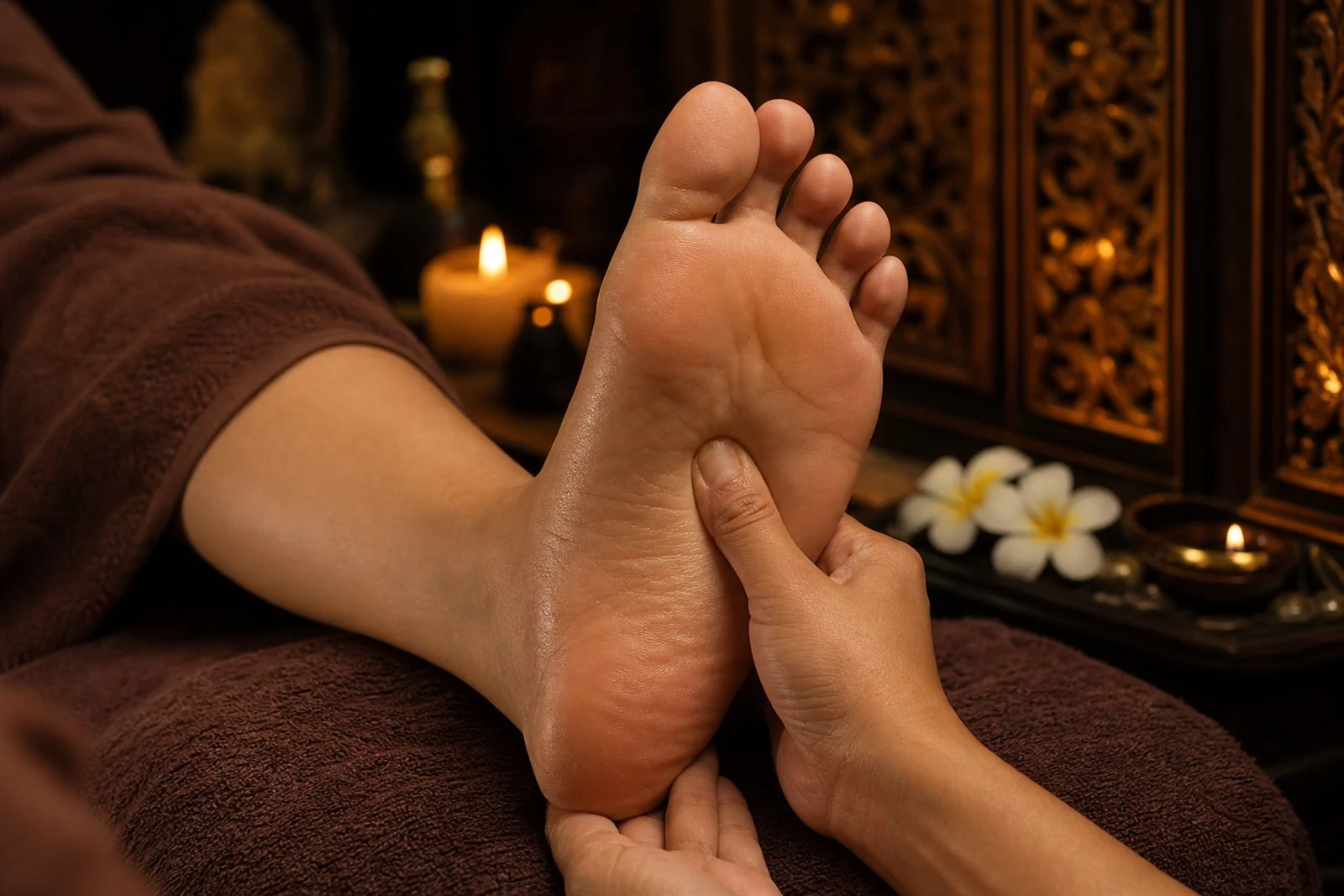
Reflexology foot massage. Focused on the legs and feet, this is a good match for people who spend long hours sitting or standing. It can be done at 30, 45 or 60 minutes, and the person lies comfortably while the therapist works from the knee down. Read more in our reflexology foot massage guide.
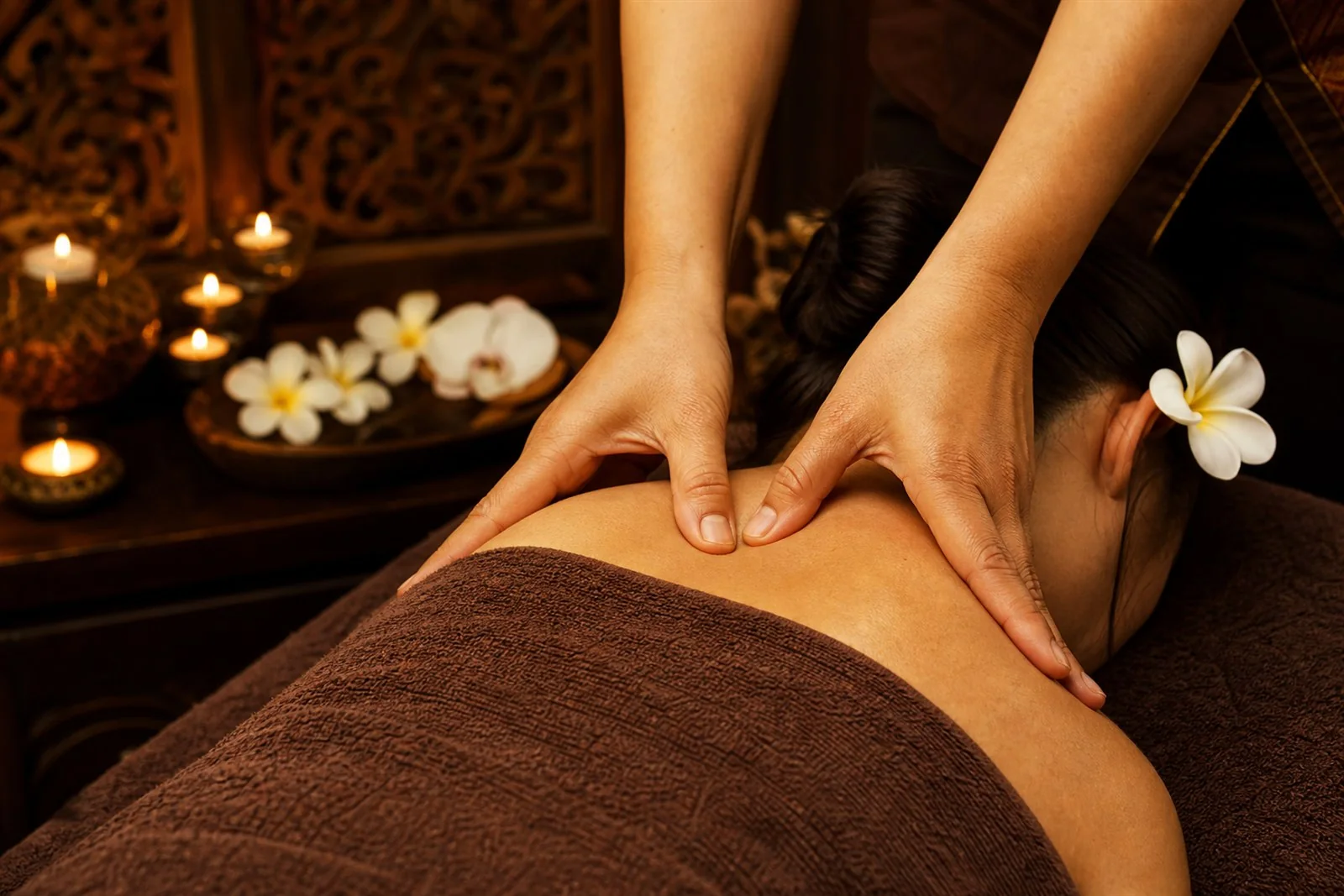
Back and shoulder massage. Targeted work on the upper body, available in 30, 45 and 60 minutes. Many people carry tension in the neck and shoulders from years of the same posture, and a focused half-hour is often enough. Back and shoulder at the Viaduct is $65 for 30 minutes and $95 for 45, and at St Heliers it is $60 and $85.
Aromatherapy massage. A gentle, unhurried style with blended essential oils. Tell the therapist about any skin sensitivity, fragile skin or scent preferences when you book.
A fast-paced, deep or stretch-heavy session is a different matter. Traditional Thai massage involves a lot of movement of the limbs, and deep tissue is firm, so both are a poorer fit for most first visits of this kind unless the guest is active and says they would like it.
"With older guests we slow everything down, check in often and never rush anyone. Tell us what is comfortable and we will work around it."
Siri therapist team
What a gentle session can feel like
In a short back and shoulder session, expect the therapist to begin lightly and build only if you ask. A 30 minute appointment moves along steadily rather than quickly: a minute or two to settle, most of the time on the neck, shoulders and upper back, and a little time at the end so you can come round without a jolt.
A reflexology session works from the other end. The therapist applies pressure along the feet and lower legs, and you can say at once if a spot is too tender. Some people drift off. Others chat the whole way through. Both are fine, and neither tells us anything about whether it is working.
Afterwards, take your time getting up. Sit for a minute before standing, have some water, and do not plan a big afternoon. Anyone who feels light-headed, unusually sore or unwell afterwards should speak to their GP.
When a spa massage is not the right choice
Some days it is better to wait. If the person is unwell, running a temperature, has a new swelling or pain, or is in the middle of recovering from an operation, check with their doctor before booking anything. If they find unfamiliar places stressful, or find getting around difficult, a quieter time of day can help, and so can a call to the branch beforehand to ask what to expect. And if massage is simply not for them, a visit with a cup of tea and company will often be worth more than an hour on a table.
Pressure, warmth and positioning
Pressure is the main thing to talk about. The guest can ask for light or medium, and can change their mind at any point. Our massage pressure guide describes the levels in plain terms.
Warmth matters too. Older guests often feel the cold more, so say if the room, a towel or the bed feels cool. Anyone who finds lying face down uncomfortable, or has trouble with stairs, getting onto a bed or turning over, should say so when they call. Please phone the branch to discuss positioning and access rather than relying on the online booking page alone, so the therapist is ready.
What to say when you ring or book
A short list of things to mention, whether you are the guest or the person booking for them:
- Their age range and general mobility (walking stick, frame, difficulty with steps).
- Any condition or medication from the list above, and that their GP has been asked.
- How long they are comfortable lying down.
- Any positions they find difficult, such as lying face down or turning over.
- How firm they usually like things, and any sore or off-limits areas.
It takes two minutes on the phone. The Viaduct number is 027-722-6564 and St Heliers is 027 654 6642. You will find both on the Viaduct contact page and the St Heliers contact page.
Booking as a gift for a parent
A voucher lets them choose the day and the treatment, which suits people who like to plan around appointments and good weather. See our gift voucher guide for how they work. If you would rather book a specific time, ring ahead and consider going with them. Some older guests feel more at ease when a family member walks them in and checks the room.
If it is a first visit, you could also choose the shorter option and book a longer one later. That way the first experience is a gentle one and nobody feels they have to sit through more than they want.
Before you book: Tell the branch about any health condition, medication, mobility need or fragile skin when you book, and check with the person's GP or specialist first if they have heart, blood pressure, bone, clotting or surgery concerns.
Common questions
Often a gentle massage is fine, but it depends on the person. Anyone with heart conditions, high blood pressure, osteoporosis, blood thinners, recent surgery or fragile skin should check with their GP or specialist first, and tell the therapist when booking so the session can be adjusted.
Thirty minutes is a good place to begin. It is a comfortable length, and you can book a longer one next time. At 30 minutes, treatments are $65 at the Viaduct and $60 at St Heliers.
Reflexology foot massage and back and shoulder massage are popular, gentle choices, as is a light aromatherapy session. Choose lighter pressure and say so at the start. Traditional Thai involves lots of stretching and is usually better for guests who are already active.
Yes. A gift voucher lets them pick the day and treatment, or you can phone the branch to book a time and mention any health or mobility needs.