You have been told to book "a full body massage", and now you are looking at a menu that lists Thai, Swedish, aromatherapy, deep tissue and coconut oil, and wondering which one that means. The good news is that all five can be a full body massage. What changes is the technique, the pressure and whether oil is used, not the amount of the body you get worked on.
This guide explains what a full body massage in Auckland covers, how to choose the style, and how long you need. Our prices are for the Viaduct in the CBD and our St Heliers spa, and both are open seven days from 10am to 8pm.
What a full body massage actually covers
In a full body session your therapist works through the whole body in turn, usually in this order:
- Back and shoulders, often the first and longest stretch, because that is where most people hold tension.
- Legs and feet, back and front.
- Arms and hands.
- Neck, head and scalp, usually towards the end.
- The front of the body after you turn over, where the therapist works the legs, arms, shoulders and neck.
You are covered by a towel throughout, and only the part being worked is uncovered at any moment. In Thai massage you stay in loose, comfortable clothing instead. Either way, you can ask the therapist to skip any area you would rather leave alone, and you can say so at any point.
Why 30 minutes is not a full body massage
Our menu includes 30 minute sessions, and they are good value for a single problem area. But thirty minutes divided across a whole body is about five minutes per region, and most guests find that rushed rather than relaxing. If you want a full body massage, book 60 minutes at the very least.
Sixty minutes gives time for each area to be worked once with a little extra on your trouble spot. Ninety minutes lets the therapist slow down and return to the tight places. A hundred and twenty is for when you want everything, and then a bit more. Our guide to choosing between 60 and 90 minutes goes into more detail on the trade-offs.
Which style: a plain guide
- Traditional Thai: acupressure and yoga-style stretches at a smooth tempo, clothed and without oil. Good for stiffness and for people who prefer not to use oil. You choose the pressure.
- Swedish: a blend of western and Thai technique using sweet almond oil. Flowing, full-body and firm enough to feel invigorating. A good all-rounder if you cannot decide.
- Aromatherapy: gentler and slower, with blended essential oils. Many guests find it the easiest way to switch off, especially when stress is the main complaint.
- Deep tissue: firmer pressure on the deeper muscle layers and fascia, for people comfortable with intensive work, such as athletes or physical jobs.
- Warm coconut oil: any of our styles with premium warm coconut oil, which softens skin while the therapist works on tension in the neck, back and shoulders.
Not sure between Thai and an oil massage? Our comparison of Thai versus oil massage explains how the two feel different.
"Tell me the first thing you want fixed, and I will plan the whole hour around that. A full body massage is better when it has a priority."
Siri therapist team
What a full body massage costs at each branch
All five everyday styles share the same price list, which makes choosing the style a matter of preference rather than budget.
- 60 minutes: $115 at the Viaduct, $105 at St Heliers.
- 90 minutes: $165 at the Viaduct, $145 at St Heliers.
- 120 minutes: $220 at the Viaduct, $195 at St Heliers.
The Viaduct is dearer at every length, and St Heliers is the better value if the seaside suits you. A 15% surcharge applies on public holidays. If you want the whole picture across the menu, see our guide to massage prices in Auckland.
What to wear and what to tell the therapist
For Thai massage, wear loose, stretchy clothes. For the oil styles, you undress to your comfort level in private and lie under a towel. The therapist leaves while you do, and knocks before coming back. Nothing is uncovered that does not need to be.
Before you start, your therapist will ask a few questions. Give them real answers:
- Where you feel tension, and where you do not want to be touched.
- How firm you like it. Pressure is yours to choose, and can be changed mid-session. Our pressure guide explains how to say it.
- Anything that has changed recently: an injury, surgery, a cold, a new medication.
- Allergies, especially to nuts, since sweet almond oil is used in our Swedish massage.
Before you book: If you are pregnant, recovering from an injury or surgery, or have a heart condition, high blood pressure or a skin condition, check with your GP or midwife first and tell the therapist when you book. Harvard Health also lists heart problems and inflamed or infected skin among the situations where massage is best avoided, and notes that massage should not replace medical advice.
A 90 minute full body massage, step by step
Every therapist works a little differently, but a typical oil massage of this length runs roughly like this.
- The consultation (a few minutes). You say where it aches and how firm you like it.
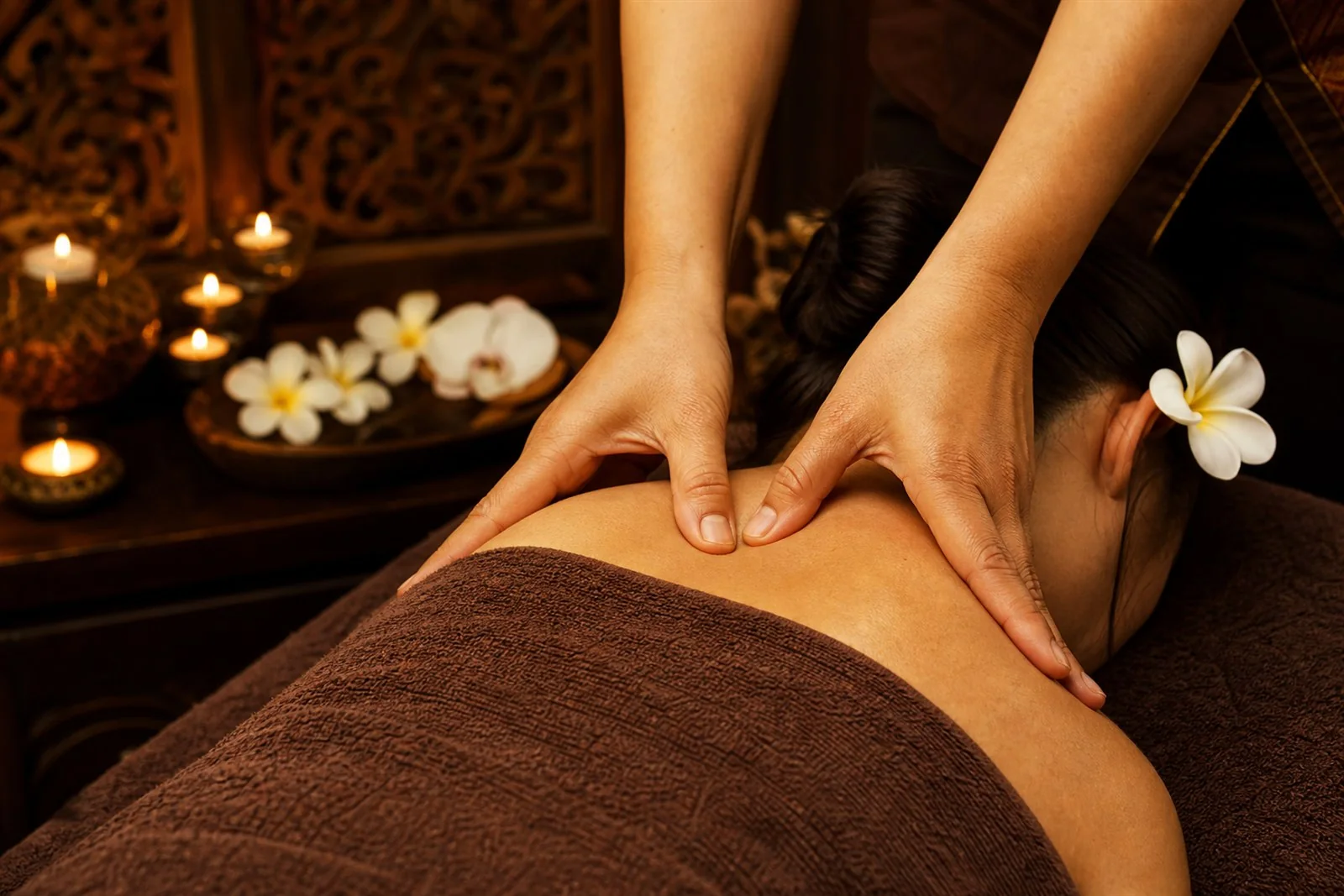
- Face down. The back and shoulders come first, with slow strokes to warm the muscle before any firmer work, then the backs of the legs and feet.
- Turning over. The therapist holds the towel while you turn. The front of the legs, arms and hands follow.
- Neck, head and scalp. Many guests find this part the most relaxing, and some drift off completely.
- The finish. Slower strokes, then quiet. Take a few minutes before you stand up.
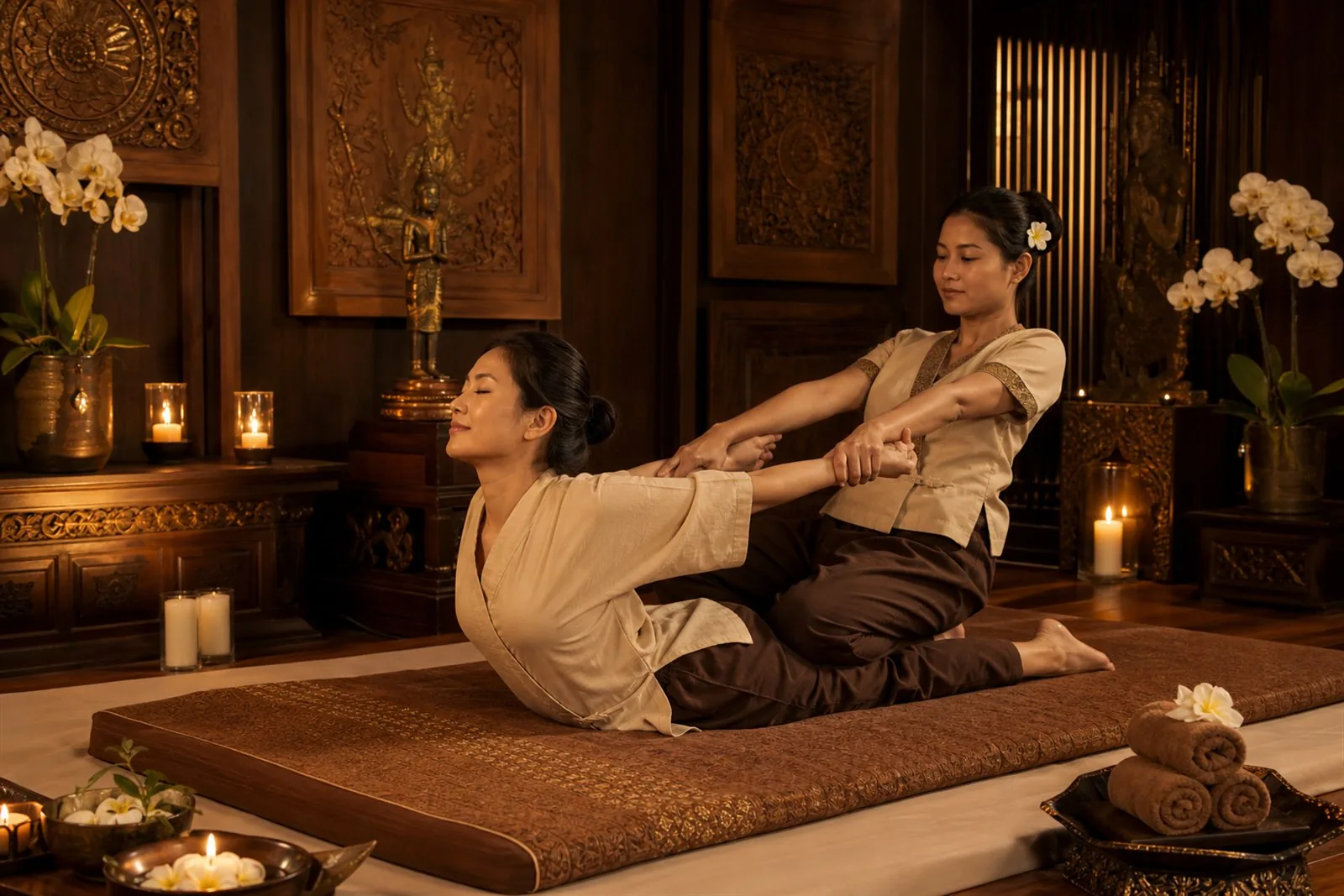
A Thai massage covers the same ground differently. You lie on a mat in your clothes, and the therapist uses palms, thumbs, forearms and gentle stretches to move you through each region, so there is more movement and less gliding.
Matching the style to your week
If you are not sure what to say to the booking screen, think about what your body has been doing. Long days at a desk tend to leave the neck, shoulders and hips tight, and Thai or Swedish suits that well. A week of training or heavy lifting is a better match for deep tissue. A week of poor sleep and a short temper points to aromatherapy. And if you simply want the nicest possible hour, warm coconut oil is a comforting choice.
One honest limit: a single full body session will not undo months of tension, and it will not replace physiotherapy or medical care. Many guests find the effects last a few days, and that regular visits help more than one big one.
After your massage
Drink some water, take it easy for the rest of the day and avoid scheduling anything strenuous straight afterwards. Mild tenderness the next day is common after firmer work and usually settles on its own. If something feels wrong, such as sharp pain, tell the spa or see your GP.
Who should choose something else
A full body massage is a broad, general treatment. If one specific area is the problem, such as a stiff neck from a desk, a back and shoulder massage is more focused and shorter. If your legs and feet are the sore bit, reflexology is a better fit. And if you want a heated experience, hot stone and herbal compress are 90 or 120 minute treatments, priced a little higher.
Common questions
Book 60 minutes at the minimum. A 30 minute session is better for one area. Ninety minutes is the comfortable choice for a first visit, because the therapist has time to work each area and return to the tight ones.
At the Viaduct, 60 minutes is $115, 90 minutes is $165 and 120 minutes is $220. At St Heliers it is $105, $145 and $195. The same prices apply to Thai, Swedish, aromatherapy, deep tissue and coconut oil massage.
Not for Thai massage, which is done in loose clothing and without oil. For the oil styles, you undress to your comfort level in private and are covered by a towel, with only the area being worked uncovered.
No. Swedish is one style, using sweet almond oil and flowing strokes. A full body massage describes the coverage, and any of our five main styles can be done that way.