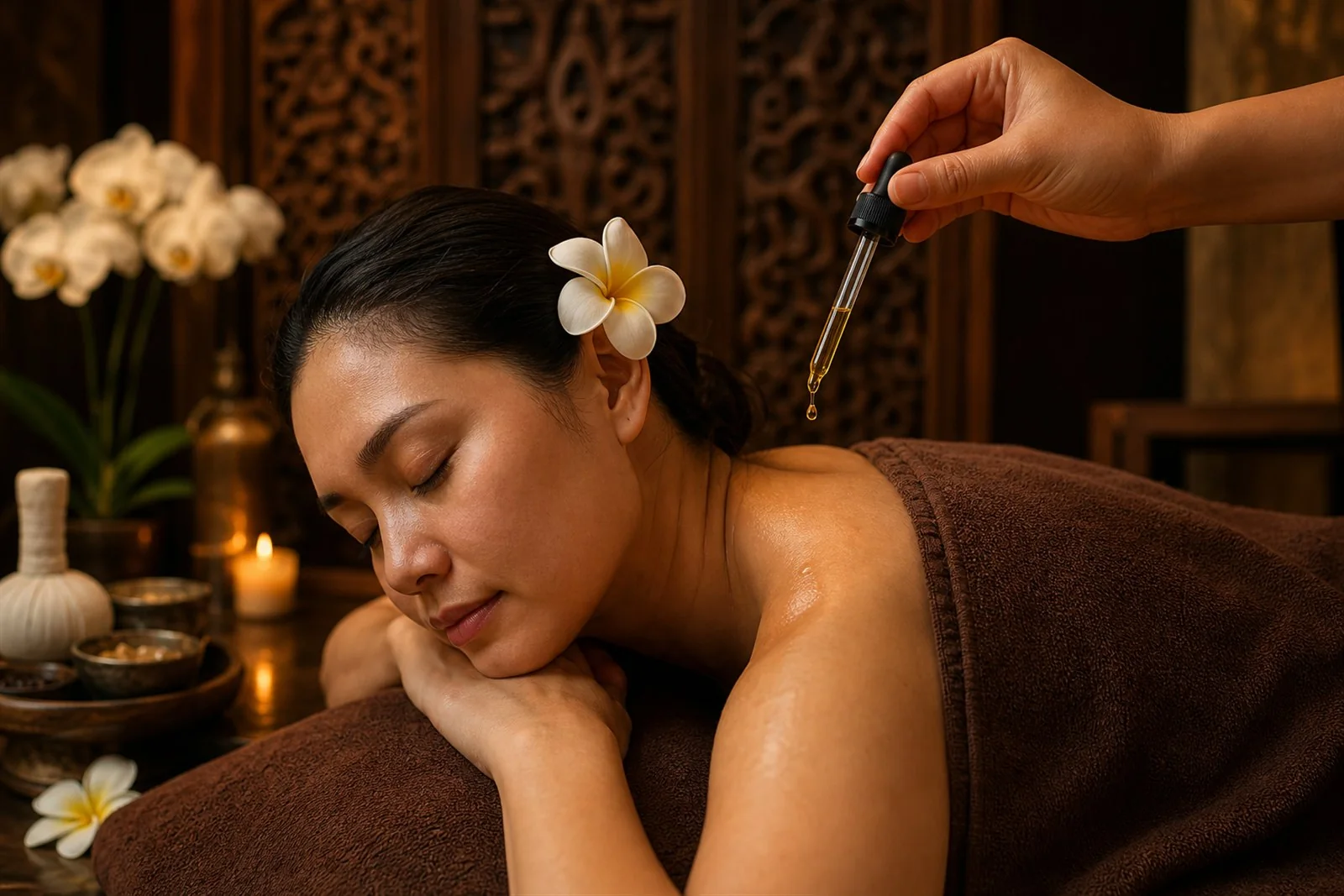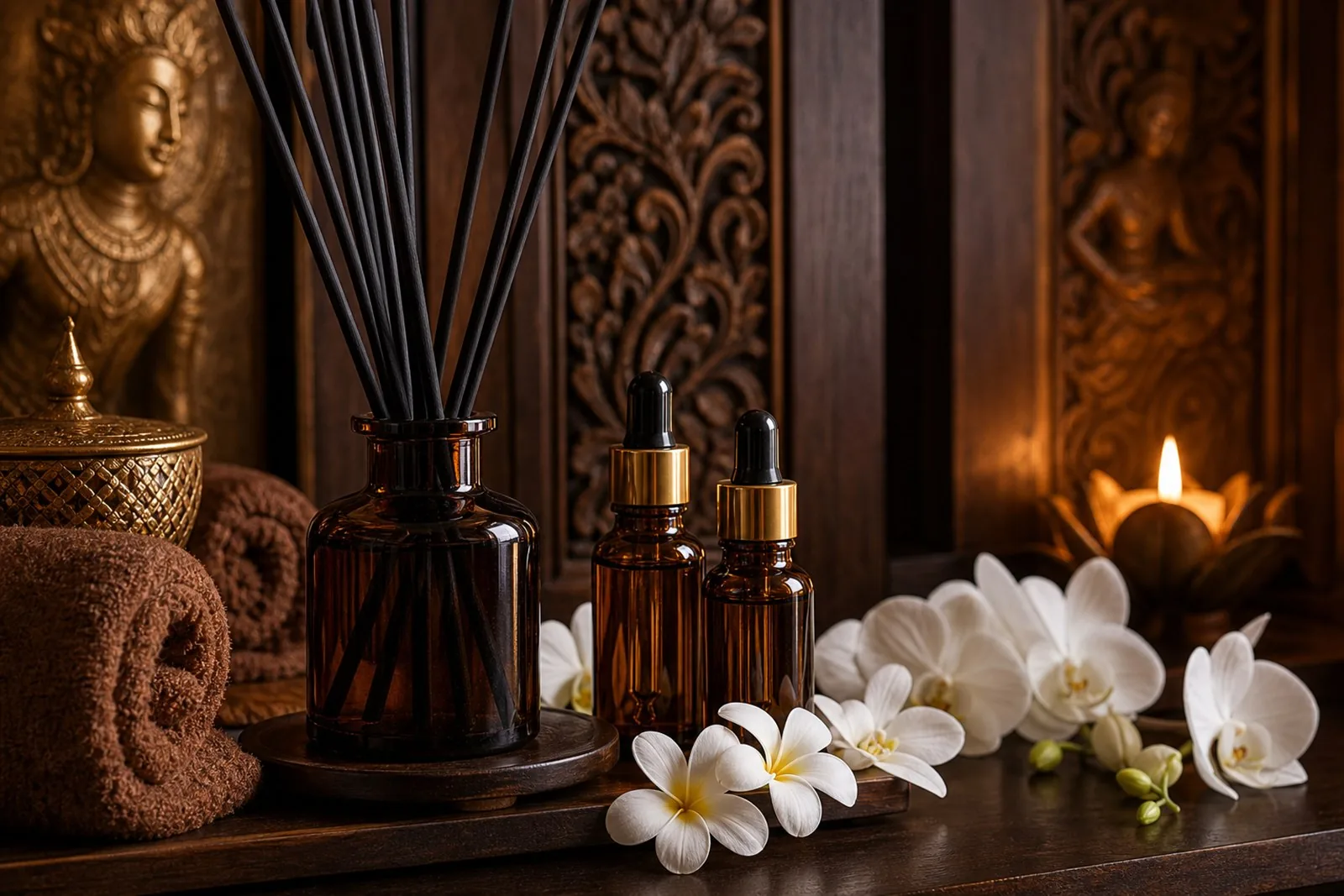
The essential oil aisle is designed to make you feel underinformed. Twenty bottles, a wall of claims, and no indication of which two you would actually use. Our therapists work with these every day, and the honest answer is that most people need three oils and one method.
The three to start with
Lavender — for the evening
The most forgiving oil there is, and the one to buy first. Soft, slightly herbal, and the traditional choice for winding down. Use it at the end of the day, on a pillow or in a diffuser an hour before bed.
Sweet orange — for the morning
Bright, cheap, and almost universally liked. Good in a kitchen, a home office, or on a grey Auckland Tuesday. Citrus oils fade fastest, which is fine — the point is the first twenty minutes.
Eucalyptus — for a heavy head
Sharp and cooling. The one to reach for at the tail end of a cold, or in a stuffy room. Strong, so use less than you think, and keep it away from small children.
That is the whole starter kit. Add peppermint if you like it, and sandalwood if you want something richer for the evening. If you want to understand how we blend these in a treatment, our guide to choosing an essential oil blend for your massage covers it.
Three methods worth bothering with
- Diffuser. Three to five drops in water, run for thirty minutes rather than all evening — your nose stops registering a constant scent within about fifteen minutes anyway, so continuous running mostly wastes oil.
- Steam bowl. A bowl of hot water, one or two drops, a towel over your head, eyes closed. The single most effective thing for a blocked head. One drop. Two is unpleasant.
- Diluted on skin. Always in a carrier oil — a light almond, jojoba or fractionated coconut oil — at roughly one to two drops of essential oil per teaspoon of carrier. Rub into wrists, temples or the back of the neck.
What is not worth bothering with: oils in a bath without a dispersant (they sit on the surface and can irritate the skin), and anything that involves swallowing them.
"A drop of lavender on a pillow will not change your life. Doing it at the same time every night for a fortnight genuinely might."
Siri therapist team
The safety rules that actually matter
- Never apply undiluted oil to skin. Essential oils are concentrated plant extracts, not perfume. Always use a carrier.
- Patch test a new oil on your inner forearm and wait 24 hours if you have sensitive skin.
- Citrus oils can make skin more sensitive to sunlight. Do not apply bergamot or citrus oils to skin that is about to be in the sun — relevant here from about October onwards.
- Never swallow essential oils. Whatever the internet says.
- Pregnancy: several oils are conventionally avoided. Ask your midwife or GP before using them regularly.
- Asthma and respiratory conditions: strong scents can be a trigger for some people. Introduce cautiously.
- Children, babies and pets: use far less, or none. Tea tree and eucalyptus in particular are not appropriate for young children, and several oils are unsafe for cats. Check with your vet.
- Keep bottles away from children and out of direct sunlight.
Building a scent cue that works
The reason a spa smell drops your shoulders before you have consciously registered it is association — scent has a direct route into the parts of the brain handling emotion and memory. You can deliberately build one of these at home, and it costs almost nothing.
Pick one scent. Use it only in one context — say, lavender, only after you have got into bed. Do not use it anywhere else. Within two or three weeks the scent itself starts doing part of the work of settling you, because your brain has learned what follows it.
This works best when it is narrow. A scent you use all day means nothing. A scent you use in exactly one situation becomes a signal.
What home aromatherapy will not do
It will not treat an illness, an infection, anxiety or depression, and no oil is a substitute for medical care or prescribed medication. If you are struggling with your mental health, please talk to your GP or call or text 1737 to speak with a trained counsellor, free, any time.
What it does well is set an atmosphere and support a habit. For the actual physical work — shoulders, back, sleep that has gone thin — that still needs hands. A 60-minute aromatherapy massage is $115 at the Viaduct and $105 at St Heliers, and both spas are open until 8.00pm, seven days.
Common questions
Three: lavender for the evening, sweet orange for the morning, and eucalyptus for a blocked or heavy head. That covers almost every situation people actually want an oil for.
No. Always dilute in a carrier oil such as almond, jojoba or fractionated coconut — roughly one to two drops per teaspoon. Patch test new oils if your skin is sensitive.
Thirty minutes is plenty. Your nose stops registering a constant scent within about fifteen minutes, so running it all evening mostly wastes oil.
Several are conventionally avoided during pregnancy. Ask your midwife or GP before using them regularly, and mention it when you book any treatment with us.