"I don't really like saunas." We hear it a lot from people about to try infrared for the first time. Ask a few questions and it usually turns out they don't mind heat at all. What they dislike is breathing very hot air.
That is the heart of the infrared sauna vs traditional sauna question. A traditional sauna uses a stove, usually topped with stones, to heat the air in a wooden room, and the hot air (plus bursts of steam when water hits the stones) heats you. An infrared sauna uses panels that give off radiant heat, which warms your body more directly while the air around you stays noticeably cooler. You still get a long, deep warmth and a real sweat. You just get there by a gentler road.
The short version
- How it heats: traditional warms the air, which warms you; infrared panels warm your body more directly
- Air temperature: roughly 66–91°C in a traditional sauna, roughly 43–57°C in an infrared one
- Humidity: a Finnish sauna is dry with bursts of steam; a steam room is saturated; infrared stays dry
- Breathing: traditional heat can feel sharp in the nose and throat; infrared is easier on both
- Sweat: fast and intense in a traditional sauna; slower to build in infrared
- At Siri: infrared only, at St Heliers only. No steam room, no wet sauna
The temperature ranges come from Cleveland Clinic's guide to infrared saunas, which explains that infrared heats you more directly rather than mainly heating the room.
How a traditional sauna works
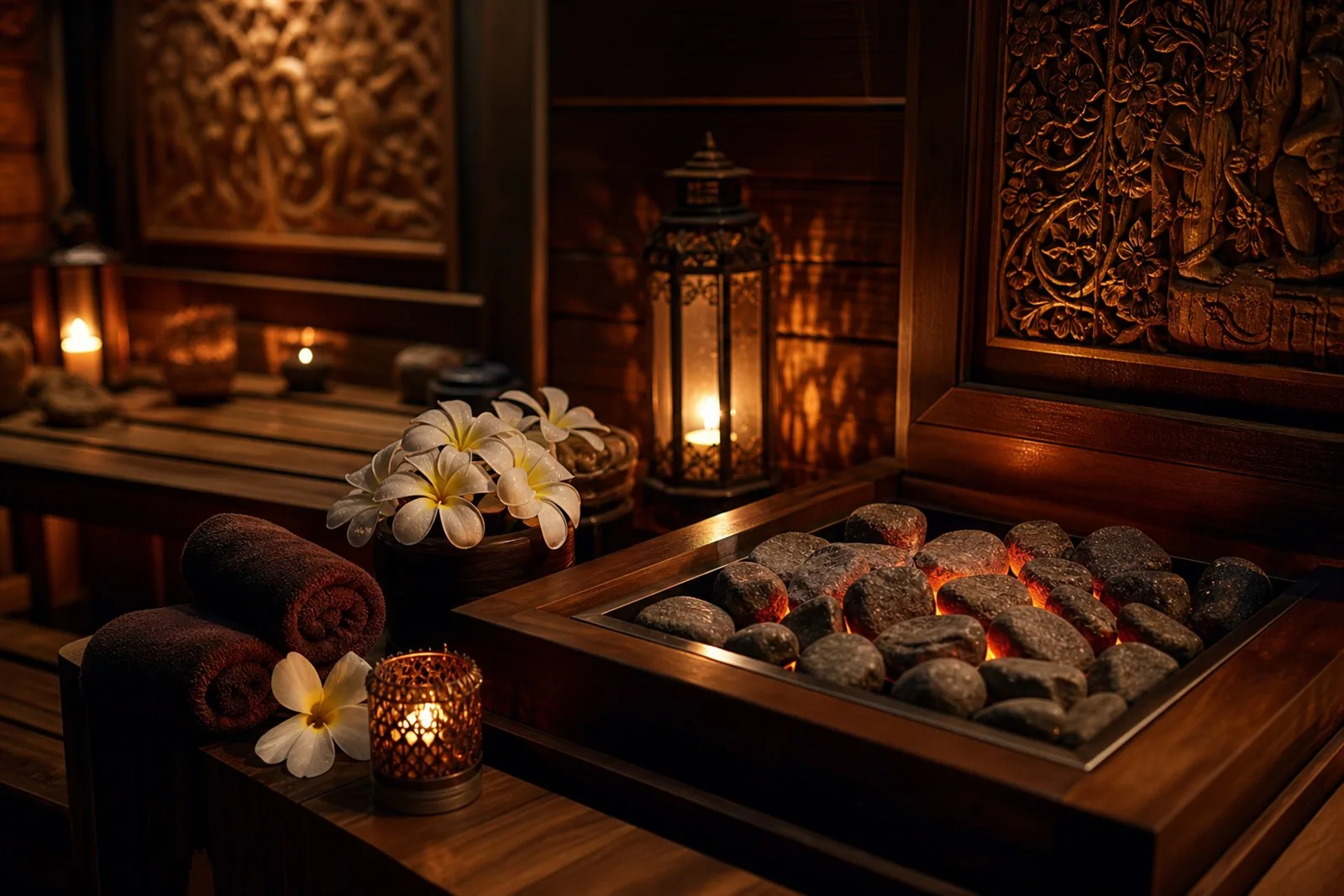
The classic Finnish sauna is a timber room with a stove and a basket of stones. The stove heats the air, the air heats your skin, and every so often someone ladles water onto the stones, sending a wave of hot, humid air across the room. That wave is the part sauna lovers live for, and the part newcomers find hardest.
Traditional sauna culture is built around rounds: a short, intense spell in the heat, then cooling off (a cold shower, a plunge, a swim in the sea), then back in. It is social, it is ritual, and the contrast between hot and cold is a big part of the pleasure. Harvard Health's overview of saunas and your health suggests keeping each spell to no more than 15 to 20 minutes and cooling down gradually afterwards.
A steam room is a different thing again: lower temperature, but near-total humidity, so sweat cannot evaporate and the heat feels heavy and wet. People often call all three "sauna". They are three distinct experiences.
How an infrared sauna works
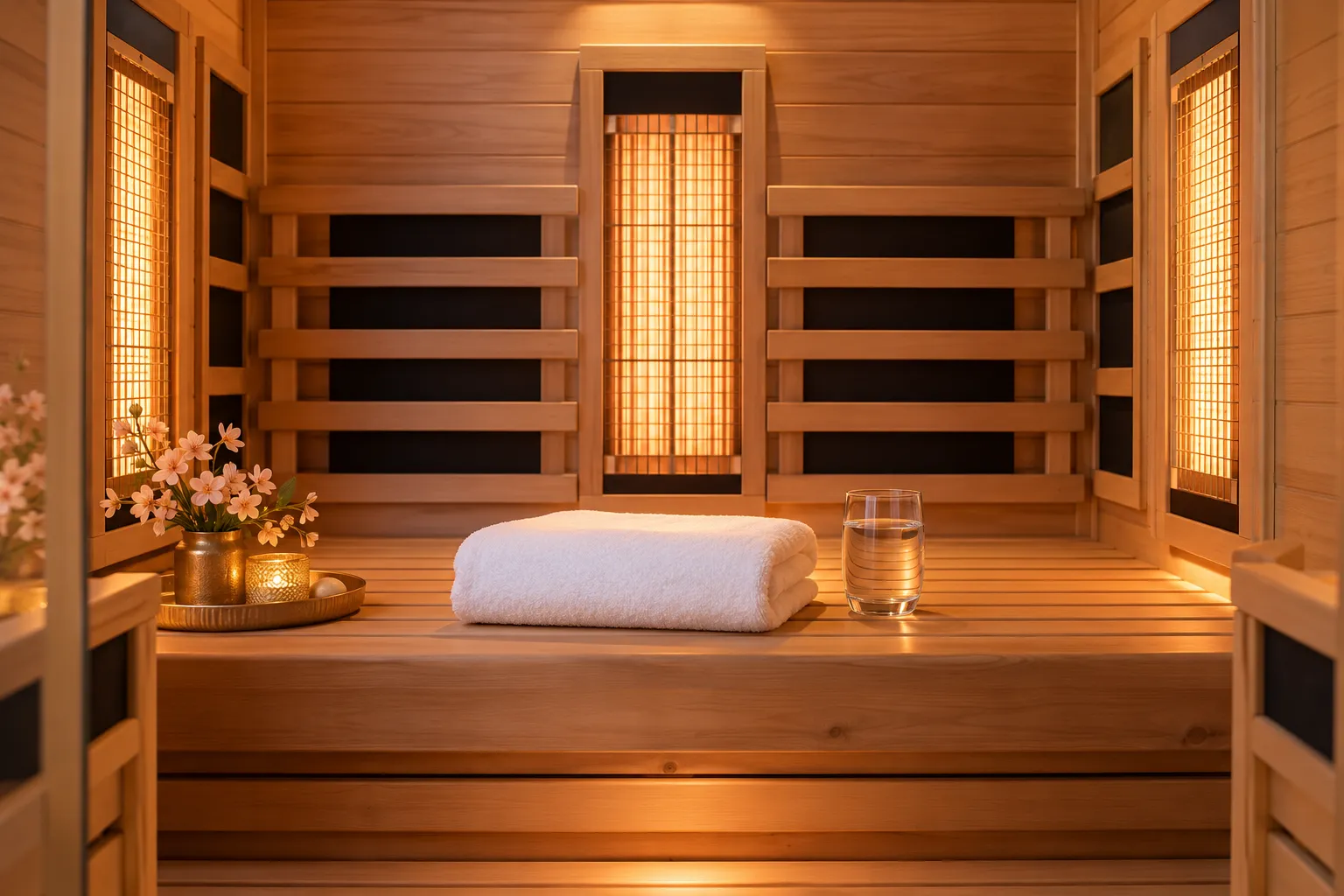
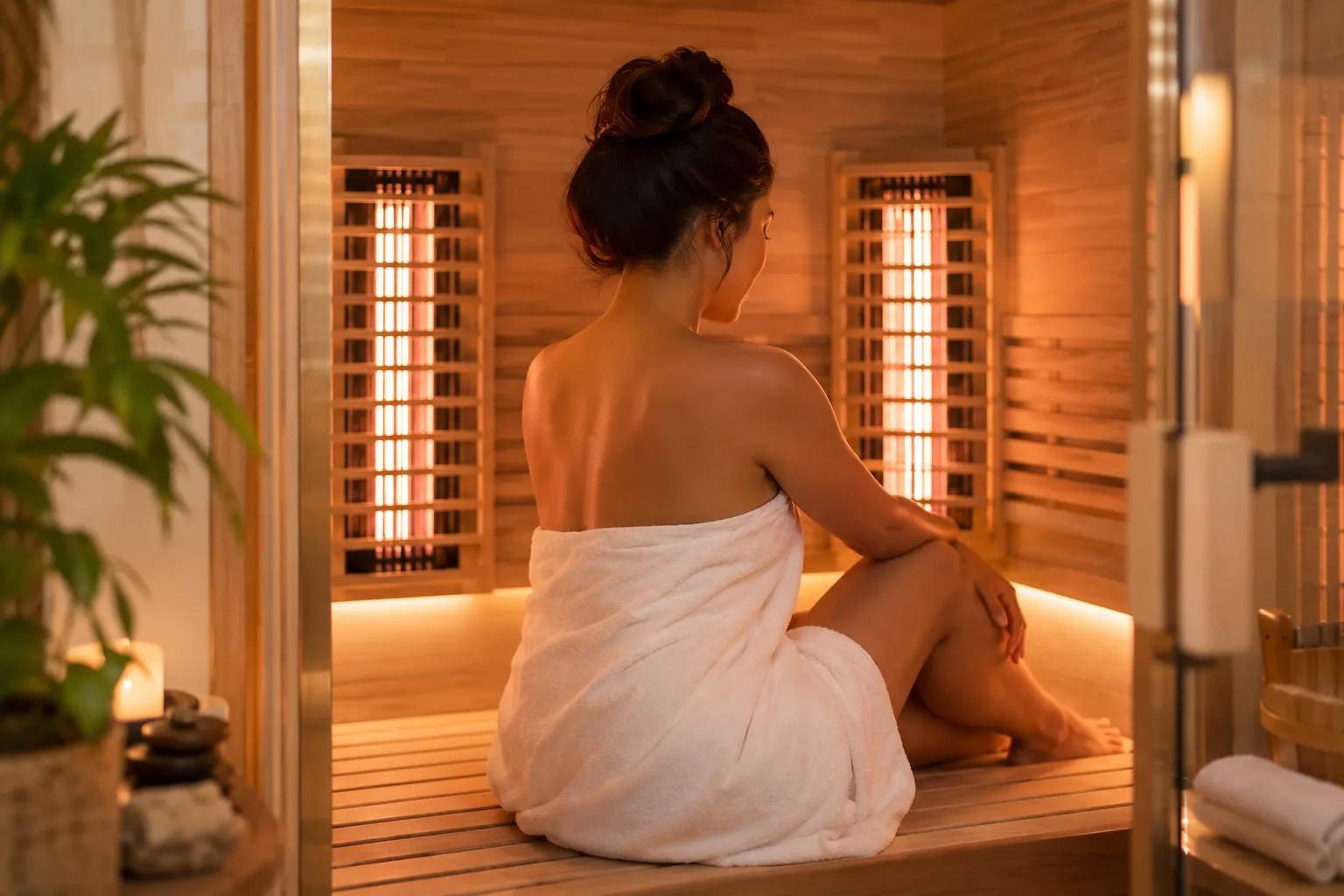
Infrared is the same kind of warmth you feel from the sun on your face on a cool, still winter's day: the air is chilly, but your skin is warm. The panels in an infrared cabin send that radiant heat straight into your skin and the tissue just beneath it. The air warms up too, just far less.
Three things follow from that. You can breathe easily, so most people find they can sit for longer and talk, think or doze. The sweat builds slowly rather than arriving in a rush, so the first few minutes can feel like nothing is happening. And the warmth feels like it sinks into stiff shoulders and backs rather than sitting on the surface. Cleveland Clinic suggests infrared sessions of around 20 to 30 minutes, starting shorter if you are new to it.
"The people who tell us they hate saunas are often the ones who stay the longest in the infrared. It was the hot air they minded, not the heat."
Siri therapist team
Infrared sauna vs traditional sauna: which suits you?
A traditional sauna, if…
- You love intense heat and that first blast when water hits the stones
- The ritual of hot rounds and cold plunges is half the point for you
- You want a short, sharp session rather than a long sit
Infrared, if…
- Hot air makes you feel short of breath or closed in
- You are new to saunas and want an easy introduction
- You want a longer, quieter sit with warmth that reaches stiff muscles
- You are pairing it with a massage, where steady warmth before the treatment is the goal
The honest limitation: if what you love about saunas is the blast of steam and a cold plunge straight after, infrared will feel tame. It is a different pleasure, not a stronger version of the same one, and we would rather say so than have you disappointed.
Switching from one to the other
Most people have tried one kind before the other, and the habits do not always carry across.
- Traditional regular trying infrared? Expect less drama. There is no steam to chase, and the sweat arrives later than you are used to, so give it time before deciding it is not working. A lukewarm shower afterwards is plenty; you do not need a plunge to finish.
- Infrared regular trying a Finnish sauna? Keep the first round short and sit on a lower bench, where it is cooler, because heat rises. Ask before ladling water onto the stones in a shared sauna; it changes the room for everyone. And cool down between rounds rather than sitting through one long session.
Infrared sauna benefits: what is realistic
What people tell us after a session is fairly consistent: a deep, all-over warmth that lasts, stiff shoulders and backs that feel looser, a calm, slightly sleepy heaviness, and a clean, wrung-out feeling after the shower. On a damp Auckland winter's day, that warmth is most of the appeal, and our guide to winter wellness in Auckland covers how the sauna fits alongside the other heat treatments.
What it will not do is just as worth knowing. The weight you lose in a sauna is water, and it comes back with your next drink. It is not a replacement for exercise. And when people call a sauna a detox, the honest translation is the sweat-and-shower experience: a long, warm sweat, a rinse, and the fresh, light feeling afterwards. That part is real and lovely. Anything more than that is your liver and kidneys' job, not the sauna's.
Who should check first
Both kinds of sauna put real demands on the body: your heart works harder and you lose fluid. Please check with your GP, midwife or specialist before booking if you:
- Are pregnant, or trying to conceive
- Have a heart condition, or high, low or unstable blood pressure
- Are prone to fainting or dizziness
- Take medication that affects sweating, heart rate or blood pressure
- Have a condition made worse by heat, recent surgery, or open or inflamed skin
Skip it on a day you are unwell or have been drinking alcohol. Drink water before and after, and leave as soon as you feel dizzy, sick or unwell; stepping out early is sensible, not a failure. Tell us about any health condition when you book.
Our infrared sauna at St Heliers
Siri's infrared sauna is at St Heliers only, at 417A Tamaki Drive. It is not available at our Viaduct spa, and there is no steam room or wet sauna on our menu. A session is 45 minutes including a shower: $60 for one person, $90 for two. For what that 45 minutes is like from start to finish, see our guide to the St Heliers infrared sauna.
If you want the sauna as a warm-up rather than the main event, Package B at St Heliers puts 20 minutes of infrared before a body scrub and an aromatherapy massage, across two and a half hours, for $280. Our guide to whether to have a massage before or after the sauna explains why the order matters.
St Heliers is open seven days, 10.00am to 8.00pm, with a 15% surcharge on public holidays. If you have your heart set on a weekend slot, book a few days ahead.
Common questions
It is different rather than better or worse. A traditional sauna gives intense, fast heat and the ritual of hot and cold rounds; infrared gives a gentler, longer warmth that is easier to breathe in. If hot air has put you off saunas before, infrared is usually the one to try.
No. The air in an infrared sauna is noticeably cooler, roughly 43–57°C according to Cleveland Clinic, compared with roughly 66–91°C in a traditional sauna. The radiant panels warm your body more directly, so you still sweat properly.
Cleveland Clinic suggests around 20 to 30 minutes, starting shorter if you are new. Our St Heliers session is 45 minutes including the shower, and you can step out whenever you need to. Leave straight away if you feel dizzy or unwell.
Siri's infrared sauna is at our St Heliers spa, 417A Tamaki Drive: $60 for one person or $90 for two, for 45 minutes including a shower. It is not available at our Viaduct spa.